Camp Kitchen Price Tiers Explained: Budget vs. Mid-Range vs. Premium

Shop for a camp kitchen and the price tags swing wildly: a folding cook table can run $30, while a fully built overland kitchen with a stove and prep deck can top $900. That spread isn't random. Each tier buys a specific level of materials, features, and durability. Here's exactly what your money gets at the budget, mid-range, and premium levels, so you can match the spend to how you actually camp.
The three price tiers at a glance
Camp kitchens cluster into three rough bands. The numbers below reflect typical 2026 retail pricing for portable, packable setups (not built-in RV or trailer slide-outs, which are a different category entirely).
| Tier | Price range | What you get | Best for |
|---|---|---|---|
| Budget | $30–$150 | A stable surface, basic storage, thin steel or fabric build | Occasional campers who already own a stove and cookware |
| Mid-range | $150–$400 | Sturdier aluminum frames, extra workspace, windscreens, sometimes a sink | Regular weekend campers who want value and longevity |
| Premium | $400+ | Integrated stove and/or sink, large prep decks, marine-grade builds | Overlanders, van-lifers, and families who camp often |
If you're new to the category and want the bigger picture on what these boxes even are, our guide to the modern camp kitchen box covers the fundamentals before you start comparing prices.
Budget tier ($30–$150): the bare essentials
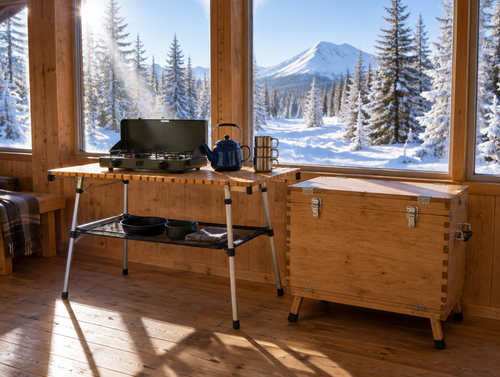
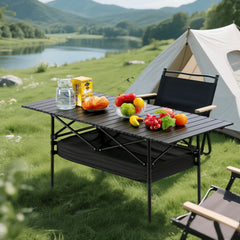
At the bottom of the range you're buying a surface and some organization, not a cooking system. A basic folding camp table (the Coleman folding table is the budget standard) runs roughly $25 to $40. Step up to a dedicated cook table like the REDCAMP Portable Camping Kitchen Table and you're in the $50 to $106 window, which adds a lantern pole and a fabric pantry bag. The GCI Outdoor Slim-Fold Cook Station, a popular entry pick, lands around $99 and folds fast.
The honest truth: a complete, functional camp kitchen can be assembled for under $100 if you piece it together and already own a stove. Budget builds focus on the basics, a flat place to set your burner and some hooks or shelves for gear. What you give up is build quality (thin steel that can rust and flex), no integrated water, and no real weather protection. For a handful of trips a year, that's a perfectly reasonable trade.


Mid-range ($150–$400): the value sweet spot
This is where most regular campers should look. Around $170, the Camp Chef Sherpa is essentially an aluminum roll-top table with four zippered compartments, the best "just get me organized" upgrade under $200. Push into the $300s and you find real chuck boxes: the Trail Kitchens King Charles Chuck Box sits near $329, and the Yoke Chuck Box runs about $389.
What the extra money buys is construction and convenience. Mid-range models swap thin steel for aluminum frames, add more usable workspace, and throw in extras like windscreens, side tables, zippered pantries, and occasionally a basin or sink. The GCI Outdoor Master Cook Station is a good example, with heat-resistant surfaces and a more rigid build that justifies the step up. You're paying for gear that survives repeat trips instead of feeling like seasonal-use plastic.
Many campers in this tier still bring their own burner, so a reliable two-burner stove is part of the budget. Our guide to building the best camp kitchen setup for 2026 walks through how the table, stove, and storage fit together.


Premium ($400+): built for years of hard use
Above $400 you stop buying a table and start buying an integrated kitchen. The Trail Kitchens Compact Camp Kitchen runs about $535, the iKamper AIOKS bundles a built-in stove and table in one box for roughly $550, and My Camp Kitchen's Outdoorsman starts near $569. At the top, the Trail Kitchens Camp Kitchen (around $799) offers more than 60 inches of prep surface in an aluminum build, and the King Charles climbs to roughly $974 with a stove.
Premium pricing reflects three things: integrated components (sinks, stoves, and large prep decks that you'd otherwise buy separately), serious materials that shrug off weather, and a build meant for overlanders and van-lifers who set up dozens of times a year. If camping is a core part of your life, the cost-per-use math often favors the durable option.
What actually drives the price
Once you understand the cost drivers, the tiers make sense. Three factors do most of the work:
- Materials. Stainless steel costs more to manufacture than aluminum because of its density and alloy content, but aluminum alloy frames offer a better strength-to-weight ratio, aerospace-grade aluminum reaches around 45,000 PSI of tensile strength while weighing roughly 60% less than comparable steel. Premium builds use powder-coated steel, marine-grade aluminum, and weatherized fabric. Cheap, unprotected steel can fail within two seasons in harsh conditions.
- Integrated features. A built-in sink, a mounted stove, or a USB-powered faucet adds real hardware cost. Most budget kitchens include none of these; you supply the stove and haul a separate water jug.
- Workspace and rigidity. More prep surface, a stable deck that doesn't wobble under a hot pan, and a case that protects everything in transit all raise the price, and the day-to-day usability.

Where all-in-one boxes fit
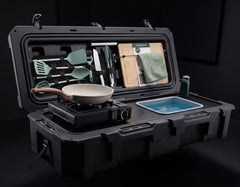
Here's the wrinkle the three-tier model hides: an all-in-one box can deliver mid-to-premium features without the piece-by-piece cost of assembling them. Instead of separately buying a $99 table, a stove, a water jug, a sink, and a storage case, an integrated kitchen bundles them in one weatherproof unit. The VOZ Camp Kitchen takes that approach, packing a built-in stove, sink, USB-rechargeable faucet, water tank, and 30-plus camping items into a single case, so the "tier" you land in is really about how much of the system you want pre-integrated versus self-sourced.


The practical takeaway: don't anchor on the sticker price alone. Add up what a budget setup actually costs once you've bought every missing piece, then compare that total to a mid-range or all-in-one box. The gap is often smaller than it looks.
FAQ
How much should a first camp kitchen cost?
For most first-timers, the $150–$400 mid-range hits the best balance of durability and price. If you camp only once or twice a year and already own a stove, a sub-$100 budget table is enough. Frequent campers tend to save money over time by buying once in the mid or premium range.
Is a $900 camp kitchen ever worth it?
It can be, if you camp often. Premium models like the roughly $799–$974 Trail Kitchens units bundle a stove, large prep deck, and weatherproof build that would cost a similar amount to assemble separately, and they hold up to heavy use. For a few trips a year, it's overkill.
Why are some camp kitchens so cheap?
Budget models cut cost with thin steel or fabric, minimal workspace, and no integrated stove, sink, or water. They work fine for light use, but the lower-grade materials can rust, flex, or fail faster, especially in wet or coastal conditions.
Does a built-in sink raise the price a lot?
It adds meaningful cost because it's real hardware, a basin, a faucet, and often a pump or water tank. Most budget kitchens skip it entirely. If running water at camp matters to you, expect to shop in the mid-range or premium tiers, or choose an all-in-one box that includes it.
Ready to upgrade your camp kitchen?
The VOZ Camp Kitchen includes everything you need in one weatherproof case. Sets up in 15 seconds.
Shop VOZ Camp Kitchen →