Camp Kitchen Setup Time Compared: 15 Seconds vs. 10+ Minutes

Every camp kitchen on the market promises a "fast, easy setup" — but almost nobody prints a number. So we pulled the actual setup times, claimed and review-tested, for five common camp kitchen styles. The spread is bigger than most campers expect: from 15 seconds to well over ten minutes, every single meal.
Why setup time is the spec nobody publishes
Burner output, counter space, and pack size all get spec-sheet lines. Setup time usually gets an adjective. That's a problem, because setup is the one spec you pay twice per meal — once to deploy, once to break down — and three meals a day multiplies it fast.
Run the math on a typical weekend with five cooked meals. A setup that takes ten minutes each way costs you five meals × two cycles × ten minutes — more than an hour and a half of pure logistics before you've chopped a single onion. A 15-second kitchen does the same job in under three minutes total for the whole trip.
And averages hide the worst case: rolling into camp at 9 PM with hungry kids, headlights for work light, and a stove buried somewhere in bin number three. That's the moment setup time stops being abstract.
Setup times by camp kitchen type: the numbers
Here's how the five common approaches compare, using manufacturer claims and independent review tests where they exist:
| Kitchen style | Setup time | What setup involves |
|---|---|---|
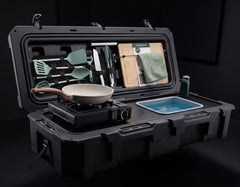
| All-in-one kitchen box (stove, sink, and water tank ride inside) | About 15 seconds | Pop three latches, lift the lid |
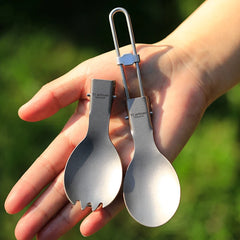
| Slim-folding cook station | About 30 seconds with practice | Unfold the frame in one move, pull out shelves |
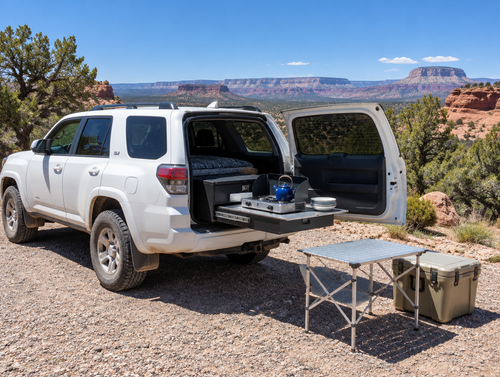
| Box kitchen with fold-out tables and legs | 4–5 minutes (manufacturer claim) | Unfold hinged tables, swing and lock the legs, connect the stove |
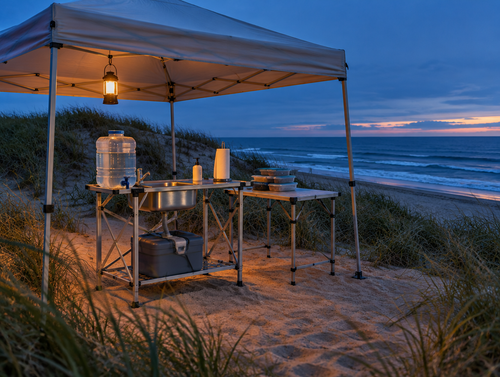
| Frame-and-snap folding kitchen | Several minutes | Expand the aluminum frame, snap on work surfaces, hang the sink and side table |
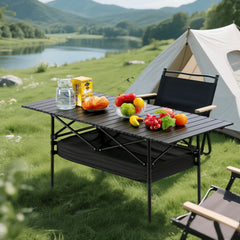
| Folding table + storage bins | 10+ minutes in practice | Unfold table, unload bins, assemble stove, fuel, water, and lighting |
The middle rows come from real products. Reviewers who tested GCI Outdoor's slim-folding Master Cook Station clocked it at roughly 30 seconds to set up or break down once they had the hang of it. Trail Kitchens publishes under five minutes for its compact box kitchen and under four for the version with an integrated stove. Coleman doesn't publish a time for the Pack-Away Deluxe, but its setup is a genuine multi-step assembly: expand the frame, snap on the surfaces, then attach the removable sink and fold-out side table.
A DIY plywood chuck box deserves its own asterisk. Its campsite deploy time depends entirely on your design — but the build itself typically eats a full weekend before trip one, even working from a single sheet of half-inch plywood.
Where the ten minutes actually goes
The bins-and-table setup isn't slow because any single step is hard. It's slow because nothing is connected to anything else. A typical sequence: carry the table out and unfold it, haul over two or three bins, dig the stove out from under the cookware, find the fuel canister, attach it, set up a windscreen, lift the water jug onto the table, find the soap, rig a trash bag, and — if it's getting dark — sort out a lantern. Ten small tasks, each under a minute, none skippable.

It adds up because a fully loaded camp kitchen is genuinely a lot of stuff — our printable checklist for a complete setup runs 47 items. Every one of those items either rides in a fixed place or becomes a search problem at the campsite.
To be clear, the table itself is rarely the bottleneck. A decent roll-up aluminum camp table deploys in well under a minute. The bottleneck is everything that has to come out of the bins after it.


What a 15-second setup actually looks like
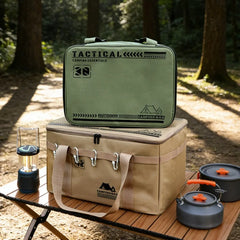
There's only one way to skip the unpacking phase: never unpack. That's the design idea behind the all-in-one kitchen box, and it's why the VOZ Camp Kitchen posts the shortest time on the board. The whole sequence is: pop three latches, lift the lid, start cooking. The butane stove, the collapsible sink with its USB-rechargeable faucet, the 2-gallon water tank, the LED lamp, and the utensils — more than 30 items in total — all ride in fixed positions inside one weatherproof case, so deployment is the same 15 seconds whether it's your first trip or your fortieth.


We broke the whole sequence down, latch by latch, in our step-by-step setup guide if you want to see exactly where the seconds go.
The honest trade-off: an all-in-one box is heavier than a bare folding station — about 57 pounds fully loaded versus 22 pounds for a slim cook station that carries nothing. You're trading carry weight for the fact that the kitchen arrives already organized.
Don't stop the clock at setup: boil time and breakdown
Setup time only matters because of what comes after it: hot food and coffee. Independent stove tests put real numbers on that second leg. A dual-burner GSI Selkirk 540+ boils a liter of water in about 3 minutes, a Coleman Cascade 3-in-1 takes about 3 minutes 15 seconds, and a 30,000 BTU Camp Chef Explorer needed nearly 7 minutes in the same style of test — proof that burner design matters more than raw BTU numbers.

Stack the two clocks together and the gap widens. A 15-second kitchen has water heating before the one-minute mark; a bins setup is still hunting for the lighter when the fast camp's kettle starts whistling. If your current stove is the slow link, a higher-output portable burner is the cheapest single upgrade — that's true whichever of our camping stoves class you run.


And remember that everything counts twice. Breakdown is where bin systems quietly lose another ten minutes, because gear never re-packs as neatly as it left home — wet sink tubs need drying, and the cookware Tetris has to be re-solved in reverse. A latching box closes the same way every time: lid down, three latches, done.
FAQ
What is the fastest camp kitchen setup?
All-in-one kitchen boxes are the fastest category: the VOZ Camp Kitchen deploys in about 15 seconds because the stove, sink, and water tank stay mounted inside the case. Slim-folding cook stations are next at roughly 30 seconds, per independent reviews.
How long does a bins-and-table setup really take?
Plan on ten minutes or more once you count every step — table, bins, stove assembly, fuel, water, and lighting. It varies with how consistently you pack, which is exactly the problem: the time is unpredictable as well as long.
Is a faster setup worth giving up counter space?
Usually you don't have to choose. A kitchen box gives you its lid and built-in surfaces immediately, and pairing it with a light roll-up table adds prep space for about one extra minute of setup. The real trade-off is weight, not counter space.
How long does a DIY chuck box take to build?
Most plans assume a full weekend of cutting, assembly, and finishing if you have the tools and materials ready, and complex builds with drawers can stretch to four days. That's time spent before the first trip — and the campsite setup speed still depends on how you designed it.
- How to Set Up a Camp Kitchen in Under 15 Seconds (Step-by-Step)
- The Ultimate Camp Kitchen Checklist (47 Items) — Free Printable PDF
- Camp Kitchen Checklist: 15 Essential Items You Need for Outdoor Cooking
- Camp Kitchen vs. Folding Table and Bins: Which Setup Actually Cooks Better?
- VOZ Camp Kitchen vs Coleman Pack-Away: Which Folding Kitchen Wins?
Ready to upgrade your camp kitchen?
The VOZ Camp Kitchen includes everything you need in one weatherproof case. Sets up in 15 seconds.
Shop VOZ Camp Kitchen →