Wildlife & Bear Deterrent Horns for Camping
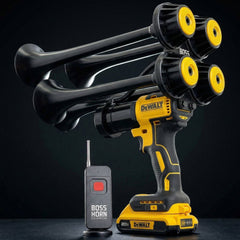
These are loud, battery-powered camp horns built to deter wildlife — a hands-free way to scare off bears, coyotes, raccoons and other curious animals that wander toward your food, cooler, or trash. Think of them as a rechargeable air horn alternative for bear country: there is no canister to run dry and no propellant to replace, because each one runs on a cordless-tool battery you likely already own.
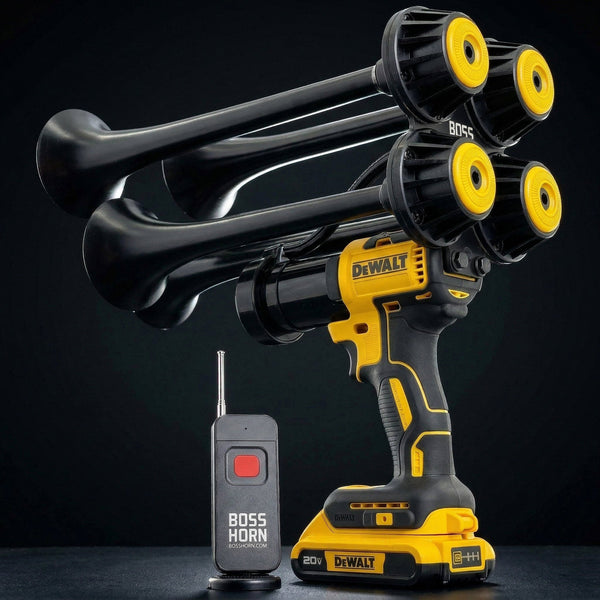
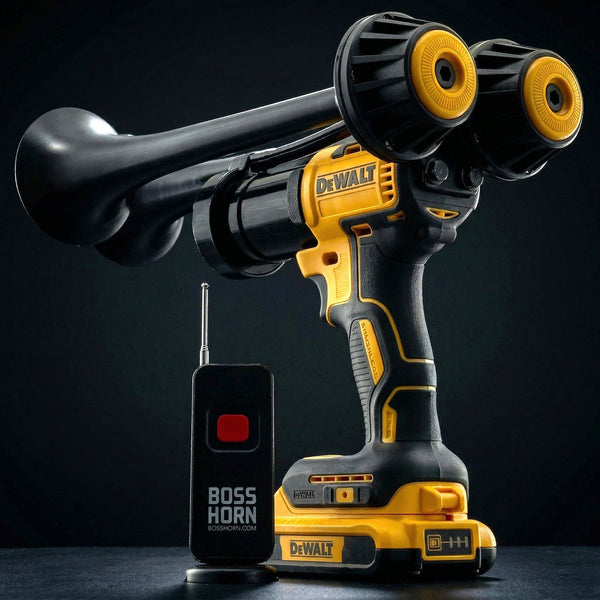
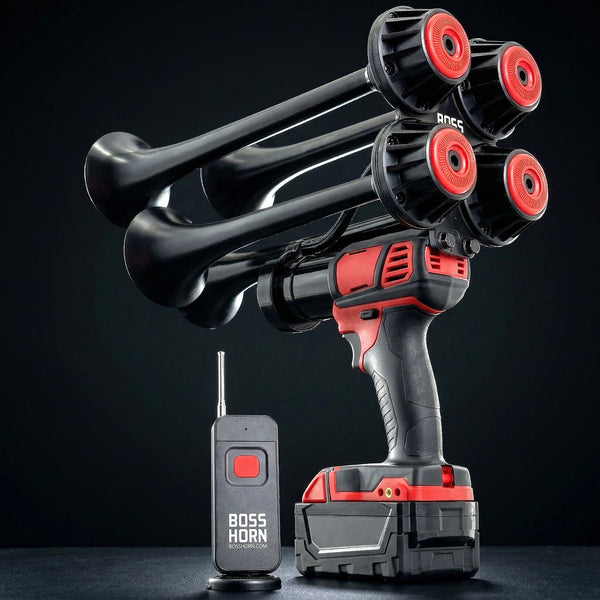
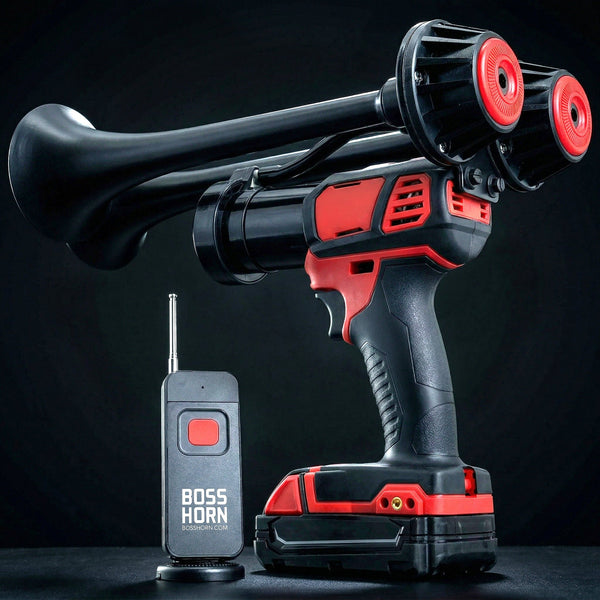
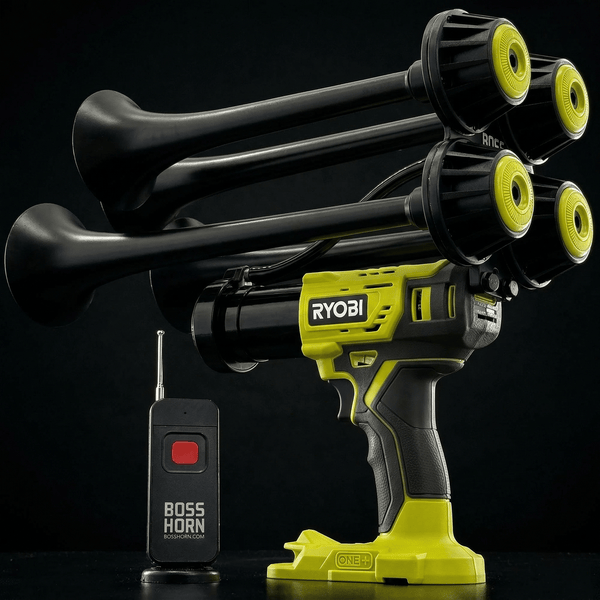
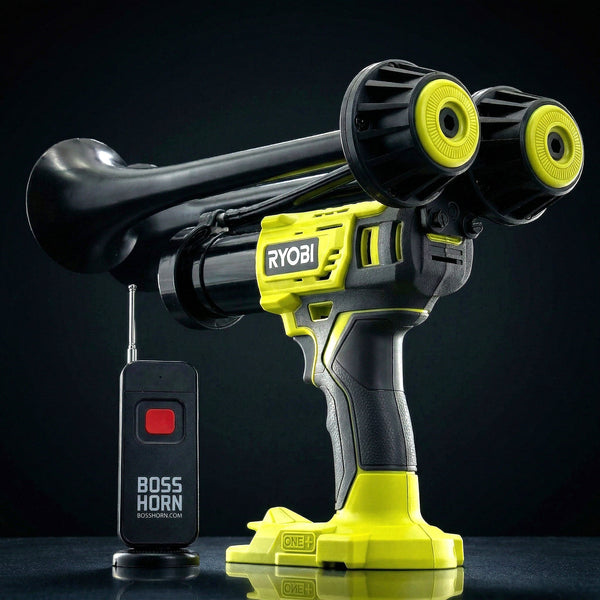
Every horn comes in three battery platforms — DeWalt® 20V, Milwaukee® 18V, and Ryobi® 18V — so you can pick the one that matches the batteries already in your camp box. A sudden 150 dB blast warns animals you are there and gives an approaching bear room to move off before a surprise encounter, and the same horn doubles as an emergency signal (three long blasts = call for help). A wireless remote (up to 300 ft, or 2,000 ft with the long-range option) lets you fire it from inside the tent.
A horn is a distance warning and deterrent, not a close-range stopper. For a charging animal, wildlife agencies recommend carrying bear spray as well.

Choose your battery platform
Same horn, three battery fits. Pick the brand that matches the cordless batteries you already pack — no proprietary pack to buy.
Boss Series vs Dual — which one?
Boss Series — the flagship
Our top-of-the-range build for campers who want the most presence and reach. The pick if you camp in serious bear or predator country and want maximum coverage at the site.
Dual — compact & ready
A two-trumpet setup at a friendlier price — still a 150 dB blast with the wireless remote. The easy first horn to clip into the kitchen box.
In collaboration with BossHorn
Powered by BossHorn
Every horn in this collection is built in partnership with BossHorn — an American horn brand founded in 2022 that reinvented the train horn as a compact, battery-powered device. Instead of an air tank and compressor, BossHorn engineered its horns to run on the cordless power-tool batteries people already own, assembled in the USA across 15+ tool-battery platforms.
BossHorn’s signature is serious volume in a grab-and-go package: a 150 dB output and a wireless remote that reaches up to 2,000 ft. We teamed up with BossHorn to bring that same platform to the campsite — tuned for wildlife deterrence and emergency signaling, so the loud, reliable horn you’d trust at an event now clips right into your camp kitchen.
What a camp horn is good for
One compact horn, three jobs around the campsite.
📣
Scare off wildlife
Back bears, coyotes, raccoons & mountain lions away from your camp kitchen — a non-violent deterrent that works from a distance.
🆘
Signal for help
Three long blasts is the universal call for help — it carries far further than a shout when someone is hurt, lost, or out of sight.
🔋
No canister, no refills
Runs on a rechargeable DeWalt® 20V, Milwaukee® 18V or Ryobi® 18V battery — nothing to inflate, nothing to run dry.
Bear horn vs bear spray: which do you need?
Two tools for two different moments — most campers in bear country carry both.
Best for distance
Bear & wildlife horn
A high-decibel noise-making device that warns and scares away an animal before it reaches camp — a bear, coyote or raccoon that’s curious or approaching. Reusable, battery-powered, and doubles as an emergency signal. Not built to stop a charging animal at close range.
Best for close range
Bear spray
A capsaicin spray for a last-resort, close-range charge — range around 30 ft, single-use, and affected by wind. The recognized tool for an actual attack, but not for everyday deterrence around the camp kitchen.
Bottom line: use the horn to keep wildlife away from a distance day to day, and keep bear spray on your hip as the close-range backup.
American wildlife a loud horn can move off
These North American animals associate a sudden, loud blast with danger and tend to back off or flee — exactly what our 150 dB train-horn platform is built to trigger. Use it to warn wildlife from a distance before they reach your camp kitchen.
✓🐻 Black bears
✓🐺 Coyotes
✓🦝 Raccoons
✓🐆 Mountain lions
✓🦌 Deer & elk
✓🦊 Foxes
✓🦨 Skunks
✓🐗 Wild boar / hogs
✓🐱 Bobcats
✓🫎 Moose
✓🐾 Opossums
✓🐿️ Squirrels
Note: a horn warns and deters from a distance — it is not a guaranteed stop for a determined or close-range animal. In bear country, pair it with bear spray.
Who shows up for the scraps you forgot to pack away
Leave a greasy pan, an open cooler, or crumbs around the camp kitchen and the campsite’s night shift moves in — many animals can smell food from up to a mile away. These are the usual visitors hunting your leftovers, and a quick horn blast (plus a clean camp) is how you send them packing:
🦝RaccoonsThe #1 camp raider — nimble paws, tip over trash and pry open coolers for anything edible.
🦨Skunks & opossumsNotorious for sniffing out unsecured food after dark and lingering around the kitchen area.
🐿️Squirrels & chipmunksBold daytime nibblers that raid food stores and chew through gear and cords for crumbs.
🐻Black bearsIn bear country, food smells draw them in — they’ll tear screens or tents to reach a meal.
🦊Foxes & coyotesOpportunists that creep toward camp at dusk for scraps, then grow bolder if they find a reward.
🐦⬛Jays, crows & ravensDaytime thieves that swoop in for unattended snacks the moment you step away from the table.
How to keep animals away from your campsite
A clean camp plus a reliable way to scare animals off does most of the work. Five habits that keep wildlife out of your camp kitchen:
1Lock up food & scent itemsUse sealed coolers, a bear canister or a locker — and never keep food, trash or even toothpaste in the tent. Smell is what draws wildlife in.
2Keep a spotless camp kitchenWash up right after eating, wipe down surfaces, and pack out every scrap and grease drop before dark.
3Make noise & deter from a distanceA loud horn is the simplest noisemaker to scare away an animal that’s approaching — back it off before it ever reaches your site.
4Light up the perimeterA bright lantern or motion light around the camp perimeter spooks many night visitors before they get comfortable.
5Keep your distance & carry a backupNever approach or feed wildlife. In bear country, pair your horn with bear spray for close-range protection.
Wildlife Deterrent Horn FAQ
Everything campers ask before clipping one into the kitchen box.
Do air horns actually scare bears?
A loud horn is most effective on a bear that sees you and keeps approaching, or one heading toward camp from a distance. The sudden blast warns the animal you are there and helps prevent a startling, surprise encounter. It is not meant to stop a bear charging at close range — for that, wildlife agencies recommend carrying bear spray as well.
Should I carry a bear horn or bear spray?
Ideally both — they do different jobs. A bear/wildlife horn is your everyday deterrent: a high-decibel blast that warns and scares animals off from a distance and doubles as an emergency signal. Bear spray is the close-range, last-resort tool for a charging animal. Use the horn to keep wildlife away from camp, and keep bear spray on hand as the close-range backup.
What animals will a camp horn deter?
A sudden, loud blast startles bears, coyotes, raccoons, mountain lions, skunks, foxes and other curious wildlife that wander toward your food prep area, cooler, or trash. These animals associate a loud, unfamiliar sound with danger and tend to back off or flee.
How loud is it — and is it safe for my hearing?
Each horn puts out a 150 dB blast — roughly the level of a jet engine at close range, which is exactly what lets it carry across a campsite and startle animals. Because it is that loud, use it responsibly: point it away from people and pets, and never fire it close to anyone’s ears, including your own.
How far does the sound carry, and how does the remote work?
The blast carries far across open ground — much farther than your voice. A wireless remote triggers the horn from up to 300 ft away, or up to 2,000 ft with the optional long-range remote, so you can set it off from inside the tent or across camp without walking up to it.
How long does it run on one battery?
It is not a one-shot canister with a few seconds of blast. As long as your battery holds charge, the horn is ready to fire again and again — and when a pack runs low, you simply swap in a freshly charged one and keep going.
Which battery brands are compatible?
Each horn is offered in three platforms — DeWalt® 20V, Milwaukee® 18V, and Ryobi® 18V. Choose the version that matches the cordless-tool batteries you already own, and the horn slides right onto the same pack.
Do I need to buy the battery separately?
These horns are designed to run on the standard cordless-tool batteries most people already have on hand — the same DeWalt®, Milwaukee® or Ryobi® packs that power your drills and saws. Just pick the brand that matches your batteries.
What’s the difference between the Boss Series and Dual?
The Boss Series is the flagship build for maximum presence and reach at the campsite. The Dual is a compact two-trumpet setup at a friendlier price — still a 150 dB blast with the wireless remote. Both come in all three battery platforms.
Can I use it as an emergency signal?
Yes. Three long blasts is the recognized call for help, and the horn carries far further than a shout when someone is hurt, lost, or out of sight. The wireless remote lets you trigger it from up to 300 ft away (2,000 ft with the long-range option).
Where can I use it responsibly?
Use it for genuine wildlife deterrence and emergencies around your own campsite. In developed campgrounds and during posted quiet hours, use good judgment and follow local rules — a 150 dB horn is for backing off an animal or calling for help, not for noise.
Forest imagery via Unsplash. Product images © Camp Kitchen.