Camp Kitchen vs. Chuck Box: Complete 2026 Comparison Guide

Quick Answer: Camp Kitchen vs. Chuck Box
If you searched camp kitchen vs chuck box, here is the short version before the deep dive:

- Chuck box — a wooden or plastic storage box that holds your cookware, utensils, and pantry. It is a container. You still need a separate stove, water source, and table.
- Modern camp kitchen — an integrated all-in-one unit that typically combines storage, prep surface, sink, water tank, stove platform, and utensil holders in a single weatherproof case.
- Choose a chuck box if you want a low-cost, customizable, DIY-friendly solution and you camp occasionally.
- Choose a camp kitchen if you camp often, value fast setup, need running water in remote spots, or cook for a family or group.
- Cost range: DIY chuck boxes commonly run $50–$500 in materials; commercial chuck boxes generally fall in the $200–$800 range; full-feature modern camp kitchens range from several hundred dollars up past $1,000 depending on built-in features.
Introduction: Why This Comparison Matters in 2026
Outdoor cooking has changed a lot in the last decade. The old chuck box vs camp kitchen debate used to be simple — chuck boxes ruled because there was nothing else. Today, overlanding, van life, and weekend car camping have created demand for purpose-built outdoor kitchens with sinks, stoves, USB power, and weatherproof construction. Meanwhile, the chuck box (also spelled "chuckbox") has not disappeared. It still has a loyal following among traditionalists, scout troops, hunting parties, and budget-conscious campers.
This guide gives you a complete, unbiased side-by-side breakdown of camp kitchen vs chuck box: what each one is, what they include, what they cost, where they shine, and where they fall short. By the end, you will know which option fits your camping style — and you will not be stuck guessing based on a forum thread from ten years ago.
What Is a Chuck Box?
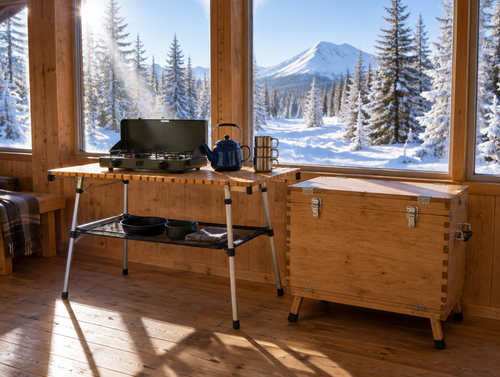
A chuck box — sometimes called a "grub box," "patrol box," or "camp box" — is a storage container designed to hold everything you need to cook a meal outdoors except the stove and the food. The term traces back to the chuckwagons used on 19th-century American cattle drives, where a single trail cook fed an entire crew out of a wooden box mounted on a wagon. Today's chuck box keeps the spirit of that design: one box, all your kitchen tools, ready to grab and go.
Typical Contents of a Chuck Box
- Pots, pans, and a kettle
- Plates, bowls, mugs, and utensils
- Cooking tools: spatula, tongs, ladle, knife, cutting board
- Dish soap, sponge, dish towels
- Spices, oil, salt, pepper
- Matches, lighter, fire starter
- Paper towels, foil, trash bags
Common Chuck Box Designs
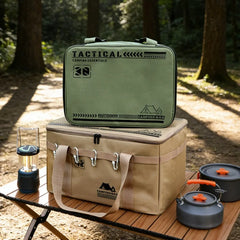
Chuck boxes come in three broad styles. DIY plywood boxes are the classic — a hinged-lid box, sometimes with a fold-down door that becomes a small prep surface. Commercial wooden chuck boxes follow the same idea but come pre-built, often with sliding drawers, dovetail joints, and brass hardware. Plastic tote chuck boxes are the budget option — a heavy-duty bin (think 27-gallon storage tote) with a fitted insert or homemade dividers.
Who Uses Chuck Boxes?
Boy Scout and Girl Scout troops have used chuck boxes for generations because they are simple, durable, and easy to load into a trailer. Hunting camps and group sites favor them for the same reason. Hobbyist woodworkers love building chuck boxes because the project is approachable and the result is genuinely useful. Anyone who wants a no-electronics, no-fuss approach to camp cooking can be happy with a well-built chuck box.
What Is a Modern Camp Kitchen?
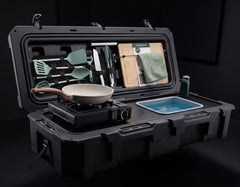
A modern camp kitchen is an all-in-one mobile cooking station. Where a chuck box is a container, a camp kitchen is closer to a folding outdoor cooking workstation. The category exploded with the rise of overlanding and van life, where buyers want to pull up to a remote site, open one case, and start cooking within minutes — without unpacking, assembling tables, or rigging a separate water jug.
Typical Features of a Modern Camp Kitchen
- Integrated case or cabinet — usually weatherproof plastic (LLDPE or roto-molded), aluminum, or marine-grade plywood
- Built-in sink with a drain hose
- Water reservoir — typically 1.5 to 3 gallons
- USB-rechargeable or battery faucet for true running water
- Stove platform or built-in burner
- Prep surface that folds out from the case
- Organized storage for utensils, plates, spices, and cookware
- Quick deployment — many units set up in under a minute
Typical Specs to Look For
When shopping a modern camp kitchen, look at four numbers: setup time (some units deploy in 15 seconds, others take several minutes), total weight (anywhere from 30 to 80 lbs depending on materials and features), water tank size, and included item count. A well-equipped unit will arrive with 25 to 35+ pieces — cookware, dishes, utensils, and prep tools — already packed and organized. For example, the VOZ Camp Kitchen Premium ships as a single weatherproof LLDPE case with 30+ items, a 2-gallon tank, a USB-rechargeable faucet, and a 15-second deploy time at 57 lbs total.
Who Uses Modern Camp Kitchens?
Overlanders, van lifers, family car campers, tailgaters, and anyone who cooks outdoors often enough that setup speed and integrated water actually matter. If you spend more than a handful of nights a year cooking outside, the case for a modern camp kitchen gets stronger.
Side-by-Side Comparison Table
| Feature | Chuck Box | Modern Camp Kitchen |
|---|---|---|
| Setup time | 5–15 minutes (unpack, set table, rig water jug, level stove) | 15 seconds to 2 minutes (open case, fold out) |
| Included items | Sold empty — you stock it yourself | Often 25–35+ items pre-packed (e.g., 30+ items in VOZ Camp Kitchen Premium) |
| Built-in sink | No — use a separate basin or jug | Yes — integrated sink with drain hose |
| Running water | No — pour-over or gravity jug | Yes — 1.5–3 gal tank + USB-rechargeable or battery faucet |
| Stove integration | Stove sold and stored separately | Built-in stove platform; some units include the burner |
| Weather protection | Wood swells and warps; plastic totes leak at the lid | Weatherproof case (LLDPE/roto-molded) protects gear from rain and dust |
| Weight | 40–100+ lbs once stocked, depending on material | 30–80 lbs fully loaded with cookware |
| Organization | Whatever you build in — usually basic dividers | Purpose-designed slots for every included item |
| Customization | High — design every drawer, slot, and dimension | Low — you live with the manufacturer's layout |
| Durability | Wood: decades with care. Plastic tote: a few seasons. | Roto-molded/LLDPE shells are built to last; metal hardware varies by brand |
| Typical price range | $50–$500 DIY (materials) / $200–$800 commercial | Several hundred to $1,000+ depending on features and country of manufacture |
Pros and Cons of a Chuck Box
Chuck Box Pros
- Low cost of entry. A weekend in the workshop and a pile of plywood scraps can produce a serviceable chuck box for under $100 in materials.
- Fully customizable. You design the dimensions, drawer count, and layout to match your exact gear and your exact vehicle.
- Traditional and satisfying. There is genuine craftsmanship pride in building and using your own chuck box.
- Simple and repairable. No electronics, no pumps, no hoses. A cracked corner can be fixed with wood glue and a screw.
- Easy to load and unload. One box in, one box out. Great for trailers and group sites.
Chuck Box Cons
- No integrated water. You still need a separate jug, basin, or jerry can.
- Limited weather protection. Wood absorbs moisture; plastic totes are not truly waterproof at the lid seal.
- Heavy and awkward. A fully loaded wooden chuck box can easily push 80–100 lbs.
- Requires assembly each trip. You unpack onto a separate table, set up the stove, rig the water — every camp.
- You have to source every item yourself. Plates, pots, utensils, soap — all separate purchases.
Pros and Cons of a Modern Camp Kitchen
Camp Kitchen Pros
- Ready in seconds. Open the case, fold out the surfaces, and you are cooking. Some units deploy in as little as 15 seconds.
- Integrated water and stove. A built-in sink with a USB-rechargeable faucet means real running water in the backcountry.
- Weatherproof storage. A sealed LLDPE case keeps your kitchen clean and dry between trips and during sudden storms.
- Pre-stocked. Many units arrive with 30+ items already packed and organized — no scavenger hunt for cookware.
- Tidy and predictable. Every item has a slot, so packing up at the end of a trip takes minutes, not an hour.
Camp Kitchen Cons
- Higher upfront cost. You pay for the engineering and the included gear in one lump.
- Less customizable. The layout is fixed. If you do not like where the spice rack is, you live with it.
- Less DIY satisfaction. If you love building things, an off-the-shelf product will not scratch that itch.
- Mechanical parts to maintain. Faucet pumps, hinges, and latches can wear out over years of use.
- Bulkier as a single piece. A chuck box can sometimes be split into two smaller boxes; an all-in-one kitchen is one large case.
When to Choose a Chuck Box
A chuck box makes sense in several specific scenarios. Pick this route if any of the following describe you:
- You are on a tight budget. A DIY chuck box can cost less than a single tank of gas in materials.
- You love DIY projects. Building a chuck box is a satisfying woodworking weekend, and you can rebuild or refine the layout over time.
- You camp occasionally. If you go out twice a year, paying for built-in water and a USB faucet is overkill — a simple box and a 5-gallon jug will do.
- You prefer traditional gear. Some campers genuinely enjoy the slower, more analog rhythm of unpacking a wooden box, hand-pumping water, and lighting a separate stove.
- You want full control over every dimension. If your vehicle has an awkward storage cubby that demands a 22-inch-wide box, you can build exactly that.
- You camp with a fixed trailer or group site. Setup time is less critical when the box lives in a trailer that is already set up.
When to Choose a Modern Camp Kitchen
A modern camp kitchen earns its higher price in specific use cases. Choose this route if you fit any of these patterns:
- You camp or overland frequently. If you are out 10+ nights a year, the time saved on setup adds up fast.
- You cook for a family or group. Pre-packed cookware for 4–6 people, an integrated sink, and a fold-out prep surface speed up every meal.
- You hate setup hassle. Some campers want to cook, not assemble. A 15-second deploy time matters when you arrive at camp tired.
- Water access is limited. A 2-gallon onboard tank with a USB-rechargeable faucet means you can wash hands, dishes, and produce anywhere — no spigot required.
- Weatherproof storage matters. If your gear lives in a garage that gets damp, or in the back of a truck that sees rain, a sealed LLDPE case protects everything inside.
- You do van life or overlanding. Permanent vehicle setups benefit from a single self-contained kitchen module instead of separate boxes, jugs, and tables.
The Hybrid Path: Using Both
Some campers run a hybrid system, and it can be a smart move. A common approach: use a modern camp kitchen as the daily-driver setup for weekend trips and overland runs, then keep a chuck box in the garage for big group trips, scout outings, hunting camps, or anything where you want a second cooking station for a larger crew.
The hybrid path also makes sense if you are transitioning. Many campers start with a DIY chuck box, learn what they actually use, and then upgrade to a modern camp kitchen once they know their cooking style. The old chuck box becomes the loaner — the one you let your kid borrow for a Scout campout, or the one that lives at the cabin.
When does the hybrid path not make sense? If storage space is tight, or if you camp solo and infrequently, owning two systems is overkill. Pick one based on your actual habits, not the camping habits you wish you had. The best gear is the gear you use, not the gear that sits in the garage.
Frequently Asked Questions
Is a chuck box still worth it in 2026?
Yes, for the right user. A chuck box remains a solid choice if you camp occasionally, want a low-cost solution, enjoy DIY projects, or run a group setup like a Scout troop. It will not give you running water or a 15-second deploy, but it will faithfully hold your gear for decades if built well. The "is it worth it" answer depends entirely on how often you camp and how much you value setup speed.
What's the main difference between a chuck box and a camp kitchen?
A chuck box is a storage container for camp cooking gear. A modern camp kitchen is an integrated cooking station that combines storage, a prep surface, a sink, a water tank, and usually a stove platform in one weatherproof case. The chuck box stores tools; the camp kitchen replaces most of the separate items (table, jug, basin, organizer) you would otherwise need to bring.
Can I add a sink to a chuck box?
Sort of. You can drop in a small plastic basin and use it as a wash tub, and you can mount a manual hand-pump faucet to a jerry can or a 5-gallon jug strapped to the side. What you generally cannot do, without a serious build, is integrate a sealed water reservoir, a USB-rechargeable pressurized faucet, and a drain hose into the box itself — that level of integration is what separates a chuck box from a modern camp kitchen.
Is a camp kitchen worth the cost over a DIY chuck box?
It depends on usage. A DIY chuck box might cost $100 in materials. A full-feature modern camp kitchen — pre-stocked with 30+ items, a 2-gallon tank, a USB faucet, and a weatherproof case — typically runs into four figures. If you camp four weekends a year, the chuck box wins on cost-per-use. If you camp 20+ nights a year, run an overlanding rig, or cook for a family, the time and convenience savings of a camp kitchen often justify the price. Many camp kitchens also bundle gear (cookware, dishes, utensils) that you would otherwise buy separately.
Which is better for overlanding: chuck box or camp kitchen?
For dedicated overlanding, a modern camp kitchen is usually the better fit. Overlanders prize fast camp setup, weatherproof storage, and self-contained water — three things modern camp kitchens deliver and chuck boxes do not. A chuck box can absolutely work for overlanding (plenty of people do it), but you will spend more time setting up camp and less time enjoying it. If your build budget allows, an integrated camp kitchen module is the cleaner solution.
Final Verdict: Camp Kitchen vs. Chuck Box
The honest answer to camp kitchen vs chuck box is that both are still relevant in 2026, and the right choice depends on how you actually camp. A chuck box wins on cost, customization, and traditional appeal — perfect for occasional campers, DIY enthusiasts, and group setups. A modern camp kitchen wins on setup speed, integrated water, weather protection, and convenience — perfect for frequent campers, families, overlanders, and anyone who wants to spend less time setting up and more time eating.
If you have decided that an all-in-one, weatherproof, pre-stocked unit fits your camping style, you can see one example of the modern category — a 30+ piece kit in an LLDPE case with a 2-gallon tank and a USB-rechargeable faucet — over on the VOZ Camp Kitchen Premium product page. Either way, pick the system that matches your actual camping habits, build or buy with care, and get out there.
Ready to upgrade your camp kitchen?
The VOZ Camp Kitchen includes everything you need in one weatherproof case. Sets up in 15 seconds.
Shop VOZ Camp Kitchen →