How to Clean Your Camp Kitchen After a Trip (So It Lasts for Years)

The trip is over, the cooler is empty, and the last thing anyone wants to do is scrub a stove in the driveway. But how you clean and dry your camp kitchen in the hours after a trip is what decides whether it lasts two seasons or ten. A camp kitchen box is not just a pile of pots — it is a sink, a water tank, an electric faucet, a stove, and a sealed case that all have to go back together dry.
Why cleaning a camp kitchen box is different
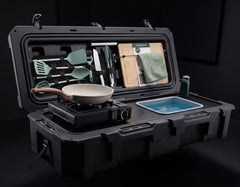
Washing a single pot is easy. An all-in-one box is a closed system: food residue, gray water, and trapped humidity all live in the same case until your next trip. The VOZ Camp Kitchen packs a collapsible sink, a 2-gallon removable water tank, a USB-rechargeable faucet pump, a butane stove, and 30-plus utensils into a single 25-gallon weatherproof case. If you close that case wet, you are sealing moisture against metal cookware and a food-grade polymer body for weeks. The goal of a good post-trip clean is simple: get everything food-free, then bone-dry, before the lid shuts.


Step 1: Clean up at camp before you pack out
The easiest grime to remove is the grime you tackle before it dries. Scrape every plate and pan into your trash bag first — the less food that hits your wash water, the less you have to dispose of responsibly. Then run a quick wash right in the built-in sink while you still have water and daylight. A box with running water makes this painless; if you want the full case for why an onboard faucet changes camp cleanup, see our guide to a camp kitchen with a sink and faucet.
Do it the Leave No Trace way. The National Park Service guidance is direct: "To wash yourself or your dishes, carry water 200 feet away from streams or lakes and use small amounts of biodegradable soap. Scatter strained dishwater." Two hundred feet is roughly 70 adult paces. Strain food bits out of your gray water and pack them out, then broadcast the strained water in a wide arc. In bear country, many campers dig a 6-to-8-inch sump hole and pour strained water into it instead. A few drops of biodegradable soap is plenty — for a short trip with a small group, hot water and a scrub pad often do the job alone.

Cleaning the stove, pan, and cookware
Wipe the butane stove down while it is still slightly warm (never hot, never lit). A damp cloth with a drop of mild soap lifts most splatter; an abrasive pad takes off burned-on drips. If your model lets you lift the burner grate, brush underneath and let the surface air dry before it goes back in the case. For the non-stick frying pan and any pots, skip steel wool, which chews up the coating — use a soft pad and warm water.
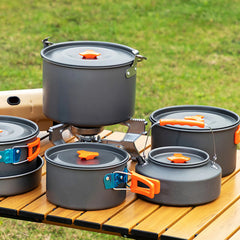
Got something welded to the bottom of a pot? Add enough water to cover it, put the lid on, and bring it back to a boil. The steam loosens the stuck-on food so you can scrape it free with a spatula instead of scouring. If you carry a cast-iron pan, a scrub of coarse salt and a little vegetable oil cleans it without stripping the seasoning, then wipe it down to a light sheen. The same cookware-care logic applies whether the pans came in your box or you added your own.


Draining the water tank, sink, and USB faucet
This is the step most people forget, and it is the one that ruins boxes. Empty the 2-gallon water tank completely — never store it with standing water, which turns stale and grows biofilm in a sealed case. Rinse the tank, give it a shake, and leave the cap off so it can air out. Wipe down the collapsible sink and the removable countertop with mild soap and water; food film loves to hide in the sink's folds.
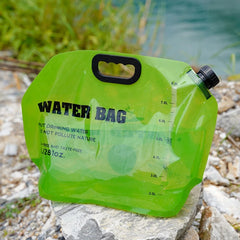
Treat the USB-rechargeable faucet pump like the electronic it is. Do not submerge the pump body or run it through a dishwasher. Wipe it with a damp cloth, let it dry fully, and store it where it will not sit in residual water. If you run several water-gear accessories on your trips — pumps, dispensers, collapsible jugs — the same rule holds for all of them: drain, wipe, and dry before they go away.


Dry everything before it goes back in the box
Trapped moisture is the real enemy. Cleaning and fully drying gear before storage, then keeping it somewhere cool and dry, is what prevents the mold, mildew, and rust that quietly destroy outdoor equipment. Towel off every item, then let the open case and its contents sit out for a few hours — a sunny afternoon or a garage with a fan is ideal. Stand pots and cups upside down so water cannot pool inside.
Two small habits pay off over years. Tuck a desiccant pack or two into the case to pull down ambient humidity, and wipe a very thin film of food-safe oil onto any bare metal — knife blades, the stove grate, cast iron — to block rust before it starts. Knowing exactly what is included in the kit makes the dry-and-repack go faster, because every piece has a home.

Storing your camp kitchen between trips
Once everything is dry, give the polymer body a final wipe. The manufacturer's advice for the VOZ case is to clean surfaces with mild soap and water and avoid bleach on the polymer body — harsh oxidizers can craze and weaken food-grade plastic over time. Store the closed box in a cool, dry, shaded spot, off a concrete floor if you can, since concrete wicks moisture and cold.
Two seasonal notes for a box with a water system: drain the tank before storing anywhere temperatures drop below freezing, because trapped water can expand and crack fittings, and top up the USB-rechargeable faucet battery every 3 to 6 months even when the box sits unused, so the pump is ready when you are. A compact, well-packed box also stores and travels better — our guide on why size and weight matter covers how that footprint pays off.
FAQ
Do I really need to dig a sump hole every time?
No. At developed campgrounds, use the provided utility sink or gray-water drain. The sump-hole method is for the backcountry, and even then scattering strained dishwater 200 feet from any water source is the standard. Always check the rules for the specific park or forest you are in, since agencies set their own gray-water requirements.
Can I put camp kitchen items in a home dishwasher?
Most cookware and utensils, yes. But keep electronics out — the USB faucet pump and any rechargeable light should only be wiped by hand. When in doubt, hand-wash; it is gentler on non-stick coatings too.
What if I run out of clean water before the dishes are done?
Scrape and wipe aggressively first so you need less water, then use the smallest amount that gets the job done. A rubber spatula and a camp towel can get a bowl nearly clean before any water touches it. Finish the deep clean at home if you have to — the priority at camp is removing food so it does not attract wildlife.
How do I get rid of a musty smell in the box?
A musty smell almost always means something went away damp. Open the case, pull everything out, and let it air and sun-dry. Wipe the interior with a mild soap solution (not bleach), dry it completely, and add a fresh desiccant pack before you close it.
Ready to upgrade your camp kitchen?
The VOZ Camp Kitchen includes everything you need in one weatherproof case. Sets up in 15 seconds.
Shop VOZ Camp Kitchen →