How to Organize a Camp Kitchen Box So You Can Find Everything Fast

A camp kitchen box only saves time if you can actually find the spatula before the eggs burn. Sealing every tool in one weatherproof case is half the job — the other half is laying it out so your hand goes straight to the thing you need, every meal, even in the dark. Here is how to organize a camp kitchen box so nothing turns into a treasure hunt.
Why box layout is the spec that decides your evening
The whole point of a camp kitchen box is that it keeps your kit in one place. But "one place" is not the same as "organized." Dump 30-plus items into a single cavity and you have just built a faster way to lose your lighter.
The fix is the same principle professional kitchens use: arrange tools by how often you reach for them and where you use them. Daily-use items live where your hand lands first; once-per-trip gear lives deep. Get that right and the payoff shows up at the worst moment — rolling into camp at 9 PM with hungry kids and a headlamp for light, when a disorganized box turns a 10-minute dinner into a 30-minute dig.
Start with three zones: prep, cook, clean
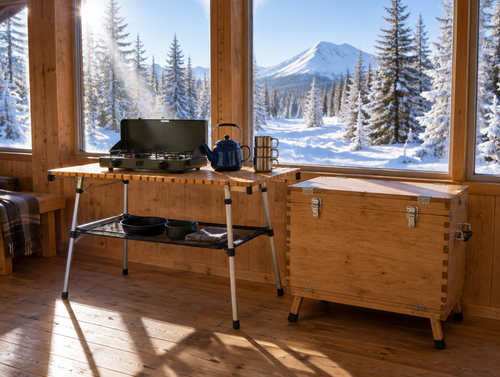
Before you decide what goes where inside the box, decide how you cook. Almost every camp kitchen, from a plywood chuck box to an all-in-one case, works best split into three zones: a prep zone (cutting board, knife, ingredients), a cook zone (stove, fuel, pot grips, cooking utensils), and a clean zone (wash basin, soap, towel, trash). Set them up in that left-to-right order and you move naturally through a meal — prep, cook, clean — instead of crisscrossing the campsite.
Your box should mirror those zones internally. Group everything you need for cooking in one part of the case and everything for cleanup in another, so unloading the box already sorts your gear onto the table in the order you will use it. For a full breakdown of which items belong in each zone, our guide to what is included in a camp kitchen kit is a useful packing reference.
Load from the bottom up: weight first, then frequency
Two rules govern where each item rides inside the box, and they sometimes pull against each other. Settle weight first, then sort by frequency within what is left.
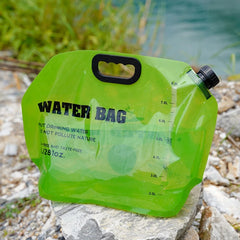
- Heaviest items go lowest. The water tank, cast-iron, and fuel are the densest things you carry, so they belong on the bottom. A low center of gravity keeps the box from tipping when you lift it and keeps it stable on washboard roads.
- Daily-use items go on top or up front. The cooking spoon, lighter, chef's knife, and your go-to pan get the most accessible spots — the top tray or the front pocket your hand reaches without looking.
- Once-per-trip gear goes deep. A backup fuel canister, spare sponges, the camp oven you use one night out of three — these live at the bottom or back where they are out of the way but still onboard.

If you are building a system from loose bins rather than a single integrated case, stick with stackable, latching-lid totes — clear ones let you spot contents at a glance, and a single bin per category ("cooking tools," "cleaning supplies," "dry food") keeps the sorting honest. Whatever containers you choose, strap the stack down for rough roads so your layout survives the drive.


A zone-by-zone layout map
Here is a simple map for where things go once you have settled weight and frequency. Adapt the exact slots to your box, but keep the logic.
| Zone | What lives here | Where it rides in the box |
|---|---|---|
| Prep | Cutting board, chef's knife, can opener, spice kit, measuring cup | Top tray or a dedicated front pocket — the first things you pull out |
| Cook | Stove, fuel, pot grips, spatula, tongs, cooking spoon, lighter | Stove and fuel low (heavy); hand tools in an upper pocket at eye level |
| Clean | Wash basin, biodegradable soap, sponge, quick-dry towel, trash bag | One side or a removable caddy, kept away from food and cooking gear |
| Storage | Cookware, plates, cups, cutlery | Nested together to save space; heavy pots on the bottom |
| Deep storage | Backup fuel, spare sponges, repair tape, seldom-used tools | Bottom or back — onboard but out of the daily path |
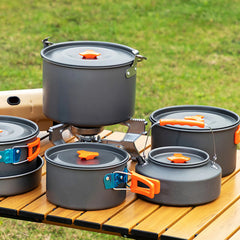
Nesting is the single biggest space-saver here: pots, pans, and cups that stack inside each other turn a messy pile into one tidy block, which is exactly how most camp cookware sets are designed to pack.


Where an all-in-one box does the organizing for you
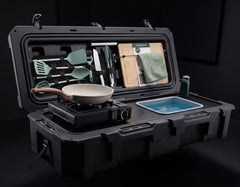
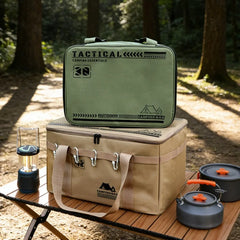
The hardest part of any layout is keeping it — loose gear drifts out of place every trip. An integrated case solves that by giving each item a molded home. The VOZ Camp Kitchen is built around this idea: the butane stove, the collapsible sink with its USB-rechargeable faucet, the 2-gallon water tank, an LED lamp, and the utensils — more than 30 items — all ride in fixed positions inside one weatherproof case. Pop three latches, lift the lid, and the layout is already done for you, the same way every single time.


That fixed-position design is also self-correcting: because every tool has one obvious slot, repacking is just "put it back," and a glance tells you instantly if something did not make it home. You get the three-zone logic baked in instead of rebuilt by hand at every campsite.
Make the system survive the whole trip
A perfect layout on day one means nothing if it falls apart by day two. Three habits keep it intact:
- Label the small stuff. Decant spices, oil, and condiments into small, clearly labeled bottles and keep them together in one pouch or tray. Loose seasoning packets are the first thing to vanish into the bottom of a box.
- Return after use, not "later." Put each tool back in its slot the moment you finish with it. This is the one rule that separates an organized box from a junk drawer by the end of a weekend.
- Keep a restock list. Note what ran low — fuel, paper towels, soap, foil — so the box is trip-ready before the next outing instead of half-empty in surprising ways.

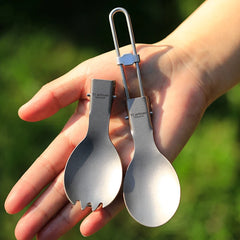
A small dedicated spice and utensil kit makes the labeling habit almost automatic, since everything seasoning-related already lives in one spot. If you want a complete, print-and-check inventory to build your box around, our 47-item camp kitchen checklist covers every category so nothing gets forgotten.


The one thing that should not live in the box: food and scented items
Organization is about access, but food storage is about safety, and the two have different rules. In bear country, the National Park Service advises securing food, garbage, and all scented items immediately on arrival, never storing food in your tent, and washing dishes right away so the cooking area does not draw wildlife into camp. Where bear-resistant canisters are used, the NPS says to place them on flat, level ground 100 feet or more from your campsite.
The practical takeaway for your layout: keep food and scented items in a cooler or a bear-approved container that lives outside the kitchen box, not mixed in with your tools. Your camp kitchen box holds gear; your cooler and canister hold anything with a smell. Keeping those two systems separate makes both your organization and your campsite safer.
FAQ
What is the best way to organize a camp kitchen box?
Sort by zone, then by frequency. Group prep, cook, and clean gear separately, put the items you use every meal where your hand lands first, and bury once-per-trip gear at the bottom. Settle the heaviest items low before anything else for stability.
Where should heavy items go in a camp kitchen box?
On the bottom. The water tank, cast-iron, and fuel are the densest things you carry, so a low center of gravity keeps the box stable when you lift it and on rough roads. Lighter, frequently used tools ride up top where they are easy to reach.
How do I keep my camp kitchen organized during a trip?
Return every tool to its slot the moment you finish with it rather than setting it down "for now," keep spices and condiments in one labeled pouch, and run a quick restock list after each trip. An integrated box with fixed positions makes this nearly automatic.
Should food be stored in the camp kitchen box?
No. Keep food and any scented items in a cooler or bear-approved canister separate from your tools. In bear country the National Park Service recommends securing food immediately, keeping it out of tents, and placing bear canisters at least 100 feet from your campsite.
- What Is a Camp Kitchen Box? The Modern Chuck Box Explained
- Camp Kitchen Kit: Everything That's Included (and Why It Matters)
- The Ultimate Camp Kitchen Checklist (47 Items) — Free Printable PDF
- How to Set Up a Camp Kitchen in Under 15 Seconds (Step-by-Step)
- Camp Kitchen Checklist: 15 Essential Items You Need for Outdoor Cooking
Ready to upgrade your camp kitchen?
The VOZ Camp Kitchen includes everything you need in one weatherproof case. Sets up in 15 seconds.
Shop VOZ Camp Kitchen →