Camp Kitchen for Fishing Trips: Clean, Chill, and Cook Your Catch

A fishing trip is the rare camping scenario where dinner shows up alive, slimy, and on its own schedule. One hour you're cooking nothing; the next you've got four trout that need cleaning, chilling, and a hot pan — fast. A camp kitchen built for a quiet weekend doesn't account for the mess, the smell, or the food-safety clock that starts the moment a fish leaves the water.
Why fishing is a different kitchen problem
Most camp-cooking setups assume you brought your food with you, prepped and packaged. Fishing flips that. Your main course is caught on site, and between the water and the plate it has to be killed, cleaned, kept cold, and cooked — often within a couple of hours, sometimes in bear country. That adds three jobs a normal kitchen never has to do: handle a raw, perishable catch without contaminating everything else; keep that catch out of the bacterial “danger zone”; and deal with guts and rinse water without turning your campsite into a wildlife magnet.
This is exactly why anglers argue about camp-kitchen setups on fishing forums. The gear that makes a shore lunch easy — running water, a surface you can hose down, a way to keep raw fish away from everything else — isn't the same gear that makes a Tuesday hot-dog cookout easy. Build for the catch, and the rest of the trip cooks itself.
Keep the catch cold: the food-safety clock
The moment a fish dies, a clock starts. The USDA defines the bacterial “danger zone” as 40°F to 140°F — the range where bacteria multiply fastest, roughly doubling in as little as 20 minutes. Federal seafood guidance is blunt about the consequence: get your catch on ice within two hours, and within one hour if the air is 90°F or warmer, then hold it at 40°F or below until you cook it. On a hot July lake, that one-hour window is real, not theoretical.
In practice that means ice and a real cooler are the first thing you pack, not an afterthought. Bleed and gut fish soon after catching, then bury them in the ice — surrounded, not just sitting on top — in a cooler kept in the shade. Use a separate cooler for the catch so fish blood and slime never touch your drinks and groceries. A dedicated insulated cooler bag for the fish is one of the cheapest pieces of insurance on the whole trip.


Cleaning your catch without wrecking camp (or your kitchen)
Cleaning fish is the messiest job in outdoor cooking, and it's the one an ordinary camp kitchen handles worst. You need running water, a surface you can rinse clean, and a plan for the guts. Doing that on the same table where you'll later make breakfast is how cross-contamination happens.
Leave No Trace fishing guidance, published through the Bureau of Land Management, says to camp at least 200 feet from lakes and streams, pack out all monofilament line, leftover bait, and bait cups, and check with local land managers for the rules on disposing of fish entrails — those rules vary by water and by state. The same guidance tells you to use caution when cooking fish in bear country, where the smell of a frying pan carries a long way. Do your cleaning well away from where you sleep and where you cook; entrails left on the bank draw bears and other animals and teach them to follow anglers for an easy meal.
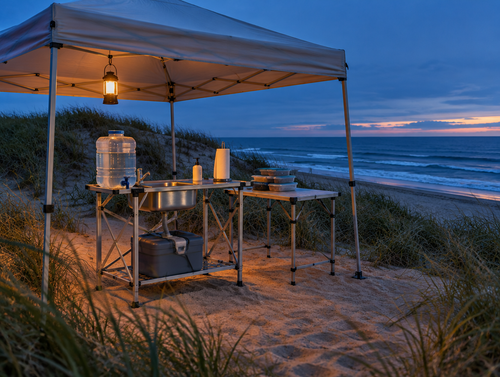
This is the strongest argument for a dedicated cleaning station with its own sink and faucet. A folding fish-cleaning table gives you a rinse-down surface, a drain, and water on demand, so the bloody work stays completely off the surface where you cook and eat. It's the single piece of gear that separates a fishing-ready setup from a borrowed picnic table.


Cooking fish at camp: hit the number
Once the fish is clean and chilled, cooking it safely is simple if you hit one temperature. The FDA and USDA both put cooked fin fish at an internal 145°F, or cooked until the flesh turns opaque and flakes apart easily with a fork. A thin fillet gets there in minutes, which is part of why fresh fish is such a good camp meal — but it also overcooks fast, so a small instant-read thermometer beats guessing.
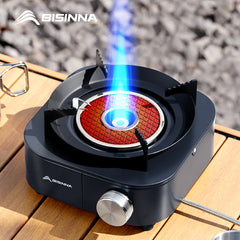
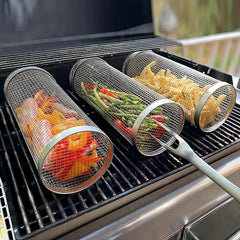
The tool that makes shore lunch painless is a grilling basket: a hinged mesh cage that holds a whole fish or a delicate fillet together so it doesn't fall through the grate or tear apart when you flip it. Behind the basket you want a burner with enough output to get a pan ripping hot — fish wants high, quick heat, not a slow simmer — which is where a strong two-burner stove or a high-output single burner from our camp stoves earns its place.


Why an all-in-one camp kitchen fits fishing trips
Pull the fishing-specific jobs together — keep a catch cold, clean it with water away from your food, cook it to temperature, and contain the smell — and you can see why a self-contained kitchen with onboard water has such a following among anglers. The water is the part loose gear can't fake.
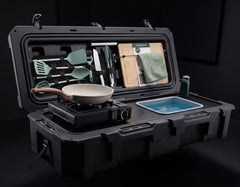
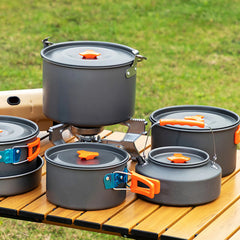
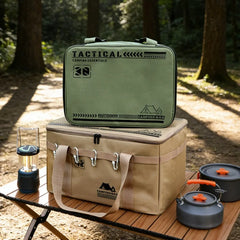
A unit like the VOZ Camp Kitchen folds a stove, a sink with a USB-rechargeable faucet, a 2-gallon water tank, cookware, and 30-plus items into one weatherproof case that opens into a standing kitchen and latches back into a single liftable box. The onboard water and sink mean you can rinse hands, knives, and a cutting surface between handling raw fish and plating dinner, even on a remote bank with no spigot in sight. It won't replace a cooler for cold storage, or a bear canister where one is required — keep those as separate parts of your plan — but it covers the clean-and-cook half of a fishing trip in one piece you can load into a truck bed or a boat.


For how to judge these boxes on water capacity, burner power, and build quality, our guide to the best camp kitchen setup for 2026 walks through what to look for before you buy. And before you load the truck, run your gear against the ultimate camp kitchen checklist of 47 items so the net, the cooler, and the thermometer all make it out the door.
Fishing camp kitchen FAQ
How long do I have before a caught fish goes bad?
Less than you'd think. Get the catch on ice within two hours of death — within one hour if it's 90°F or hotter out — and keep it at 40°F or below until you cook it. Between 40°F and 140°F, bacteria multiply fast, so a cooler packed with plenty of ice is non-negotiable on a fishing trip.
Where should I clean fish at camp?
Well away from where you sleep and cook, and away from your kitchen surfaces. Leave No Trace fishing guidance recommends camping at least 200 feet from water, packing out line and bait, and checking local rules for entrail disposal. Don't leave guts on the bank — they draw bears and other wildlife. A dedicated cleaning station with a sink keeps the mess off the table you eat from.
What temperature should I cook fish to?
An internal 145°F, or until the flesh is opaque and flakes apart easily with a fork. Thin fillets hit that in just a few minutes and overcook quickly, so check with a thermometer rather than eyeballing it.
Do I really need a special table to clean fish?
You don't strictly need one, but it solves the hardest problem of a fishing trip: keeping raw fish, blood, and rinse water completely separate from the surface where you prep and eat. A folding fish-cleaning station with its own faucet and drain handles that in one piece, and it doubles as extra prep space the rest of the trip.
Can a single camp kitchen handle a whole fishing trip?
For the cleaning and cooking half, yes — especially one with an onboard water tank and sink, which lets you rinse and wash anywhere. Just pair it with a good cooler for cold storage of the catch, since a kitchen box isn't a refrigerator and won't keep fish at a safe temperature.
Ready to upgrade your camp kitchen?
The VOZ Camp Kitchen includes everything you need in one weatherproof case. Sets up in 15 seconds.
Shop VOZ Camp Kitchen →