Camp Kitchen for Boondocking and Dispersed Camping: Cooking With No Hookups

Boondocking strips camping down to exactly what you brought with you: no water spigot, no power pedestal, no dish station, and usually no picnic table. If you want to cook real meals at a dispersed site, your kitchen has to arrive fully self-contained — water, fuel, burner, sink, and work surface included.
What "No Hookups" Actually Means for Your Kitchen
Dispersed camping — boondocking, dry camping, wild camping, whatever your corner of the internet calls it — is camping on public land outside developed campgrounds. The Bureau of Land Management allows it across huge swaths of the West, generally free of charge, and national forests do the same. The trade is simple: you get solitude and a $0 nightly rate, and in exchange you get zero services. No potable water. No electricity. No sewer or graywater drain. No trash pickup. Stays are typically capped at 14 days within a 28-day period, though limits vary by field office and forest, so check the local rules before you settle in.
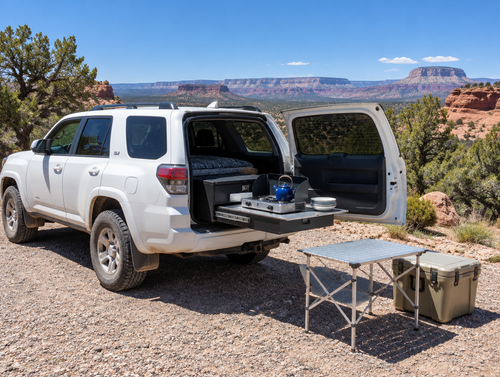
For the camp cook, that changes the packing list completely. At a developed campground you can lean on the spigot, the picnic table, and the dish-washing station. At a dispersed site, every one of those jobs has to be covered by gear in your vehicle. The campers who eat well out there aren't the ones with the fanciest recipes — they're the ones whose kitchen systems don't depend on anything the land isn't offering.

Water Math: Do It Before You Leave Pavement
Water is the resource that ends a boondocking trip. Fuel and food are easy to overpack; water is heavy — about 8.3 pounds per gallon — so most people cut it too close. The federal preparedness baseline at Ready.gov is one gallon per person per day for drinking and sanitation. That's a floor, not a camp-cooking budget. Once you're boiling pasta, rinsing produce, washing a skillet, and scrubbing plates for two or three people, real-world planning lands closer to 1.5 to 2 gallons per person per day.
A concrete example for a couple on a two-night weekend:
- Drinking: 2 people × 2 days × 1 gallon = 4 gallons
- Cooking and dishes: roughly 1 to 1.5 gallons per day = 2 to 3 gallons
- Buffer for spills, coffee, and a hot morning: 1 gallon
- Total: 7 to 8 gallons in the vehicle
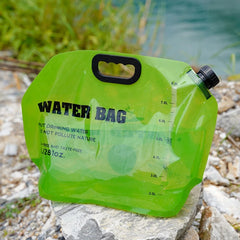
The setup that works best off-grid is split storage: a small onboard tank feeding your kitchen's sink for on-demand washing, plus larger jugs or collapsible containers as the reserve you refill it from. That way the kitchen stays compact and the bulk water stays cheap. We break down how far each tank size actually goes in our guide to camp kitchen water tank sizes.


A Self-Contained Kitchen Box Is Built for Exactly This
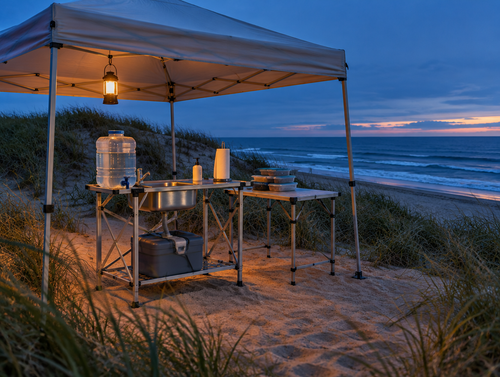
Here's the thing about boondocking gear lists: most camp kitchen advice quietly assumes a campground. A folding table works great next to a spigot. Off-grid, the question flips — how much of the kitchen can one box carry on its own?
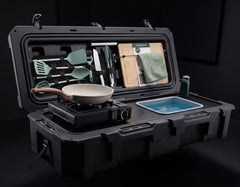
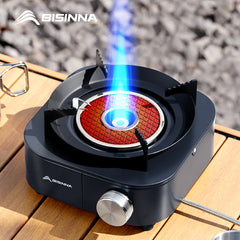
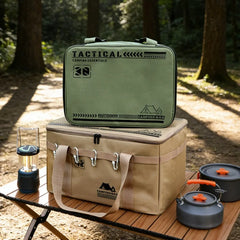
That's the problem the VOZ Camp Kitchen was designed around. It packs a stove, a real sink, a USB-rechargeable faucet that pumps from a built-in 2-gallon water tank, and 30-plus cooking essentials into one weatherproof case that sets up in seconds. Nothing in it needs a hookup: the faucet runs on a USB-charged pump instead of water pressure, the stove runs on canister fuel instead of a power pedestal, and the case itself is the counter, so a missing picnic table doesn't matter. You park, open the box, and the kitchen exists. If you're still comparing approaches — box versus table-and-bins versus vehicle build-out — our guide to the best camp kitchen setup walks through what to look for before you buy.


Cooking Under Fire Restrictions
Peak boondocking season is also peak fire-restriction season across the West. Under Stage 1 restrictions — which national forests routinely impose in summer — campfires and charcoal are banned outside developed sites, but stoves fueled by pressurized gas or propane with a shut-off valve remain legal, provided you clear flammable vegetation at least 3 feet around the burner, per Forest Service fire-restriction rules. Stage 2 tightens things further and specifics vary forest by forest, so check the current alerts for the forest you're headed to.
The planning takeaway: never build a boondocking meal plan around campfire cooking. The fire is a bonus when it's allowed; the gas stove is the kitchen. And since there's no resupply 40 minutes down a washboard road, count your burner-hours and bring more fuel canisters than the math says you need.


Graywater, Dishes, and Leaving No Trace
With no utility sink, dishwater becomes your responsibility, and it's the spot where boondockers most often get sloppy. The routine that keeps a site clean is short: scrape food scraps into your trash (never onto the ground — food waste habituates wildlife), wash with a minimal amount of biodegradable soap, then strain the wash water and broadcast it at least 200 feet from lakes, streams, camps, and trails, following Forest Service and Leave No Trace guidance. The same distance logic applies to your camp itself — set up well back from water sources, and follow any stricter local rule.
A kitchen with a contained sink makes this dramatically easier, because your graywater ends up in one basin you can carry to a proper disposal spot instead of soaking the dirt next to your prep area. We cover the full routine — straining, sump holes, what soap actually counts as safe — in our guide to camp kitchen graywater disposal.
FAQ
How long can you stay at one dispersed campsite?
On most BLM land and national forests, the limit is 14 days within a 28-day period, after which you must move on. Exact stay limits and how far you must relocate vary by field office and forest, so confirm the local rule for your specific area.
How much water should two people bring for a weekend of boondocking?
Plan on 7 to 8 gallons for two people over two nights: one gallon per person per day for drinking (the Ready.gov baseline), plus 1 to 1.5 gallons a day for cooking and dishes, plus a small buffer. Scale up in desert heat.
Can you use a camp stove during a fire ban?
Usually yes under Stage 1 restrictions: pressurized gas and propane stoves with a shut-off valve are typically allowed with a 3-foot clearance of flammable material. Under Stage 2 and beyond, rules differ by forest — always check the current fire restrictions for the exact forest or BLM district before your trip.
Where do you dump dishwater when there are no hookups?
Strain out all food particles (pack those out with your trash), then scatter the strained graywater at least 200 feet from any water source, campsite, or trail. Never pour it into a stream or lake, and never dump unstrained water on the ground.
Do dispersed campsites have picnic tables?
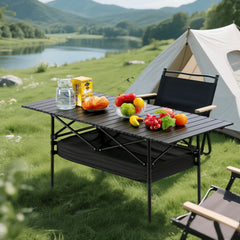
Almost never — dispersed sites are undeveloped by definition. Bring your own work surface, whether that's a folding camp table or a kitchen box whose case doubles as the counter.
Ready to upgrade your camp kitchen?
The VOZ Camp Kitchen includes everything you need in one weatherproof case. Sets up in 15 seconds.
Shop VOZ Camp Kitchen →