
Where to Dump Camp Kitchen Sink Graywater (Leave No Trace, Done Right)

A camp kitchen with a real sink solves the worst part of cooking outdoors — the cleanup. It also hands you a responsibility most campers never plan for: a basin of dirty dishwater and no drain pipe underneath it. Where that graywater goes is one of the most-argued questions at any campground, so here is the straight answer for every situation, done the Leave No Trace way.
What Counts as Graywater — and Why It's Your Problem
Graywater is any used wash water: dishwater, hand-washing runoff, the water you rinsed a cutting board with. It looks harmless coming out of the basin, but it carries three things the landscape around your campsite does not want: food particles, grease, and soap.
- Food scraps attract wildlife. Leave No Trace warns that bits of food in dishwater teach animals that campers mean an easy meal. A raccoon raiding your site tonight is annoying; a food-conditioned bear is dangerous — for you, for the next camper, and ultimately for the bear.
- Soap harms water sources. "Biodegradable" soap biodegrades in soil, where microbes can digest it — not in cold water. Poured into a lake or stream, even camp-branded soap lingers and stresses fish and other aquatic life.
- Puddles wreck campsites. A greasy gray dump spot next to the picnic table smells, draws flies, and is the first thing the next family notices when they pull in.

None of that means washing dishes at camp is a problem. It means the last two minutes of the job — disposal — matter as much as the first ten.
First Question: Developed Campground or Dispersed Site?
Everything about graywater disposal flows from one question: does the place you're camping have facilities? Your answer picks your playbook.
| Where you're camping | Where graywater goes |
|---|---|
| Developed campground (national park, state park, private) | Utility sink, designated gray-water drain, or RV dump station — whatever the posted rules name |
| Dispersed site (national forest, BLM land) | Strained, carried 200 feet from water and camp, and broadcast over soil |
| Backcountry | Same strain-carry-broadcast method, just at kettle scale |
When in doubt, ask the camp host or read the board at the entrance. Rules genuinely vary from one campground to the next — some provide dedicated drains, others route everything to the dump station, and some forests prohibit dumping wash water entirely.
At a Developed Campground: The Drain, Not the Ground
National Park Service campgrounds are the clearest example of how developed sites want this handled. Big Meadows Campground in Shenandoah tells campers to strain out food particles and pour dishwater only into the restroom utility sinks — and explicitly not on the ground (the rules are printed on the campground map). Watchman Campground in Zion routes graywater to the dump station or designated drains near the restrooms. Glacier National Park requires all wastewater — dishwater and shower water alike — to be contained and emptied into utility sinks or the RV dump station.
The campground routine is short:
- Scrape plates and pans into the trash before any water touches them.
- Wash in your camp kitchen's basin, not at the shared water spigot — spigots are for filling containers, and a gray puddle under one is exactly what the rules exist to prevent.
- Strain the finished dishwater (food bits go in the trash) and carry the basin to the utility sink or drain.
That's it. At a developed campground you never have to decide where graywater goes — the campground already decided. Your only job is getting it there strained.
On Dispersed Land: Strain, Carry, Broadcast
On national forest or BLM land there's no utility sink, so you follow the method the National Park Service's Leave No Trace guidance spells out: carry water 200 feet away from streams or lakes, use small amounts of biodegradable soap, and scatter the strained dishwater.
- Scrape first. Every bit of food that goes into the trash bag is a bit you don't have to strain out later. Wipe greasy pans with a paper towel before washing.
- Wash with less soap than you think. Hot water and a scraper do most of the work. A few drops of biodegradable soap finish it.
- Strain the graywater. Pour it through a fine-mesh strainer or a bandana stretched over the basin. The captured scraps go into your trash, packed out with you.
- Carry it 200 feet. That's from any stream or lake, and away from your camp and trails. It's farther than it sounds — pace it off the first time.
- Broadcast, don't pour. Fling the water in a wide arc so it spreads thin over the soil instead of pooling in one spot.

The broadcasting step is what makes the whole method work. Spread thin across soil, graywater dries fast, food smells dissipate before animals key in on one spot, and soil microbes break the soap down. Dumped in one puddle, the same water is a wildlife attractant and a soap concentrate. The distance rule is what protects the stream: soap that never reaches the water can't harm what lives in it.
Make Graywater Part of the Kitchen, Not an Afterthought
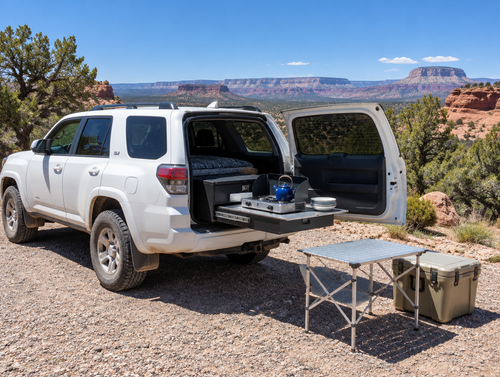
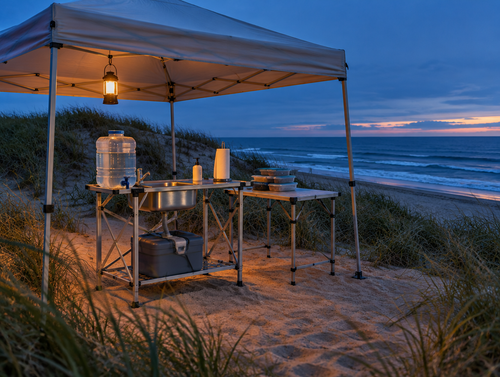
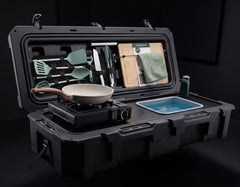
The reason graywater catches campers off guard is that most setups treat washing up as an improvisation. A camp kitchen with a built-in water system flips that. The VOZ Camp Kitchen packs a sink, a water tank, and a USB-rechargeable faucet into the same box as the stove and cookware, so all your wash water ends up in one basin instead of dribbling around the site — which means disposal is one carry, not a scavenger hunt. And because the whole kitchen sets up in about 15 seconds, there's no excuse to skip the wash station even on a one-night stop.


Two habits complete the system:
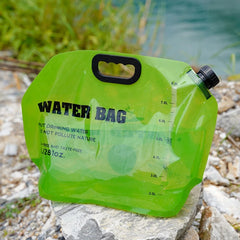
- Give graywater its own container. A dedicated bucket with a handle — something like this 1.5 / 2.6 gallon camp bucket — sits under or beside the sink and collects everything. When it's time to walk to the utility sink or pace off 200 feet, you're carrying one sealed-enough container, not a sloshing wash basin.
- Run a wash order. Cleanest items first (cups, utensils), greasiest last (pans). The water stays usable longer, you use less of your tank, and there's simply less graywater to deal with at the end. If you're weighing whether a sink setup is worth it at all, our breakdown of why running water changes camp cooking covers the trade-offs.


One last step happens at home: a sink and tank that handled dishwater all weekend need a rinse and a dry-out before storage, or you'll open the box next trip to a science experiment. Our guide to cleaning the camp kitchen sink and water system walks through it.
FAQ
Can I just pour dishwater on the ground at my campsite?
No. At developed campgrounds it's almost always against posted rules — NPS campgrounds like Big Meadows say so explicitly. On dispersed land, dumping it in one spot at camp concentrates food smell and soap exactly where you sleep. Strain it and either use the campground's drain or broadcast it 200 feet out.
Is biodegradable soap safe to use in a lake or stream?
No. Biodegradable means soil microbes can break it down — a process that doesn't happen in cold open water. Soap of any kind stresses aquatic life, which is why the guidance is to do all washing at least 200 feet from the water and let the soil do the filtering.
What should I do differently in bear country?
Treat graywater like food, because to a bear's nose it is. Strain thoroughly, pack the scraps with your food trash in whatever storage the area requires, and never dispose of dishwater near your sleeping area. Parks in grizzly country, like Glacier, require every drop of wastewater to be contained and taken to a utility sink or dump station — a good default anywhere bears live.
What's the easiest way to strain dishwater?
A small fine-mesh kitchen strainer lives in the wash kit and takes two seconds. No strainer? A bandana or paper towel stretched over the graywater bucket catches the same particles. Either way, the solids go into your trash bag, not on the ground.
Can I dump graywater in a toilet?
Only where the campground says so. Some campgrounds direct strained dishwater to flush toilets or specific drains; vault toilets are usually off-limits because they're pumped, not plumbed. If a sign doesn't tell you, ask the host — the utility sink is the safe default.
- How to Set Up a Camp Kitchen in Under 15 Seconds (Step-by-Step)
- How to Clean a Camp Kitchen Sink and Water System (and Prevent Mold)
- Camp Kitchen With Sink: Why Running Water Changes Everything Outdoors
- Camp Kitchen for a Hunting Camp: A Bear-Country Setup That Cooks Anywhere
- How to Clean Your Camp Kitchen After a Trip (So It Lasts for Years)
Ready to upgrade your camp kitchen?
The VOZ Camp Kitchen includes everything you need in one weatherproof case. Sets up in 15 seconds.
Shop VOZ Camp Kitchen →