How to Clean a Camp Kitchen Sink and Water System (and Prevent Mold)

The sink is the part of a camp kitchen that earns its keep and gets neglected the fastest. A built-in basin, a faucet, and a few gallons of stored water make outdoor cooking feel almost civilized — right up until you pop the lid after a few weeks in the garage and catch a sour, swampy smell. That smell is the warning sign. Here is exactly how to clean the sink, tank, and pump so your water system stays fresh, and how to keep mold from ever getting a foothold.
Why Camp Kitchen Water Systems Grow Mold in the First Place
Mold, mildew, and bacteria only need three things: moisture, a little organic food, and a dark, enclosed space. A camp kitchen water system hands them all three. After a trip there is almost always a film of water left in the tank, trapped in the faucet line, and pooled in the basin. Add a few crumbs of food, a smear of grease, or soap residue, and you have a buffer. Then you close the lid and tuck the case in a garage — warm, dark, and undisturbed for weeks.
The same logic explains why larger freshwater systems get sanitized on a schedule. RV and trailer freshwater tanks are a known mold and algae risk for exactly this reason, which is why owners are advised to sanitize them at least twice a year. Your camp kitchen tank is smaller, but the rule is the same: standing water plus time equals trouble. The good news is that a 2-gallon tank is far easier to clean than a 40-gallon one — you can do the whole job at a utility sink in about 20 minutes.

The After-Every-Trip Routine (10 Minutes)
The single most effective thing you can do is never let water sit in the system. Most mold problems are prevented at the campsite or in the driveway, not with a deep clean later. Before the kit goes back into storage, run this short routine:
- Drain everything. Empty the water tank completely, then run the faucet until the pump sputters air so the line and pump head clear out too.
- Wipe the basin. Hot water, a drop of dish soap, and a cloth. Get the corners and the drain, where food particles collect.
- Flush the faucet with clean water. Fill the tank with a quart of fresh water and run it through the faucet to rinse soap and food residue out of the line.
- Leave it open to dry. Prop the tank, basin, and lid open so every surface air-dries. A bone-dry system cannot grow mold.
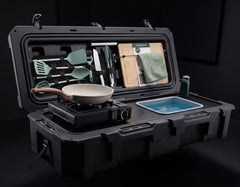
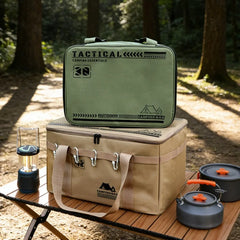
This is the same discipline that keeps the rest of the box healthy — the sink just needs a little extra attention because of the trapped water. If you want the full end-of-trip walkthrough for the whole kit, our running-water guide covers how the sink and faucet system is meant to be used and drained. The all-in-one design of the VOZ Camp Kitchen makes this easy because the sink, faucet, USB-rechargeable pump, and water tank are one integrated unit you can drain and dry together.


How to Deep-Clean the Tank, Faucet, and Pump
Once or twice a season — or any time you smell something off — do a full sanitizing clean. There are two tools that matter here: chlorine bleach for killing mold and bacteria, and white vinegar for mineral scale and odor. Use the right one for the job, and never mix them (bleach and vinegar together release toxic chlorine gas).
Sanitize the tank with bleach
For an empty water container, the CDC recommends mixing 1 teaspoon of unscented liquid household chlorine bleach into 1 quart (4 cups) of water, using bleach that contains 5%–9% sodium hypochlorite. Pour the solution into the tank, cap it, and shake or slosh it so it touches every interior surface, then let it sit at least 30 seconds before pouring it out. For a small camp tank you can scale up to fill it part-way. Here is a quick reference:
| Task | Mix | Dwell time |
|---|---|---|
| Sanitize empty tank (CDC ratio) | 1 tsp unscented bleach per 1 quart water | 30+ seconds, then dump |
| Heavier mold/odor soak | Same ratio, fill higher | Up to a few hours |
| Descale / freshen (vinegar) | Equal parts white vinegar and water | 10 minutes |
After the bleach solution comes out, refill the tank with fresh water and run the faucet until you no longer smell any chlorine, repeating with fresh water as needed. That rinse step matters — it is the same flush-until-no-smell process used on larger freshwater systems.
Clean the faucet line and pump
The faucet line and pump are where smells hide, because water sits in them between trips. To clean the lines, fill the tank with a 50/50 white-vinegar-and-water mix, run it through the faucet until it flows out, then let it sit about 10 minutes before flushing twice with fresh water. Vinegar is the better choice for taste, odor, and mineral buildup; if you actually see mold, switch to the bleach solution above, because vinegar does not reliably kill spores.
One caution for camp kitchens with a USB-rechargeable electric faucet pump: don't submerge the motor or battery housing in cleaning solution. Run the solution through the pump by pumping it, and wipe the exterior with a vinegar-dampened cloth rather than soaking it. If your kit uses a separate water container or a clip-on pump, the same approach applies — clean the vessel, flush the pump, air-dry both.


How to Keep Mold From Coming Back
A deep clean fixes a problem; good storage habits keep it from returning. The whole battle is about denying moisture and food a place to sit:
Compact, integrated kits make this easier because there are fewer separate parts to lose track of — one reason the size and design of a portable camp kitchen affects how easy it is to actually maintain.
FAQ
Can I drink water that's been stored in my camp kitchen tank?
Treat the camp kitchen tank as a wash-and-rinse water source unless you've sanitized it and use safe water. If you need to disinfect questionable water for drinking, the EPA's emergency guidance is 8 drops of 6% unscented bleach (or 6 drops of 8.25%) per gallon, doubled if the water is cloudy or very cold — then let it stand 30 minutes before use.
How often should I deep-clean the water system?
At least twice a year for a system that sees regular use, plus any time the water smells or tastes off. The after-every-trip drain-and-dry routine is what keeps those deep cleans easy.
Is vinegar or bleach better for my camp sink?
Use vinegar for mineral scale, taste, and routine freshening; use chlorine bleach when you need to actually kill mold or bacteria. Never combine the two — the mix produces toxic gas.
What if mold is already growing in the tank?
Scrub what you can reach with a bottle brush, then sanitize with the bleach solution and let it dwell longer (up to a few hours). Rinse until there is no chlorine smell, then air-dry completely before storing.
- Camp Kitchen With Sink: Why Running Water Changes Everything Outdoors
- Camp Kitchen Kit: Everything That's Included (and Why It Matters)
- Portable Camp Kitchen: Why Size and Weight Matter More Than You Think
- How to Clean Your Camp Kitchen After a Trip (So It Lasts for Years)
- How to Store a Camp Kitchen Between Trips (So It's Ready Next Time)
Ready to upgrade your camp kitchen?
The VOZ Camp Kitchen includes everything you need in one weatherproof case. Sets up in 15 seconds.
Shop VOZ Camp Kitchen →