Camp Kitchen for Groups and Large Families: Sizing a Setup That Feeds Everyone

Cooking for two at camp is a hobby. Cooking for eight is logistics. The moment your group crosses about five people, the friendly little setup that fed you and a buddy starts to choke — one burner backs up, the water jug runs dry mid-cleanup, and there is nowhere to set a cutting board. A camp kitchen built for groups and large families is really a question of throughput: burners, water, prep space, and storage all sized so dinner lands before the kids melt down.
Why cooking for a crowd is a different job
Feeding a big group is not the same recipe made larger. It is a different workflow. With two people you cook one thing at a time and nobody notices. With six or eight, meals stack up: coffee and eggs and pancakes all want the stove at once, and a single pot of chili that feeds four leaves half the table waiting. The bottlenecks are predictable, which is the good news — you can plan around every one of them.
It helps to know the headcount your campsite even allows. Many National Park Service campgrounds cap a standard site at six people, and steer larger parties to designated group sites that hold anywhere from about 10 to 40 campers. If your family or friend group is pushing past six, you are likely booking a group site already, and your kitchen needs to match that scale.
How many people can one camp kitchen actually feed?
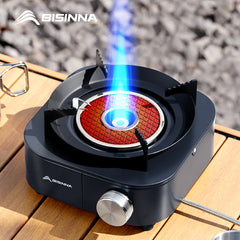
The honest answer comes down to burners. A two-burner camp stove comfortably handles three to five people — it is the Swiss Army knife of car-camping cooking, enough to run a pot and a pan at the same time. Push past five and you either want a second stove or more firepower per burner. For large groups and involved meals, plan on roughly 20,000 BTU per burner so you can actually bring a big pot to a boil; smaller groups can get by on 10,000 BTU or less, accepting longer boil times.
Practically, that means a group of six to eight is a two-burner-plus setup: one high-output two-burner stove for the main meal, plus a single backup burner for coffee, a side, or boiling cleanup water. Browse our camp stoves if you are building out capacity — a dedicated high-BTU burner alongside your main stove is the cheapest way to double your throughput.


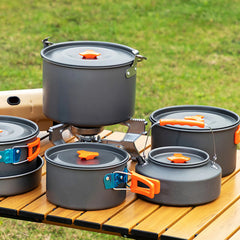
Cookware scales with the crowd too. Two-person nesting sets will not feed a group; you want a large pot for pasta, chili, or boil-in-bag meals and a wide pan for breakfast in shifts. A bigger cookware set with a stockpot earns its space the first morning you cook a dozen eggs.

Water is the first thing a big group runs out of
Water is the single most underestimated resource for group camping. The working rule for car camping is about two gallons per person per day — roughly one gallon for drinking and one for cooking, dishes, and hygiene. Cooking alone runs close to a quart per person daily. Do the math for a group and the numbers get real fast.
| Group size | Per day (~2 gal/person) | Weekend (2 days) |
|---|---|---|
| 4 people | ~8 gallons | ~16 gallons |
| 6 people | ~12 gallons | ~24 gallons |
| 8 people | ~16 gallons | ~32 gallons |
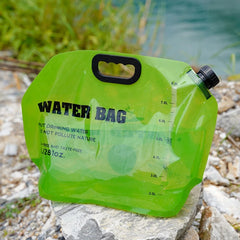
A camp kitchen with a built-in sink and an integrated water tank changes the math, because it turns "haul a jug to the spigot every hour" into "refill once or twice a day." For a large family you will still want backup capacity on hand — a multi-gallon jug with a tap or a foldable water container so nobody is rationing rinse water by Sunday. See our camp water gear for tanks and dispensers that keep a group supplied.


Prep space and a two-cook workflow
The quiet killer of group camp meals is counter space. One cutting board cannot serve a kitchen where someone is chopping onions while someone else plates pancakes and a third person is washing up. Big groups cook best with two stations: a hot station (stove and pots) and a cold station (prep, plating, and dishes), ideally a few feet apart so two cooks are not elbowing each other.
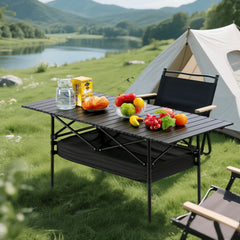
That is where a folding camp table or two pays off. Set the stove on one surface and keep a full table clear for cutting, mixing, and laying out plates. A roll-up table that seats four to six doubles as both prep counter and dining surface. Our camp tables range from quick-deploy side tables to family-sized roll-ups for exactly this reason.

Workflow tip that scales: assign roles. One person owns the stove, one preps, one runs cleanup. With a group you have the labor — use it. A camp kitchen that keeps tools organized and visible (so the second cook is not digging through a bin for the spatula) is what makes a two-cook system actually work.
Food and cooler planning for bigger groups
Plan on roughly 1.5 to 2.5 pounds of food per person per day as a baseline, and lean toward the high end — 2.5 to 4 pounds — for car camping with fresh ingredients, since they carry more water weight and bulk. Round your total up about 10 percent as a fudge factor; appetites run bigger outdoors, and leftovers beat shortfalls. For six people over a weekend that is easily 30 to 45 pounds of food, which means cooler capacity becomes its own planning problem.
The fixes are the same ones that work at home, scaled up: prep what you can before you leave (batter, marinades, chopped vegetables), favor one-pot meals that feed a crowd from a single burner, and stage your cooler so the first night's food is on top. A large insulated cooler or storage bag keeps a group's perishables cold without three separate coolers underfoot. For a full pack list that scales to a family, our 47-item camp kitchen checklist is a free printable starting point.
Building a group-ready setup around the VOZ Camp Kitchen
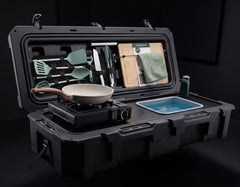
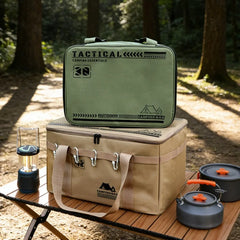
An all-in-one box solves the two hardest group problems at once: water and organization. The VOZ Camp Kitchen combines a built-in stove, a real sink with a USB-rechargeable faucet, a water tank, and a weatherproof case packed with 30-plus cooking items — so the running-water and where-is-everything headaches are handled before you add a single accessory. For a large family, you build outward from there: add a second high-output burner for parallel cooking, extra water capacity, and a dedicated prep table.


The point is not to buy the biggest possible kit — it is to size each piece to your real headcount. If you are still deciding what matters most before you spend, our guide to the best camp kitchen setup for 2026 walks through the features that actually earn their place, which is doubly true when you are cooking for a crowd.
FAQ
Is a two-burner stove enough for a large family?
For three to five people, yes — a two-burner stove runs a pot and a pan at once and covers most meals. For six or more, add a second burner or a higher-output stove (around 20,000 BTU per burner) so you can cook in parallel instead of in shifts.
How much water should I bring for a group?
Budget about two gallons per person per day for car camping — roughly one gallon for drinking and one for cooking and cleanup. A group of six needs about 12 gallons a day. A camp kitchen with an integrated tank and sink cuts down on jug runs, but carry backup capacity for a big group.
How do I keep a group meal from taking forever?
Run two stations — a hot station for cooking and a cold station for prep and dishes — and assign roles. Prep ingredients at home, lean on one-pot meals, and make sure your gear is organized so the second cook is not hunting for tools.
How much food do I need per person?
Plan 1.5 to 2.5 pounds per person per day, and up to 4 pounds for fresh car-camping food. Round your total up about 10 percent — appetites run bigger outdoors, and it is better to have extra than to come up short.
Ready to upgrade your camp kitchen?
The VOZ Camp Kitchen includes everything you need in one weatherproof case. Sets up in 15 seconds.
Shop VOZ Camp Kitchen →