
Beach Camping Camp Kitchen: A Cooking Setup That Beats Sand and Wind

Cooking dinner with your toes in the sand is one of the best parts of beach camping — right up until a gust flattens your burner flame and the first gritty bite of pasta reminds you that the beach fights back. Here's how to set up a camp kitchen that handles sand, wind, and salt air without turning every meal into a chore.
Why the Beach Is the Toughest Place You'll Cook All Year
A forest campsite quietly does you a lot of favors. Trees break the wind, the ground under your table is firm, and the air isn't actively corroding your gear. A beach takes all three favors away at once: there's nothing between your stove and the open ocean, your "floor" is loose grit that migrates into food and hinges, and the breeze carries salt that starts working on bare metal from the moment you park.
None of this ruins a trip — beach camping is worth every bit of it — but it does punish the classic loose setup of a folding table, open bins, and gear spread across a tarp. Everything below comes down to one theme: on sand, a kitchen that closes beats a kitchen that sprawls.
Wind: Plan Around the Sea Breeze
Beach wind isn't random. As the land heats up during the day, warm air over the beach rises and cooler air over the water flows in to replace it — that's the sea breeze, and it reliably builds through the afternoon before easing after sunset. Practically, that means mornings are usually your calmest cooking window, and the dinner hour often lands right in the windiest part of the day. If you're planning one ambitious meal, make it breakfast or lunch; keep dinner simple and lidded.

For the cooking itself, a few setup habits handle most of the wind:
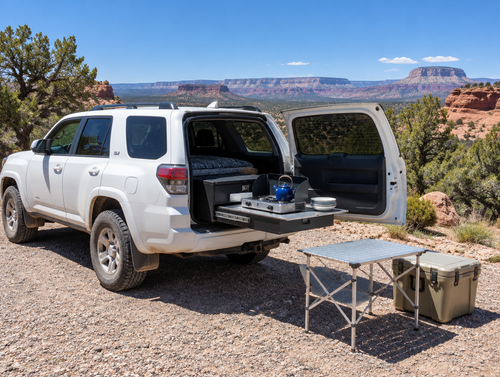
- Use your vehicle as the windbreak. Park broadside to the onshore breeze and set the kitchen on the leeward side. A tailgate or SUV hatch is the best wind shadow on the beach.
- Put the burner low and the flame lower. Wind steals heat fast; a lid on every pot shortens cook times and keeps blowing sand out of the food at the same time.
- Don't tuck your stove against the dunes. Dune vegetation is protected at most managed beaches, and dry beach grass plus an open flame is a bad combination.
- Stake or weight anything light. Paper towels, foil, and empty pots leave without saying goodbye.
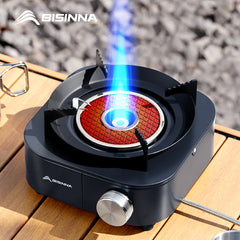
A stove with a built-in windshield earns its keep here — wraparound side panels keep the burners lit in gusts that would blow out an open burner. If you use an aftermarket folding windscreen with a canister stove, leave 1–2 inches of clearance between the screen and the stove: wrapped too tight, a windscreen traps heat against the canister, and an overheated canister is a genuine safety risk.


Wind on the beach usually comes with spray and the occasional squall, and the fixes overlap — our guide to cooking with a camp kitchen in rain and wind covers windscreen placement, tarp rigging, and stove behavior in gusts in more detail.
Sand: Keep the Grit Out of Food, Hinges, and Latches
Sand doesn't jump into your dinner on its own. It rides in on hands, feet, towels, and wind — which means you can block almost all of it with a little elevation and a few habits:
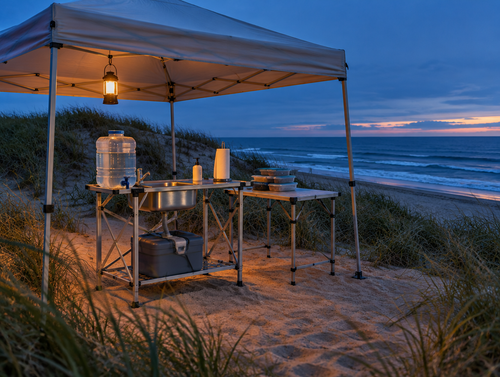
- Get every food surface off the ground. Prep at counter height on a table or tailgate. Ground-level prep on a blanket is how sand ends up in the butter.
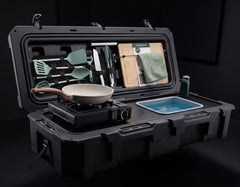
- Work out of a closed box, not open bins. A latched camp kitchen box stays sand-free inside no matter what the wind does. Open bins collect a dusting of grit every hour they sit out.
- Prep on the lid, then close it. A box lid at counter height doubles as a cutting station, and shutting it between tasks protects everything inside.
- Adopt the rinse-first rule. Nobody touches food or utensils with sandy hands. One rinse station stops more grit than any amount of careful plating.
- Lay down a "clean zone" mat. A ground mat under the kitchen gives you somewhere to stand and set things down that isn't bare sand, and shakes clean in seconds.
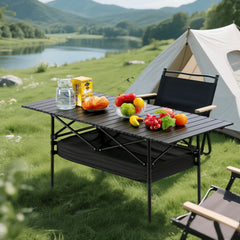
Table choice matters more on sand than anywhere else. Narrow pin-style legs sink and wobble as you chop; tables with wide feet or crossbar bases sit stable on soft ground. Push each leg down firmly to compact the sand before you load the table up.


Sand is also the enemy of moving parts. Brush hinges, latches, and zippers with a dry brush (an old paintbrush works) before you open them — forcing a latch with grit in it grinds the mechanism every time. If you're still choosing a setup and want to know which boxes actually seal against this stuff, our guide to the best camp kitchen in 2026 breaks down lids, latches, and drawer designs feature by feature.
Fresh Water: The Built-In Faucet Earns Its Keep
At most beach campsites the nearest spigot is back at the parking lot or ranger station — if it exists at all. That's exactly the situation an all-in-one kitchen with onboard water was built for. The VOZ Camp Kitchen carries its own water tank, sink, and USB-rechargeable faucet, which means running water anywhere on the sand: rinse hands before they touch food, rinse produce, rinse the salt spray off a knife blade mid-prep, and wash up after dinner without hauling pots to a bathhouse.


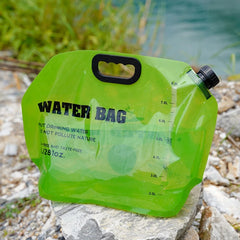
Budget more water than you would inland. Beach camping adds a steady stream of small rinses — hands, feet, gear, dishes — on top of cooking and drinking, and salty air makes everyone thirstier. Fill the tank before you leave pavement, bring a backup jug, and top up whenever you pass a spigot.
Salt Air: The Corrosion Clock Starts in the Parking Lot
You don't have to dunk your gear in the ocean for salt to reach it. Coastal air carries a fine salt mist that settles on every exposed surface, and once it's there, it doesn't leave on its own — in dry weather, deposited salt can sit on metal indefinitely unless something rinses it off. Standard 304 stainless steel exposed to salt spray can start showing tea-colored staining and small rust spots within weeks to months if the salt is never removed; marine-grade 316 resists much longer, but most camp cookware and hardware isn't 316.
The fix costs you ten minutes at home:
- Rinse everything metal with fresh water — stove grates, cookware, sink basin, frame, latches. Plain tap water is all it takes; salt-free water poses essentially no risk to stainless steel.
- Dry completely before you latch the box shut. Trapped damp salt air inside a closed case is worse than the beach itself.
- Leave the box open overnight in the garage to air out, then hit hinges and latches with a dry or silicone lubricant.
That routine, plus the storage basics in our guide on how to keep a camp kitchen from rusting, will get a stainless setup through years of coastal trips without a spot of corrosion.
FAQ
Can I cook on the beach with a stove or open fire?
Rules vary by beach, so check the managing agency before your trip. As one example, at Cape Hatteras National Seashore open beach fires are allowed from 6 a.m. to midnight, must be no more than 3 feet in diameter, and must be built below the mean high tide line at least 100 feet seaward of any vegetated dune. Contained camp stoves are commonly allowed even where open fires are restricted, but verify locally — fire bans do happen in dry stretches.
What's the single best way to keep sand out of food?
Elevation plus closure. Prep at counter height instead of on the ground, keep everything in a latched box or sealed containers between uses, and make everyone rinse their hands before touching food. Those three habits eliminate almost all of the grit.
Will one beach weekend rust my camp kitchen?
Not if you rinse and dry it afterward. The damage comes from salt residue left sitting on metal for weeks after the trip — that's when staining and pitting start. A fresh-water rinse and a full dry before storage resets the clock to zero.
Where do I dump dishwater at the beach?
Strain out food scraps and pack them out with your trash, then dispose of graywater according to the site's rules — some beaches have utility sinks, others want it broadcast away from camp and the waterline. The full method is in our guide to dumping camp kitchen graywater the Leave No Trace way.
- Best Camp Kitchen in 2026: What to Look for Before You Buy
- Cooking With a Camp Kitchen in Rain and Wind: How to Weatherproof Your Setup
- How to Keep a Camp Kitchen From Rusting: Weatherproofing That Actually Works
- Are Camp Kitchen Boxes Waterproof? What Actually Happens When It Rains
- Camp Kitchen for Fishing Trips: Clean, Chill, and Cook Your Catch
Ready to upgrade your camp kitchen?
The VOZ Camp Kitchen includes everything you need in one weatherproof case. Sets up in 15 seconds.
Shop VOZ Camp Kitchen →