Are Camp Kitchen Boxes Waterproof? What Actually Happens When It Rains

Short answer: most camp kitchen boxes are not waterproof — and the good ones don't need to be. What keeps your gear dry through a rainy weekend is weatherproofing, which is a different (and more honest) claim. Here's what the labels actually mean, what happens to wood, fabric, and molded plastic boxes when the sky opens up, and how to recover if a storm catches your setup outside.
Waterproof vs. Weatherproof: What the Labels Really Mean
In gear marketing, "waterproof" gets used loosely. In engineering, water protection is measured by IP (Ingress Protection) ratings: a two-digit code where the first digit covers solids like dust and the second covers water. IPX4 means a product resists splashing water from any direction. IP65 means it's fully dust-tight and can shrug off low-pressure water jets — think garden hose, not submersion. True submersion protection starts at IPX7.
Here's the part most buyers miss: almost no camp kitchen box on the market carries an IP rating at all. IP testing is built for electrical enclosures, and a box with latches, hinges, and a big opening lid isn't a sealed enclosure. So the practical question isn't "is it waterproof?" — it's "does rain falling on the closed box reach the gear inside?" For a well-molded plastic case, the answer is no. For plenty of other builds, the answer is yes, and faster than you'd think.
For context on what your box is actually up against: the National Weather Service classifies rain as "heavy" when it falls at a rate above 0.30 inches per hour. A typical summer thunderstorm can hit that rate in minutes, which is why a box that handles drizzle fine can still soak through during one loud afternoon cell.

What Actually Happens to Each Type of Box in the Rain
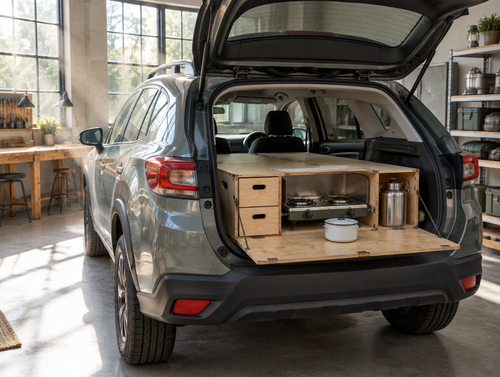
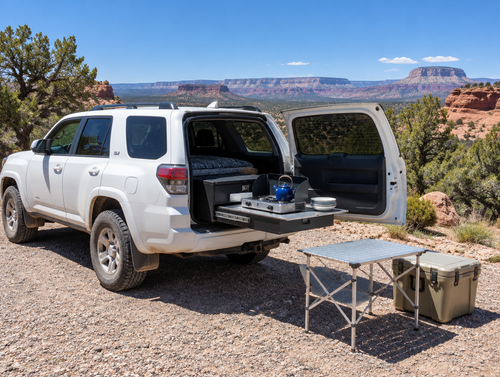
Camp kitchen boxes span everything from DIY plywood chuck boxes to rotomolded cases, and they behave very differently when wet:
| Box type | Passing shower | Sustained rain (hours) |
|---|---|---|
| Untreated plywood chuck box | Surface absorbs water immediately | Swelling and warping can start after a day or two of wet exposure; exposed edges wick the most moisture |
| Sealed or painted plywood | Sheds water while the finish is intact | Seams, screw holes, and edges wick moisture as the finish ages; needs recoating to stay tight |
| Soft-sided fabric organizer | Coating sheds light drizzle | Soaks through at zippers and seams; stays damp for days and can mildew if packed wet |
| Plastic storage tote | Shell is fine; lid seam is not sealed | Water pools on the lid and drips through the rim into your gear |
| Molded LLDPE / rotomolded case | Rain runs off the one-piece shell | Contents stay dry with the lid latched; no seams for water to wick through |
| Aluminum box | Shell is impervious | Rivet lines and the lid channel are the entry points; steel hardware can corrode if left wet |
The pattern is simple: boxes made of absorbent material (wood, fabric) lose to rain over time no matter how careful you are, while boxes assembled from many parts (totes with loose lids, riveted panels) lose at the joints. A one-piece molded shell sidesteps both problems, which is why rotomolded coolers and kayaks use the same construction.
The Four Places Water Actually Gets In
When a box does leak, it's almost never through the walls. Check these four spots on whatever you own or plan to buy:
- The lid seam. A flat lid resting on a flat rim lets wind-driven rain travel sideways into the box. Look for an overlapping lid lip that sheds water past the seam, like a roof shingle.
- The latch cutouts. Latches need holes or recesses in the shell. Molded-in recesses shed water; bolted-on latches with through-holes can drip.
- The hinge line. The back of the box takes the least attention and often the most water. Continuous or bar-style hinges leave fewer gaps than small individual hinges.
- Plywood edges and screw holes. On wooden boxes, end grain absorbs moisture far faster than face grain — edges and fastener holes are where swelling starts.
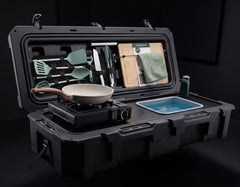
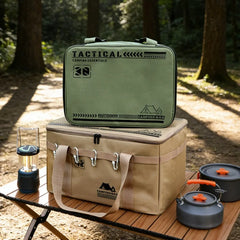
This is exactly why the VOZ Camp Kitchen uses a one-piece food-grade LLDPE shell with stainless bar hinges and three latches: with the lid closed, the case is weatherproof, dustproof, and UV-resistant, so the stove, cookware, and utensils inside stay dry through the storm. To be clear about what that claim means — it's built to sit out in the rain, not to be submerged. No camp kitchen is a dry bag, and any brand implying otherwise is overselling.


What About the Gear Inside?
A dry case only matters because of what it protects. Steel and aluminum cookware doesn't mind a little humidity, but two categories of camp kitchen contents genuinely need to stay dry:
- Electronics. A USB-rechargeable faucet pump has a battery and charging port. Inside a closed weatherproof case it's fine in any weather; left loose on a table in the rain, it's a gamble.
- Anything that rusts. Knife blades, stove burner hardware, and carbon-steel tools will spot quickly if they get rained on and then sit packed away wet.
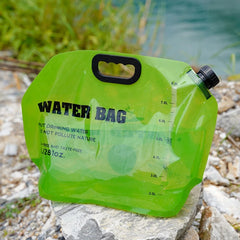
If you're not sure what all rides inside a full kit — stove, cookware, faucet, tank, utensils, and the rest — the complete rundown is in Camp Kitchen Kit: Everything That's Included (and Why It Matters). For soft goods and overflow gear that live outside the main case, a purpose-made waterproof storage bag keeps towels, dry goods, and spare kit protected on an open truck bed or roof rack.


Caught in an Overnight Storm? The 10-Minute Recovery Routine
Say you forgot the box on the picnic table and it rained all night. Here's the triage, in order:
- Tip it and drain. Open the lid away from you and pour off any water pooled on top before it runs inside.
- Unload everything. Even in a sealed case, check — humidity from a damp item packed earlier can condense overnight.
- Towel the interior. Wipe the floor of the case, the lid underside, and every corner where water collects.
- Air-dry with the lid open. Prop the case open in sun or breeze for a few hours. A closed damp case is how mildew starts.
- Run the faucet pump. Cycle the water system for a minute to clear any dirty water that splashed into the tank area.
- Dry the hardware. Hit hinges, latches, and stove burners with a dry cloth — standing droplets on steel are what start corrosion.
A molded plastic case will come through this completely unbothered. A plywood box that took an overnight soaking needs days of open-air drying, and if the edges have already swelled, the damage is done.

FAQ
Do I need a tarp over my camp kitchen box?
Over a molded plastic case — no, the shell is the tarp. A tarp still earns its place over your cooking area, because you can't cook in the rain without cover, and over wooden or fabric boxes, which need all the help they can get.
Can a camp kitchen box sit outside all season?
An LLDPE or rotomolded case with UV protection can live on a deck or in a truck bed through the season. That said, storing it indoors between trips still extends the life of latches, gaskets, and the gear inside — sun and temperature swings age everything.
Is it safe to cook on a stove that got rained on?
Yes, once it's dry. Towel it off, let the burner and valve area air-dry fully, then test-light it. Water in a burner venturi causes sputtering, not danger, but dry it anyway — wet steel parts corrode.
Will rain ruin a USB-rechargeable faucet?
Stored inside a closed weatherproof case, it's protected. The vulnerable moment is the charging port: never plug in a damp pump. Let it dry completely before charging, same as a phone.
What's the difference between weatherproof and submersible?
Weatherproof means rain, spray, and dust falling on the closed box don't get in. Submersible (IPX7 and up) means the box survives being underwater — a standard almost no camp kitchen meets or needs. If your box ends up underwater, you have bigger problems than wet spatulas.
Ready to upgrade your camp kitchen?
The VOZ Camp Kitchen includes everything you need in one weatherproof case. Sets up in 15 seconds.
Shop VOZ Camp Kitchen →