Camp Kitchen for a Sedan or Small Car Trunk: How to Make It Fit

Most camp kitchen advice quietly assumes you drive a truck or a van. But plenty of great campsites get reached in a Civic, a Camry, or an Accord — and a sealed trunk is actually a clean, secure, weatherproof home for an outdoor kitchen, if you respect its limits. The trick is measuring the right things before you buy anything.
Why a sedan trunk is the trickiest car-camping space
A truck gives you an open bed. A van gives you a flat floor. A sedan gives you a sealed box you can only reach through one fixed opening — and that opening, not the cargo volume, is usually what defeats people. Sedan trunks hold roughly 12 to 17 cubic feet, but the lid hinges, the narrow mouth, and the load lip you have to lift gear over all shrink what you can actually use.
That said, a trunk has real advantages over an open truck bed: it is lockable, fully shaded, and almost completely sealed against dust and rain. Pack it smart and your kitchen rides cleaner than it would in any pickup. The whole game is choosing a kitchen that fits the opening and the floor — and packing it so you are not unloading the entire trunk to reach the stove.

The four measurements that decide what fits
Cubic feet is a marketing number. It is calculated with the trunk empty and tells you almost nothing about whether a rigid box will slide in. Before you order any kitchen, grab a tape measure and write down four numbers:
- Floor depth — front seatback area to the lid latch. On a midsize sedan this is often around 38 inches.
- Width between the wheel wells — the real bottleneck for anything rigid. Frequently about 41 inches on a midsize trunk, narrower up high.
- Interior height — floor to the underside of the closed lid, commonly near 20 inches.
- The opening — measure the mouth itself, not the cavity. A Toyota Camry trunk, for example, opens about 32 inches wide and 18 inches tall even though the trunk holds 15.1 cubic feet. If a box is wider than the mouth, the volume behind it is irrelevant.
For reference, here are three of the most common American sedans and their published trunk volumes — useful as ballpark figures, but always verify with your own tape measure because trim and model year shift these numbers.
| Sedan | Trunk volume | Notes |
|---|---|---|
| Honda Civic (sedan) | 14.8 cu ft | Compact; tight opening, plan modular |
| Toyota Camry | 15.1 cu ft | ~38" deep, ~41" wide, ~20" tall; mouth ~32" x 18" |
| Honda Accord | 16.7 cu ft | One of the larger sedan trunks |
One box or modular: two honest paths
There are two legitimate ways to build a sedan camp kitchen, and which one is right depends almost entirely on those measurements above.
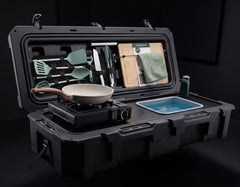
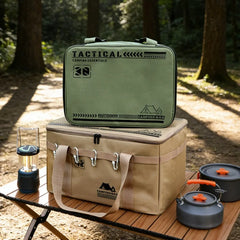
The first path is a single self-contained box. A complete unit like the VOZ Camp Kitchen keeps the stove, sink, USB-rechargeable faucet, 2-gallon water tank, cookware, and 30-plus items sealed in one weatherproof case — you lift one thing out and your whole kitchen is deployed. The honest catch for sedan owners: that case measures about 47.6 by 19.3 by 11.4 inches closed. That is longer than a typical midsize trunk is deep (~38 inches) or wide (~41 inches), so it will not sit square on the floor. What does work is loading it diagonally — a midsize sedan's trunk floor runs roughly 50 to 56 inches corner to corner, which swallows a long box that refuses to go in straight. In a compact trunk like a Civic's, though, a full-size box is a stretch, and the modular path wins.


The second path is modular: a few flat, light, independently packable pieces you tuck into gaps and around bags. It loses the one-lift convenience of a sealed box but wins on raw flexibility, and it is the only realistic approach for the smallest trunks. For a deeper look at why footprint and weight matter more than total volume, see our guide to why size and weight matter more than you think.
Building a modular trunk kitchen for the tightest cars
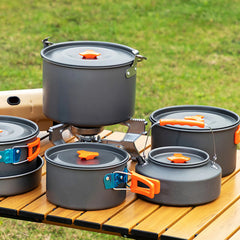
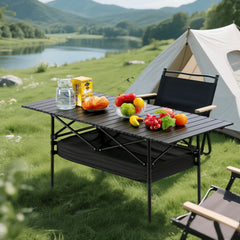
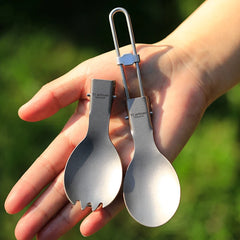
If your trunk is genuinely small, build the kitchen from low, flat parts that nest against the contours instead of fighting them. The principles that experienced sedan campers repeat are simple: keep it low profile, keep it low mass, and keep it modular. A handful of pieces does the job:
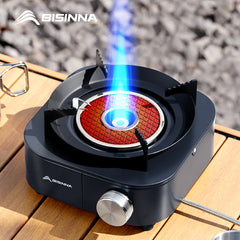
A flat-folding stove is the anchor of this kit — it is the piece most likely to win or lose the battle with your trunk opening, so size it first.


The thing that makes a modular trunk kitchen livable is organization. Loose gear migrates to the back of the trunk where you cannot reach it; bagged and boxed gear stays put and comes out in one motion. A couple of soft bags or a low bin turn a chaotic trunk into something you can actually cook out of at dusk.


Packing and loading a sedan so you can actually cook
Fitting the gear is half the job; the other half is loading it so the kitchen is reachable without a full unload. A few habits make the difference:
- Use the 60/40 split. Almost every sedan rear seat folds in a 60/40 split. Dropping even the smaller section turns the trunk into a long pass-through and lets a stubborn long item ride through into the cabin.
- Load the kitchen last, nearest the mouth. Sleeping gear and clothes go deep; anything you touch at every stop rides by the opening.
- Protect the load lip. A 57-pound loaded box dragged over the painted lip will scratch it. A folded blanket or a cheap loading mat saves the paint and your back.
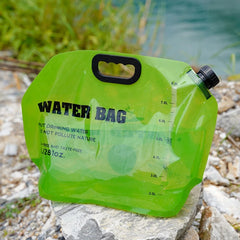
- Keep water low and central. Two gallons of water weighs about 17 pounds; ride it on the floor between the wheel wells, not stacked on top where it can shift.
- Cook off a table, not the trunk. Without a tailgate, set the stove on a roll-up table beside the car so a hot burner is nowhere near your trunk carpet or paint.
None of this is sedan-specific magic — it is the same fit-and-access thinking that applies to any rig. If you want the bigger picture across truck beds, vans, trailers, and RVs, our vehicle camp kitchen guide covers how the same kitchen adapts to each.
FAQ
Can a full camp kitchen box really fit in a sedan trunk?
In a midsize sedan, yes — but usually loaded diagonally rather than square, because a full-size case is often longer than the trunk is deep or wide. A midsize trunk floor measures roughly 50 to 56 inches corner to corner, which accommodates a long box that will not go in straight. In a compact trunk, a modular kit is the more realistic choice.
What is the single most important measurement?
The trunk opening, not the cubic feet. A rigid box wider or taller than the mouth simply will not pass through, no matter how much room sits behind it. Measure the mouth first.
Do I have to fold the rear seats down?
Not always, but the 60/40 split fold is your best friend for long items and for reaching gear from inside the cabin. For everyday kitchen access you want pieces that fit through the trunk lid alone, so you are not crawling through the back seat at every meal.
Is a sedan trunk safe for a stove and fuel?
Store fuel canisters upright, never run a stove inside the closed trunk, and always cook outside the vehicle on a table. A sealed trunk gets hot in summer sun, so keep butane and propane canisters out of direct heat and never leave them baking in a parked car.
Ready to upgrade your camp kitchen?
The VOZ Camp Kitchen includes everything you need in one weatherproof case. Sets up in 15 seconds.
Shop VOZ Camp Kitchen →