Camp Kitchen for Motorcycle & Moto Camping: What Actually Fits on Two Wheels

Let's be honest before you spend a dime: a full camp kitchen box does not ride pillion. A loaded all-in-one case is longer than a motorcycle seat and heavier than most soft luggage is rated to carry. But moto campers still cook — some of the best camp meals we've seen came off two wheels. Here's the setup that actually works: a stripped-down kitchen on the bike, and the full box for the trips where a truck is part of the plan.
The Honest Math: What a Motorcycle Actually Carries
Motorcycle luggage is measured in liters, and the numbers are small. Saddlebags typically hold 15 to 30 liters per side — about 60 liters total on a well-equipped bike. A top case adds 20 to 55 liters, a tank bag 5 to 20, and a tail duffel anywhere from 20 to 70. Stack it all generously and a fully loaded adventure bike carries somewhere around 100 to 150 liters — for everything. Tent, sleeping bag, pad, tools, rain gear, clothes, and only then the kitchen.
Weight is just as tight. Most adventure motorcycles have a total payload of roughly 375 to 550 pounds — and that number includes you. Soft-pannier makers commonly recommend keeping each bag around 30 pounds so mounts and handling stay happy.
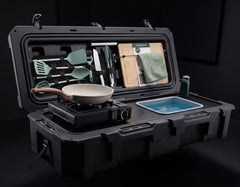
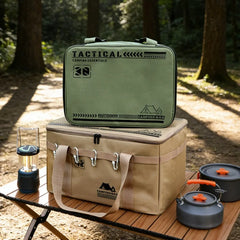
Now hold our own all-in-one box up against that. Closed, it measures 47.6 inches long, 19.3 inches wide, and 11.4 inches tall, and weighs about 57 pounds loaded. That's roughly 170 liters of displacement — nearly triple the volume of a full two-saddlebag setup — in a single rigid case that's longer than your seat. It does not go on the bike, and any article that pretends otherwise is wasting your weekend. What does work is a kitchen that fits in one pannier: plan on 8 to 12 liters and 6 to 8 pounds for cooking gear, and you'll eat well without upsetting the chassis.
| Luggage | Typical volume | Kitchen role |
|---|---|---|
| Saddlebags / panniers | 15–30 L per side | Stove, cookware, food — one side only |
| Top case | 20–55 L | Overflow food, packable table |
| Tank bag | 5–20 L | Spices, lighter, snacks, coffee |
| Tail duffel / dry bag | 20–70 L | Sleep system first; empty water bag on top |
The Two-Wheel Kitchen That Actually Fits
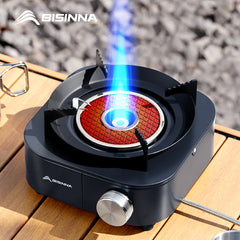
Every item earns its spot by nesting inside something else. Start with the stove. A folding canister stove packs down to the size of a deck of cards and weighs as little as 5.8 ounces — that's the weekend default. Riders heading somewhere remote often step up to a multi-fuel expedition stove in the 15-ounce range, because it burns unleaded gasoline: your fuel bottle and your gas tank become the same supply line. If your bike carries a top case and you like real simmer control, a compact folding burner like our 2,600W Portable Folding Camping Stove splits the difference between backpacking-tiny and campground-comfortable.
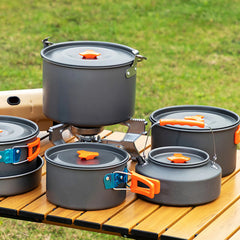
Cookware is where nesting pays rent. The pattern the moto crowd has settled on is one 1.5-to-2-liter pot with cups, bowls, and the stove itself stacked inside — one cylinder in the pannier instead of five loose pieces rattling against your tools. Our Ultralight 2-Person Cookware Set is built exactly for this: hard-anodized aluminum pot and pan that nest into a single package.


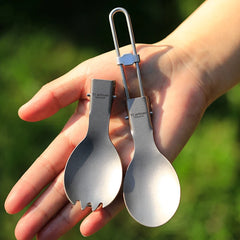
Utensils and flavor come next, and this is where grams matter more than anywhere else. A folding titanium cutlery set disappears into a pot; a 12-bottle spice kit is the single cheapest upgrade to roadside cooking — gas-station food money buys a week of real dinners once you can season anything.


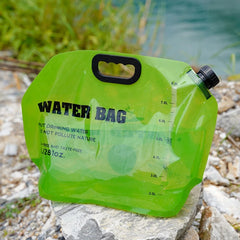
Water is the trap. Water weighs 8.34 pounds per gallon, so hauling gallons on a motorcycle is a handling penalty you feel in every corner. The two-wheel answer is a collapsible 2-gallon water bag that packs flat and empty while you ride, then fills at the campground spigot. Ride with a liter or two for the road; carry capacity, not water.
Where Each Piece Rides
Load placement matters more on two wheels than in any truck bed. The rule every luggage maker repeats: heavy items ride low and close to the bike's centerline. Here's the layout that keeps the kitchen from fighting the suspension:
- Left pannier, bottom: pot set with stove and cutlery nested inside — the densest kitchen mass, low and central.
- Right pannier: food for 1–3 days, fuel canister upright and bagged, never loose against food.
- Tank bag: spice kit, lighter, coffee, and anything you want at a lunch stop without unstrapping the camp.
- Tail bag, top: the empty water bag and a packable towel — light, crushable, last in, first out.

Balance the two panniers within a few pounds of each other. A bike that pulls to one side at parking-lot speed is usually a kitchen packed on one side.
The Base-Camp Play: When the Full Kitchen Still Comes Along
Here's the part most moto-camping lists skip: a lot of motorcycle trips involve four wheels somewhere. A chase truck on a group ride. A toy hauler to the rally. A friend who'd rather drive and cook than ride. A week of day-loops from one campground you never pack up. In every one of those, the stripped-down pannier kit is the wrong answer at camp — you have a vehicle, so bring the real kitchen in it.
That's where the VOZ Camp Kitchen earns its spot: the whole cook station — built-in stove, collapsible sink, USB-rechargeable faucet, 2-gallon water tank, and 30-plus pieces of cookware and utensils — travels in one weatherproof case in the truck bed and opens into a full kitchen in seconds. Riders cook and wash up like they're home, and the bikes stay light for the fun part.


If a support vehicle is part of your trips, our guide to vehicle camp kitchens for trucks, vans, trailers, and RVs covers how the box rides in each. And if the "chase vehicle" is a friend's commuter, even a sedan trunk swallows the full case — the box needs a car, not a truck.
FAQ
Can I strap a camp kitchen box to a motorcycle luggage rack?
No — and we sell the box. A loaded all-in-one case runs around 57 pounds and nearly four feet long; rear racks and top-case plates are engineered for a fraction of that weight, and hanging it high behind the rear axle would wreck handling even if the mounts held. On two wheels, the kitchen goes in the panniers, piece by piece.
What's the best stove type for moto camping?
For weekend trips near pavement, a folding canister stove — smallest, lightest, zero fuss. For remote or international routes, a multi-fuel stove that burns unleaded gasoline, because you're already carrying a tank of it. For base camps with a support vehicle, a full two-burner setup wins on cooking speed and stability.
How much space should the kitchen take on the bike?
Budget 8 to 12 liters — one pannier side, or half a tail bag. If your cook kit is crowding out rain gear or tools, cut cookware, not safety equipment: one pot, one burner, one spork covers 90 percent of road meals.
How do I handle water on a motorcycle?
Carry capacity, not water. A collapsible jug packs flat while riding and fills at camp; at 8.34 pounds per gallon, pre-filling at home costs you cornering confidence and buys you nothing a campground spigot can't.
Ready to upgrade your camp kitchen?
The VOZ Camp Kitchen includes everything you need in one weatherproof case. Sets up in 15 seconds.
Shop VOZ Camp Kitchen →