Camp Kitchen for First-Time Car Campers: A No-Stress Beginner Setup

Your first car camping trip should be about the campfire and the view, not about standing over a half-built cook station wondering where you packed the matches. The cooking setup is where most first-timers get tripped up: too much gear, the wrong gear, or a pile of mismatched bins that takes 20 minutes to dig through. This guide walks you through a no-stress beginner camp kitchen, what you actually need, and the shortcut that skips years of trial and error.
Why Your First Camp Kitchen Feels Harder Than It Should
Most new campers build a kitchen the slow way: a stove from one store, a water jug from another, a tub of random utensils, and three plastic bins that never quite close. It works, eventually. But the first few trips are usually a scramble, because the gear was bought piece by piece without a plan for how it all packs, travels, and sets up together.
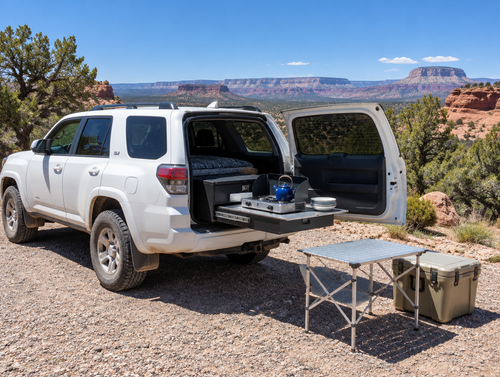
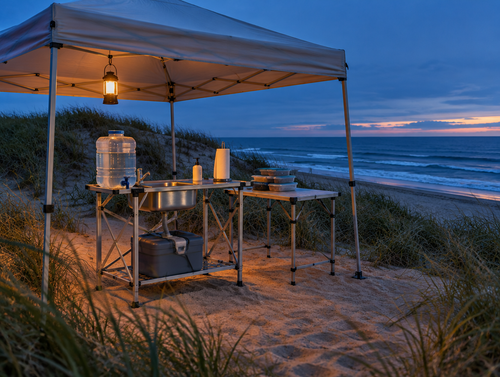
The fix is to think in terms of a single cook station, not a shopping list. Everything you cook with should live in one place, travel as one unit, and come out ready to use. When your stove, water, sink, and tools are already organized as a system, "making dinner" stops being a project and becomes a 60-second task.

The All-in-One Shortcut
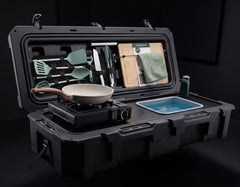
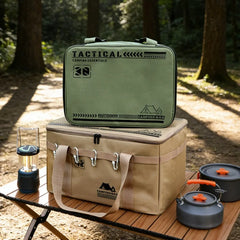
The fastest way to skip the piecemeal stage is an all-in-one camp kitchen box. Instead of assembling a setup over several seasons, you open one case and the whole station is there. The VOZ Camp Kitchen is built exactly for this: a weatherproof case that opens into a cook station with a built-in two-burner stove, a sink with a USB-rechargeable faucet, a water tank, and more than 30 cooking and prep items already inside.


For a first-timer, the appeal is less about luxury and more about not forgetting things. You can't leave the spatula at home if it lives in the box. You don't have to remember how the stove connects to the water, because it's already integrated. If you'd rather understand the whole category before you commit, our guide to the best camp kitchen setup in 2026 breaks down what to look for before you buy.
What a Beginner Camp Kitchen Actually Needs
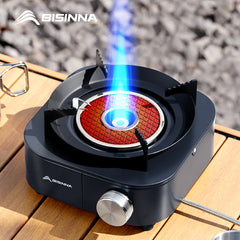
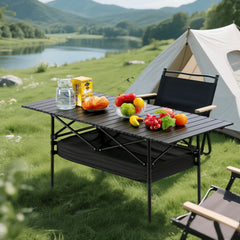
You do not need a chef's worth of equipment for your first weekend. Whether you buy an all-in-one box or assemble your own kit, the core list is short. A two-burner propane stove is the car-camping standard because it gives you the most cooking surface and the most heat control, which matters when you're learning to time two dishes at once.
| Category | Beginner essentials | Why it matters |
|---|---|---|
| Heat | Two-burner stove + fuel (plus a lighter as backup) | Cook and boil at the same time; backup ignition never fails |
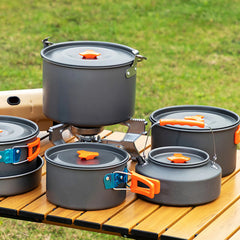
| Cookware | One pot, one pan with lids | A six-cup pot boils water for meals, coffee, and cleanup |
| Tools | Knife, cutting board, spatula, spoon, tongs | Covers almost every campsite meal you'll cook the first season |
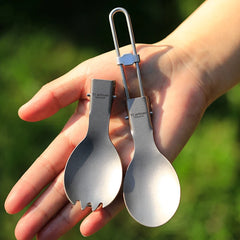
| Eat | Plates, bowls, mugs, reusable utensils | Nesting or collapsible versions save space in the vehicle |
| Water | Jug or tank, plus a wash basin | Drinking, cooking, and dishes all run off your water supply |
| Clean | Biodegradable soap, sponge, trash bags, towel | Cleanup is half the job; plan for it before you cook |
If you want to build your own kit instead of buying a box, start there and add only what you reach for. Our 47-item camp kitchen checklist lays out the full list by priority so you don't overpack the trunk on trip one. Not sure which stove to start with? Browse our beginner-friendly camp stoves to compare burner counts and output.


Water and Cleanup Without the Mess
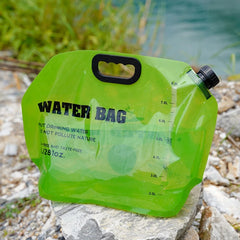
Water is the part beginners underestimate most. A reliable rule of thumb is about two gallons of water per person per day once you add up drinking, cooking, and washing, with roughly one gallon of that going to drinking and cooking alone. For a couple on a two-night trip, that's eight gallons before you've washed a single dish, so bring more than you think you need and keep it in a dedicated jug or tank.

Cleanup has rules worth knowing before you go. The National Park Service's Leave No Trace guidance says to wash dishes at least 200 feet from any stream or lake, use only small amounts of biodegradable soap, strain out food scraps, and scatter the leftover water over a wide area so it evaporates instead of pooling. You can read the full Leave No Trace principles on the NPS site. A camp sink or simple wash basin makes all of this far easier than balancing a pot in one hand.


Your First Trip, Set Up in Order
On site, order matters more than speed. Do it in this sequence and the rest of the evening takes care of itself:
- Pick a flat, shaded spot for the kitchen, ideally on the downwind side of the tent so cooking smells don't drift into where you sleep.
- Set up the stove first and the table or work surface around it, so you have somewhere to put hot pots down.
- Stage water next, with the drinking supply separate from the wash water so they never get mixed up.
- Lay out tools where you'll reach for them, and keep cleanup gear (soap, sponge, trash bag) within arm's length before you start cooking.
- Cook, then clean while the stove is still warm, so grease wipes off easily and you're not scrubbing cold pans in the dark.
An all-in-one box collapses most of these steps because the stove, sink, and tools come up together. If you're still comparing options, our honest review of the best camp kitchens of 2026 shows how the major setups handle real first-trip use.
FAQ
Do I need a two-burner stove, or is one burner enough?
One burner works for solo trips and simple meals, but two burners is the car-camping standard because you can cook a main and boil water at the same time. For families or anyone learning to time meals, the second burner removes a lot of stress.
How much should a first-time camp kitchen cost?
It varies widely depending on whether you buy piece by piece or all at once. The hidden cost of building your own is the trial and error: gear you replace after the first trip because it didn't fit your setup. An all-in-one box trades that uncertainty for one known price.
Can I just use my kitchen stuff from home?
For a first trip, yes, and it's a smart way to test what you actually use before buying anything. The catch is that home cookware is often heavier and doesn't nest, so it eats up trunk space fast. Once you know what you reach for, purpose-built camp gear pays off.
What's the one thing beginners forget most?
Cleanup supplies and enough water. People plan the meal in detail and then realize they have no way to wash up or not enough water to do it. Pack soap, a sponge, a trash bag, and extra water before you pack a single ingredient.
Ready to upgrade your camp kitchen?
The VOZ Camp Kitchen includes everything you need in one weatherproof case. Sets up in 15 seconds.
Shop VOZ Camp Kitchen →