Minivan Camp Kitchen: Turning a Pacifica, Sienna, or Odyssey Into a Rolling Cookhouse

Minivans are the only family vehicles that combine a flat, low cargo floor, sliding doors, and honest seating for seven or eight — and that combination quietly makes them excellent camp cookhouses. Here's how to turn a Chrysler Pacifica, Toyota Sienna, or Honda Odyssey into a rolling kitchen without bolting anything in.
Why a Minivan Is a Sleeper Camp-Cooking Vehicle
Overlanders get the magazine covers, but look at the numbers. Every current minivan hides a deep cargo well behind the third row — deep enough that a full camp kitchen box drops in with all seats still in use. Fold or remove the rear rows and you're working with a hauling volume that embarrasses most SUVs.
| Minivan | Behind 3rd row | Behind 2nd row | Maximum cargo |
|---|---|---|---|
| Chrysler Pacifica (gas) | 32.3 cu ft | 87.5 cu ft | 140.5 cu ft (both rows stowed in-floor) |
| Toyota Sienna | 33.5 cu ft | 75.2 cu ft | 101.0 cu ft (seats folded) |
| Honda Odyssey | 32.8 cu ft | 86.6 cu ft | 140.7 cu ft (2nd row removed) |
Two other things matter at a campsite. The load floor sits low — no tailgate climb, no roof-rack gymnastics — so a 50-pound kitchen box slides out at hip height. And sliding doors open in tight, tree-lined sites where a swinging SUV hatch or truck door would hit something. Owners on Pacifica forums regularly haul 4-by-8 plywood sheets flat with the hatch closed; if a sheet of plywood fits, a camp kitchen isn't a challenge.

Built-In Minivan Kitchen vs. Portable Camp Kitchen Box
There are now purpose-built slide-out kitchens for minivans. Trail Kitchens sells a Minivan Camper Kitchen for $1,995 that mounts in the rear cargo area of vans like the Pacifica, Grand Caravan, and Sienna. The spec sheet is genuinely nice: stainless sink, two-burner propane stove, a 5-gallon fresh water reservoir with a marine-grade 12V pump, a carbon-block water filter, and a 9 Ah AGM battery. The unit measures 44.5 by 24.5 inches and stands about 12.75 inches tall.
The trade-off is permanence. A mounted unit lives in your cargo well full-time, which is fine for a dedicated adventure van and awkward for the same Odyssey that does school drop-off Monday morning. It also costs more than most families want to sink into a second-use vehicle.
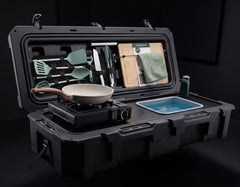
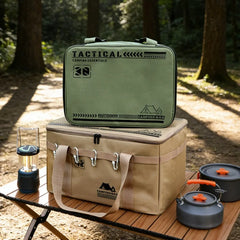
The portable-box route gets you the same core functions in a case you can lift out after the trip. The VOZ Camp Kitchen packs a butane stove, a built-in collapsible sink with a USB-rechargeable faucet, a 2-gallon removable water tank, an LED lamp, and 30-plus cooking and prep items into a weatherproof case measuring 47.6 by 19.3 by 11.4 inches — about 57 pounds loaded, currently $1,169. It sets up in roughly 15 seconds: open the lid, flip the latches, cook.


- Choose a built-in if the van is a dedicated camper, you want plumbed water with a filter, and you never need the cargo well for anything else.
- Choose a portable box if the van is still the family hauler, you want the kitchen out of the vehicle (and on a picnic table) in one lift, and you'd rather spend hundreds less.
Where the Kitchen Rides: Pacifica, Sienna, and Odyssey Notes
Chrysler Pacifica. Gas trims have Stow 'n Go: both the second and third rows fold flat into bins in the floor, giving you a completely flat surface with zero seat removal, something neither rival matches. With seats up, those same in-floor bins swallow soft goods — utensil rolls, towels, fuel canisters — so the kitchen box rides in the rear well and the small stuff disappears under the floor. One caveat: the Pacifica Plug-In Hybrid gives up second-row Stow 'n Go because the battery pack lives under that floor. The seats still fold; they just don't vanish.
Toyota Sienna. Every Sienna is a hybrid, which makes it the fuel-economy pick for long hauls, but its second-row seats slide on long rails rather than stowing into the floor and they aren't designed to come out. Plan your galley around the rear well — at 33.5 cubic feet behind the third row, it's the deepest of the three — and treat the second row as passenger space.
Honda Odyssey. The Magic Slide second-row seats shift side to side for access, and the outboard seats can be removed entirely — each weighs roughly 68 pounds, so it's a two-person job or a grunt. With the third row dropped into its well and the second row out, you get a van-sized 140.7 cubic feet. For a weekend trip, though, most Odyssey owners just leave every seat in place and slot the kitchen box in the rear well.
This is the same decision framework we use across pickups, SUVs, and trailers in our vehicle camp kitchen guide — the minivan just happens to be the vehicle where the portable box makes the strongest case.
The Liftgate Galley: A Setup That Works at Any Campsite
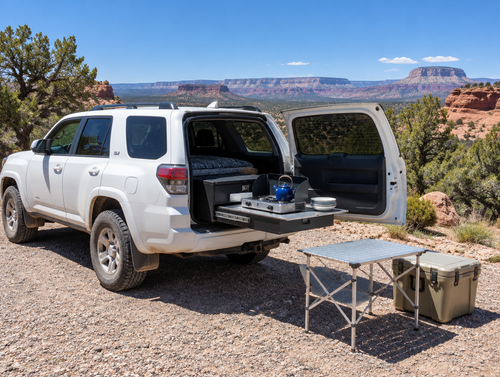
The best minivan kitchen setup barely counts as a setup. Back into the site, pop the liftgate, and slide the kitchen box to the edge of the cargo floor. The open liftgate becomes your roof — shade at noon, cover in drizzle — while the box's lid works as a prep counter at standing height. Everything stays inside the weatherproof case between meals, so a surprise storm means closing one lid, not evacuating a table full of gear.
One hard rule: cook outside the van, always. The U.S. Consumer Product Safety Commission warns to never use portable fuel-burning camping equipment inside a vehicle or tent unless it's specifically designed for enclosed spaces — carbon monoxide is odorless, and people die from stoves run in vehicles every year. Stand behind the bumper under the open liftgate; keep the burner itself in open air.

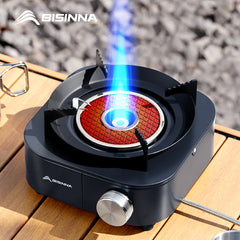
A single-burner cassette stove is the natural match for a minivan galley: it's flat, it stores inside the box or an in-floor bin, and butane canisters are cheap and everywhere. If you cook for a crowd, add a second standalone burner rather than upsizing everything.


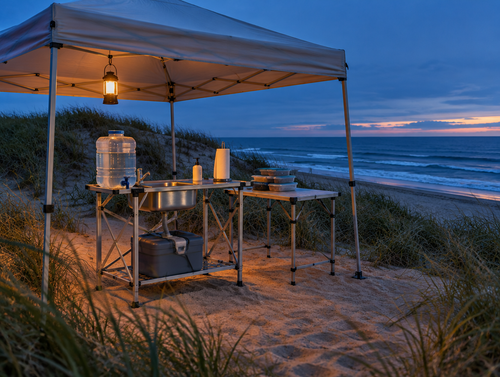
The one accessory worth adding is a folding side table. The cargo floor holds the kitchen, but a light roll-up table next to the bumper gives you a landing zone for hot pans and a serving line for kids — and it packs flat against the wheel well on the drive.


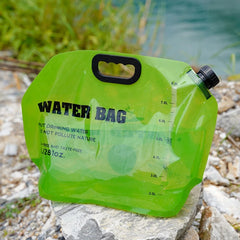
Water is simpler than van-lifers make it look. A 2-gallon tank covers a weekend of cooking and dishwater for a family if you refill at the campground spigot; the VOZ's rechargeable faucet means no hand-pumping while you scrub.
FAQ
Will a camp kitchen box fit with all the seats in use?
Yes. All three vans offer 32 to 33.5 cubic feet behind the third row, and a full kitchen box uses only part of that — there's still room for a cooler and duffels on top and beside it.
Can I cook inside the minivan when it rains?
No. CPSC guidance says never to run fuel-burning camp stoves inside a vehicle. Use the open liftgate as your rain cover and keep the stove in open air at the bumper line, or wait it out — the sealed box keeps everything dry.
Do I need to remove seats to camp-cook out of a minivan?
Not for cooking. Seat removal (Odyssey) or in-floor stowing (Pacifica) only matters if you're also sleeping inside or hauling a base-camp load for a big group.
Is a $2,000 built-in minivan kitchen worth it over a portable box?
Only if the van is effectively a camper. If it still carries passengers most weeks, a portable box delivers the same stove-sink-water core for less money and lifts out in seconds.
Ready to upgrade your camp kitchen?
The VOZ Camp Kitchen includes everything you need in one weatherproof case. Sets up in 15 seconds.
Shop VOZ Camp Kitchen →