The Camp Kitchen Pack-Up Routine: Break Camp in 20 Minutes Without Forgetting Anything

Everyone rehearses the setup. Almost nobody rehearses the pack-up — which is why the last morning of a camping trip so often turns into a sweaty scramble of wet dishes, a hot stove, and gear crammed into whatever bin has room. A camp kitchen breakdown routine fixes that: same steps, same order, every trip.
Why pack-up deserves a routine as much as setup
Setting up a camp kitchen is easy because you start from order: clean gear, packed in its place, and no deadline. Breakdown is the opposite. You start from entropy — dirty pans, a half-full water tank, damp towels, a stove that is still too hot to touch — and you usually start it with a clock running. The National Park Service reminds campers that a campsite has a check-out time just like a hotel room, and you are expected to be packed and gone by then.
The difference between a calm exit and a frantic one is not speed — it is sequence. When you do the same steps in the same order every time, nothing gets forgotten, nothing gets packed wet, and the slowest step (the stove cooling down) runs in the background instead of holding everything up at the end.
The night-before reset: five minutes that saves thirty
The single biggest pack-up shortcut happens the evening before you leave. After dinner, do a five-minute reset: wash the dinner dishes, return every tool to its assigned spot, and seal all food back into containers and the cooler. The NPS advises campers to clean the cooking area immediately after every meal — it keeps ravens, rodents, and raccoons from treating your kitchen as a buffet overnight, and in bear country it is not optional: food and coolers should never sit out unattended, and bear-resistant lockers only work when they are actually closed and latched.

That photo above is what rangers at Grand Canyon National Park found after ravens worked over a site where food and trash were left out. Beyond the mess, that is an hour of cleanup added to a morning that already had a deadline — and a fine in many parks.
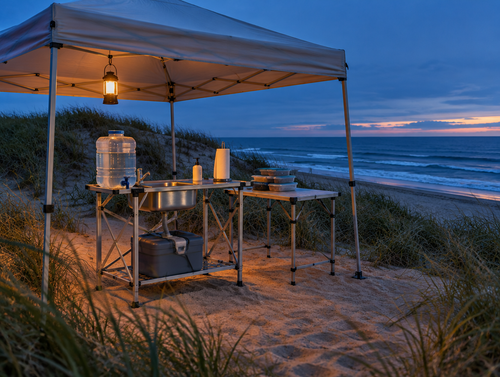
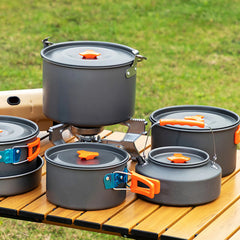
The reset works best when your kitchen is organized in zones: a cook zone (stove, fuel, lighter, pot grips), a prep zone (cutting board, knife, seasonings), and a wash zone (soap, sponge, towels, basin). Each zone lives in its own bag or compartment, so "putting the kitchen to bed" means returning items to three homes instead of thirty. Dedicated storage bags make the zones physical instead of theoretical.


The morning breakdown order
Here is the order that keeps every step from blocking the next one. The logic is simple: start the slow, passive jobs first (stove cooling), batch the wet jobs together, and make repacking the very last thing that happens.
| Step | What you do | Why this order |
|---|---|---|
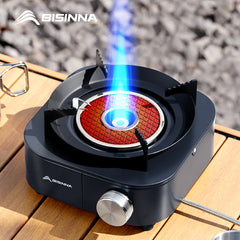
| 1 | Heat your wash water, then shut the stove down completely | The stove needs the longest cool-down of anything in camp — let it happen in the background while you work |
| 2 | Wash, rinse, and dry the breakfast dishes | Wet jobs come first so everything has time to air-dry before the case closes |
| 3 | Drain the water system — tank, faucet line, sink basin | Water is dead weight and trapped moisture; get it out while dishes dry |
| 4 | Wipe down the stove top, counter, and prep surfaces | Surfaces are still deployed and easy to reach; a 60-second wipe now beats scrubbing dried grease at home |
| 5 | Repack by zone — every item back to its one assigned spot | Dry gear goes home; no sorting, no "mystery bin" to deal with next trip |
| 6 | Disconnect the fuel and stow the now-cool stove | By step 6 the stove has had 20+ minutes to cool while you worked |
| 7 | Close the case, load the vehicle, and walk the site | The final sweep only works when everything else is already in the car |
For the dishes in step 2, the NPS recommends the three-bin method at frontcountry sites: wash in warm water, rinse in a second bin, then sanitize in a third bin with a mild bleach solution of 2 teaspoons of bleach per gallon of water. Strain the food solids out of your wash water and pack them out with your trash before you dump the graywater where the campground directs.
Draining the water system the right way
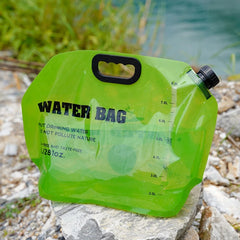
If your camp kitchen has a tank, sink, and faucet, the water system is the one subsystem you cannot rush. Water weighs about 8.3 pounds per gallon, so a few forgotten gallons turn your kitchen box into a back-strainer that sloshes on every corner of the drive home — and any water that stays trapped inside becomes a mold colony by your next trip.
The sequence: empty the tank at the campground's utility drain, run the faucet for a few seconds to clear the line, towel out the sink basin, and leave the tank cap open while you finish the rest of the breakdown so the inside can air out. If your faucet is USB-rechargeable, breakdown morning is also the natural reminder to top up its charge at home so it is ready for the next trip.
Pack it like the next setup depends on it — because it does

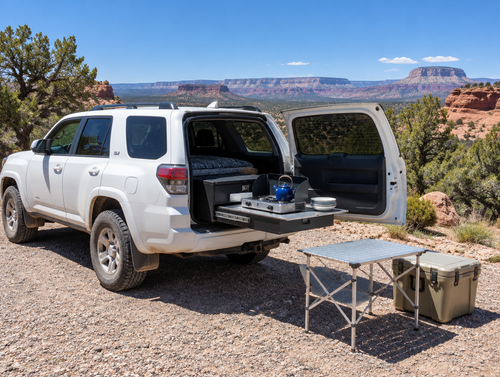
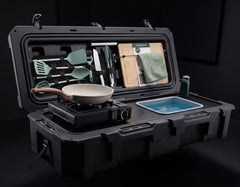
Here is the part most campers get backwards: pack-up is not the end of this trip, it is the beginning of the next one. Toss everything into a loose bin "to sort at home" and next trip starts with twenty minutes of digging. Return every item to one assigned spot and the next setup is nearly instant — that is the whole reason a VOZ Camp Kitchen can go from tailgate to cooking-ready in under 15 seconds, as we walked through in our step-by-step setup guide: the stove, sink, tank, and 30+ pieces all ride in fitted spots inside one weatherproof case, so packing up is the setup video played in reverse.


Two safety notes for the fuel, whatever stove you run: disconnect the canister or cylinder once the stove is fully cool, and transport cylinders upright with the valve on top — never loose in a closed, hot vehicle, where heat drives the internal pressure up. Those two habits take under a minute and remove the most serious risks of the drive home.
The final site sweep
With the vehicle loaded, walk the site slowly in a grid: picnic table (top and under), fire ring and grate, the bear box if you used one, tent pad, and the ground where the kitchen stood. You are looking for the classics — a lighter on the table edge, a sponge on the fire grate, tent stakes, a cutting board leaned against a tree. The NPS asks campers to leave the campsite better than they found it, and the sweep that protects the site is the same sweep that saves your gear.
One last habit worth stealing from professional guides: keep a short pack-out list taped inside your kitchen lid — stove, fuel, knife, lighter, towels, soap, tank cap. Seven items, ten seconds to scan, and it catches the small, expensive things that grids miss.
FAQ
How long should a camp kitchen breakdown take?
With the night-before reset done, budget about 15–20 minutes from "stove off" to "case in the car" for an all-in-one kitchen box, most of it waiting on dishes to dry. Skip the evening reset and the same job routinely swallows 45 minutes, because you are cleaning, sorting, and packing all at once.
Can I pack the stove while it is still warm?
No. Let it cool completely before it goes anywhere near the case — that is exactly why shutting the stove down is step 1 and stowing it is step 6. Packing a warm stove risks scorched gear and softened plastics, and disconnecting fuel from a hot appliance is how leaks and flare-ups happen.
Should I wash dishes at camp or wait until I get home?
At camp, right after the meal — the NPS is unambiguous about cleaning immediately. Dirty cookware sealed in a case breeds odor and corrosion on the drive, and food residue at the site draws animals to your camp and to every camper who uses that site after you.
What about damp towels and wet gear?
Never seal damp textiles inside a weatherproof kitchen case — weatherproof means airtight, and airtight plus moisture equals mildew. Drape towels over the load in the vehicle or clip them to a window on the drive, then finish drying everything at home before the kitchen goes into storage.
- How to Set Up a Camp Kitchen in Under 15 Seconds (Step-by-Step)
- The Ultimate Camp Kitchen Checklist (47 Items) — Free Printable PDF
- Camp Kitchen Checklist: 15 Essential Items You Need for Outdoor Cooking
- How to Wash Dishes With a Camp Kitchen Sink: The 3-Bin Method Made Easy
- How to Store a Camp Kitchen Between Trips (So It's Ready Next Time)
Ready to upgrade your camp kitchen?
The VOZ Camp Kitchen includes everything you need in one weatherproof case. Sets up in 15 seconds.
Shop VOZ Camp Kitchen →