Butane vs. Propane for Your Camp Kitchen Stove: Which Fuel Wins?

Almost every portable camp kitchen runs on one of two fuels: butane in slim 8-ounce cassette canisters, or propane in the stubby green 1-pound cylinders. They look interchangeable on the store shelf — but they behave very differently once the temperature drops or dinner gets ambitious. Here's how to pick the right one for your setup.
The 60-Second Answer
If you cook at established campgrounds in three-season weather, butane is the easier fuel to live with: the canisters are flat, light, and cheap in multipacks, and they slide right into a camp kitchen box next to the stove. If you camp in freezing temperatures, run big two-burner stoves, or cook for a crowd all week, propane is the workhorse — it keeps full pressure down to well below zero and connects to refillable bulk tanks.
- Pick butane if: you car camp spring through fall, cook on a single-burner cassette stove, and want the most compact fuel that stores inside your kitchen box.
- Pick propane if: you camp in shoulder-season cold or winter, need 15,000+ BTU across multiple burners, or want to run a 20-lb refillable tank at base camp.
- Best of both: many campers keep a butane cassette stove in the kitchen box for fast weeknight-style meals and a propane two-burner for group cooking.
How the Two Fuels Actually Differ
Butane and propane are close chemical cousins — both are liquefied petroleum gases, and both pack roughly 21,000 BTU of energy per pound of fuel. Per pound, there's no meaningful energy difference. What separates them is how eagerly each one turns from liquid to gas.
Propane boils at −44°F, so it keeps vaporizing and building pressure in almost any weather you'd voluntarily camp in. Butane boils at about 31°F — right around freezing. Below that, the liquid in the canister simply stops turning into gas, and your stove sputters out even though the canister still sloshes with fuel.

That same eagerness to vaporize is why the canisters look so different. At 70°F, propane pushes about 110 psi against the walls of its container, while butane sits near 17 psi. Propane needs a thick steel cylinder; butane gets away with a thin, lightweight can that costs less to make and weighs less in your kit. It's also why a butane canister can be long and flat — the shape that stows so neatly beside a cassette stove in a kitchen box.
| Property | Butane (8-oz cassette can) | Propane (1-lb cylinder) |
|---|---|---|
| Works down to | ~31°F | −44°F |
| Energy content | ~21,000 BTU/lb | ~21,500 BTU/lb |
| Canister pressure at 70°F | ~17 psi | ~110 psi |
| Canister weight & shape | Light, flat, slim | Heavier steel bottle |
| Refillable bulk option | No | Yes — 20-lb tank + hose |
Why Butane Runs the Camp Kitchen Box
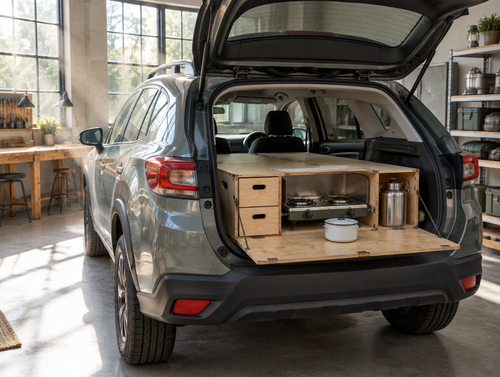
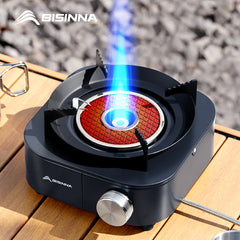
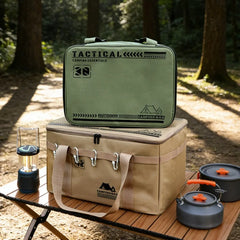
Cassette stoves — the flat single-burner stoves that take an 8-ounce butane can loaded sideways — are the default heart of a portable camp kitchen for good reason. They set up in seconds, light with a built-in piezo igniter, simmer precisely, and fold into a case about the size of a laptop bag. The fuel stores flat next to the stove, so the whole cooking system lives in one box.


The numbers work for weekend trips, too. A typical 7,650 BTU cassette burner runs about 1.5 hours on high — or roughly 3 hours on low — from a single 8-ounce can. Since most camp meals need 15–30 minutes of actual burner time, one can covers a weekend of cooking for two, and multipack canisters commonly work out to around $3 apiece at big-box hardware stores.
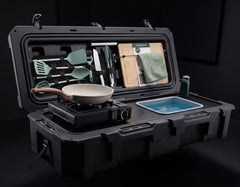
This is exactly why the VOZ Camp Kitchen ships with a butane-canister gas burner: the flat stove and flat fuel cans pack inside the weatherproof case alongside the sink, USB-rechargeable faucet, and the rest of the 30-plus-piece kit. You grab one box and the whole kitchen — heat source included — comes with you. If you're curious what else rides along in the case, see our full breakdown of what's included in a camp kitchen kit.


When Propane Wins
Butane's 31°F cutoff is a real-world problem, not a spec-sheet footnote. Shoulder-season mornings in the mountains routinely dip into the 20s, and a chilled butane can loses pressure well before the fuel technically stops vaporizing — the flame shrinks as the canister cools itself during use. Propane doesn't care. At −44°F it's still boiling off vapor, which is why cold-weather campers, hunters, and winter overlanders standardize on it.
Propane also scales up. A 1-lb cylinder holds about 21,500 BTU of usable energy — good for roughly two hours on a 10,000 BTU burner — and the same stoves accept a hose to a 20-lb refillable tank, which carries about twenty times the fuel of a single small cylinder. A two-burner propane stove in the 17,000 BTU class will boil a gallon pot and fry a skillet of hash side by side, something a single cassette burner can't match.


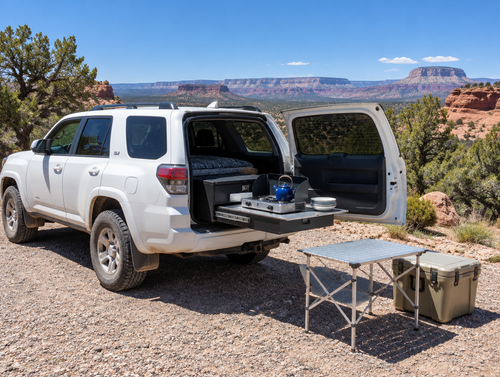
The trade-off is bulk. Propane bottles are round, heavy for their fuel load, and don't stow flat inside a kitchen box. If you go the propane route for base camp, the fuel usually rides loose in the truck bed or a milk crate — and if you're weighing small cylinders against a big refillable tank, we've run those numbers in our 1-lb canister vs. 20-lb tank comparison.
Runtime and Cost, Side by Side
| Fuel unit | Approx. usable energy | Runtime on high | Notes |
|---|---|---|---|
| 8-oz butane can | ~10,500 BTU | ~1.5 hr on a 7,650 BTU cassette stove | Cheapest per can in multipacks (~$3) |
| 1-lb propane cylinder | ~21,500 BTU | ~2 hr on a 10,000 BTU burner | Twice the fuel per can, heavier steel bottle |
| 20-lb propane tank | ~430,000 BTU | Multi-week base camp | Refillable; needs a hose or adapter |
Two honest caveats on cost. First, per unit of heat, refillable propane is the cheaper fuel over a season of heavy use, because tank refills cost far less per pound than any disposable canister. Second, for the light-duty cooking most camp kitchens actually see — coffee, eggs, one-pot dinners — the difference amounts to a few dollars per trip either way. Buy for temperature and stove compatibility first, price second.
Can One Camp Kitchen Run Both?
Absolutely, and plenty of experienced campers do. The cassette stove and its flat cans live in the kitchen box permanently, ready for fast solo or two-person meals. A propane two-burner joins the load-out for group trips, cold weekends, or week-long base camps. Our camp stove collection covers both fuels, from single-burner cassette stoves to high-output propane rigs, so you can match the burner to the trip instead of forcing one fuel to do everything. And if you're tempted to skip gas entirely, we've also compared propane against induction cooking on a power station.
FAQ
Will a butane stove work in winter?
Not reliably. Below about 31°F the fuel stops vaporizing, and performance sags even in the high 30s as the canister chills during use. Warming the can in your jacket or sleeping bag before cooking helps for a single meal, but if you regularly camp below 40°F, propane is the dependable choice.
Are gas stoves allowed during fire bans?
Usually, yes — most lower-stage fire restrictions still permit gas stoves with an on/off valve, while banning wood and charcoal fires. Rules vary by land manager and restriction stage, so check the current order for your forest or park before you go. We cover the details in our fire ban stove rules guide.
How should I store fuel canisters?
Cool, ventilated, and out of direct sun — never in a hot parked car or a sealed box left baking in July heat. Propane cylinders in particular shouldn't sit above about 120°F. At home, store canisters in a garage or shed rather than living space, and check cassette cans for rust around the rim before each season.
Does altitude change which fuel wins?
Canister stoves of both types actually run fine at altitude — the practical problem is that high camps are cold camps. Since mountain mornings often start below freezing, altitude tilts the decision toward propane even though the elevation itself isn't the issue.
Can I convert a butane stove to propane?
Only if the manufacturer explicitly supports it. Adapter fittings exist, but propane's far higher canister pressure means a butane-rated regulator and hose aren't automatically safe with propane. Use each stove with the fuel it was designed and certified for, and buy a dual-fuel or propane-native stove if you want flexibility.
Ready to upgrade your camp kitchen?
The VOZ Camp Kitchen includes everything you need in one weatherproof case. Sets up in 15 seconds.
Shop VOZ Camp Kitchen →