

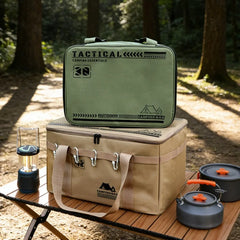
Camp Kitchen for Camping With a Baby or Toddler: Bottle Washing, Sterilizing, and a Sink That Makes It Easy

Camping with a baby means up to eight bottles a day that have to be taken apart, washed, rinsed under running water, and sometimes boiled, at a site where the nearest spigot may be a five-minute walk. Here is the bottle workflow that actually works out of a camp kitchen box, with the CDC's own numbers for washing, sanitizing, formula water, and how much water to bring.
Why bottle duty is the hard part of camping with a baby
At home the sink, hot water, and drying rack are in one place. At a campsite they are usually in three, and the schedule does not slow down. The American Academy of Pediatrics puts a newborn at 1 to 2 ounces per feeding in the first week, rising to 3 to 4 ounces every 3 to 4 hours by the end of the first month, and 6 to 8 ounces at each of 4 or 5 feedings by 6 months. Each feeding ends with a bottle, nipple, ring, and cap that the CDC says should be cleaned after every use.
The CDC's washing method is specific, and it drives the gear list. Rinse the parts by holding them under running water, not by setting them in a sink. Wash them in a clean basin used only for infant feeding items, with hot soapy water and a brush that is also used only for bottles. Rinse again under running water. Then air-dry on a clean rack or towel without rubbing, because a dish towel can transfer germs back onto the parts. Two of those steps need water that flows. That is the whole reason a camp kitchen with a working faucet changes this trip.
If you are still deciding what kind of kitchen to bring, our guide to the best camp kitchen setup for 2026 compares the all-in-one box with the table-and-tub approach. This article assumes you want the box.
The bottle station: what a sink and faucet change
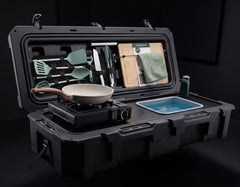
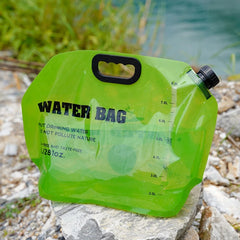
A VOZ Camp Kitchen packs a collapsible sink, a USB-rechargeable faucet fed by a 2-gallon water bag, a butane stove, and 30-plus cooking items into one weatherproof case that measures 47.6 by 19.3 by 11.4 inches and weighs about 57 pounds loaded. It opens in about 15 seconds. For a parent, the important part is that the sink and the stove sit side by side at counter height, so rinsing, washing, and boiling happen in one spot while the baby is in the carrier or the pack-and-play three feet away.


The faucet is a press-button pump: press it, water flows, let go and it stops. That makes the CDC's "hold the parts under running water" step realistic at a campsite. You hold a nipple in one hand and a bottle in the other, and the water runs without anyone tipping a jug. The sink catches the rinse water, and the graywater goes wherever the campground says it should.
Here is the bottle station layout that keeps the CDC method intact:
- A dedicated bottle basin. The CDC says bottle parts should not be washed directly in a sink, because the sink may carry germs from other dishes. A small collapsible tub that lives inside the case and is used for nothing else solves this. Fill it from the faucet and add dish soap and hot water from the kettle.
- A bottle-only brush. Keep it in a zip bag inside the basin so it never touches the dinner pot.
- The sink for rinsing. Rinse under the running faucet before the basin wash and again after.
- A drying spot with airflow. A clean towel on the countertop or a folding rack, with the parts left to air-dry fully. The CDC also says to rinse and air-dry the basin and brush after each use and wash them every few days.
Older kids can rinse and stack, a point we make in our family car camping guide. The basin wash and anything involving boiling water stays with an adult.
Sterilizing bottles on a butane stove
Not every baby needs bottles sanitized at camp. The CDC recommends daily sanitizing for babies under 2 months old, babies born prematurely, and babies with a weakened immune system. For older, healthy babies, thorough washing after every feeding is the standard, and sanitizing is an extra step for peace of mind. Either way, the box gives you two ways to do it.
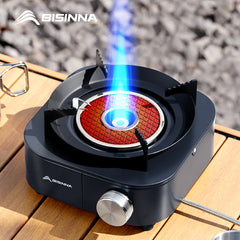
Boiling. Put the disassembled parts in a pot, cover them with water, bring it to a boil, and boil for 5 minutes. Lift the parts out with clean tongs and let them air-dry. On the butane burner this is a morning ritual: the pot goes on while the coffee water heats on the other side of the countertop. Our hot water at the camp sink guide covers timing, but a 10,000 BTU burner brings a liter of water to a boil in a bit over three minutes, so the whole sanitize cycle is under ten minutes of stove time.

Bleach soak. When you would rather not run the stove after dark, the CDC lists an unscented bleach solution as an approved alternative: 2 teaspoons of bleach per gallon of water, soak the parts for at least 2 minutes, then let them air-dry. Do not rinse afterward, because rinsing can put germs back on the parts.
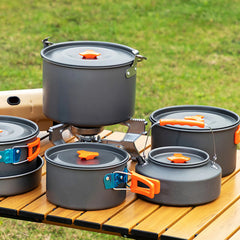
A dedicated small kettle keeps the routine cleaner, because sterilizing water and dinner water never share a pot. The 37-fluid-ounce kettle in our three-piece cookware set holds enough for a bottle-and-nipple batch and pours cleanly into the basin afterward.


Formula water, the thermos trick, and the 2-hour clock
Formula has its own hot-water rule for the youngest babies. For infants under 2 months, born prematurely, or with weakened immune systems, the CDC recommends mixing powdered formula with water of at least 158°F (70°C) to kill Cronobacter, a bacterium that can live in dry powdered formula. The method is simple: boil the water, wait about 5 minutes, then mix. Measure the water first, then add the powder. Let the bottle cool before feeding and test a few drops on your wrist. It should feel warm, not hot.
The camp hack that parents on Pregnant Chicken and The Crazy Outdoor Mama swear by fits this rule. Boil a batch of water first thing in the morning, pour it into an insulated bottle, and mix bottles on demand. You skip relighting the stove for every feeding. For a baby in the under-2-month group, reboil once the thermos water is no longer steaming hot, and keep the thermos out of a toddler's reach.

Prepared formula runs on a clock. The CDC says to use it within 2 hours of mixing and within 1 hour from the moment the baby starts drinking. Anything left after a feeding gets tossed. A bottle that will not be used within 2 hours can go in the refrigerator for up to 24 hours, but a cooler only counts as a refrigerator if it is holding 40°F or below, the FDA threshold for keeping perishables safe. With melting ice on a warm weekend, mix bottles fresh instead of stockpiling them.
For the water itself, a campground's potable spigot is fine. If you are filling from anything you are not sure about, the CDC's rule for making water safe is a rolling boil for 1 minute, or 3 minutes at elevations above 6,500 feet, then cool it and store it in a clean, sanitized container.
The daily water budget with a baby or toddler
Bottle duty adds a surprising amount to a camp kitchen's water use. Here is how the pieces add up against a 2-gallon (256-ounce) tank.
| Use | Planning figure | Where the number comes from |
|---|---|---|
| Formula water | Up to 32 oz per day | AAP daily maximum for formula intake |
| Boil-sanitize batch | About one kettle (37 oz) per cycle | Enough to submerge a day's parts |
| Basin wash plus rinses | One basin fill plus faucet rinses, several times a day | CDC washing method |
| Toddler drinking water | 0.5 to 1 cup per day at 12 to 24 months; 1 to 5 cups at 2 to 5 years | AAP recommended drinks by age |
| Toddler milk | About 16 oz per day at 12 to 24 months | AAP recommended drinks by age |
With an infant, plan on refilling the 2-gallon bag at least once a day and treat it as the formula-and-sanitizing supply. A 3.4-gallon jug with its own spigot beside the box handles dish rinsing and hand washing, so nobody raids the faucet tank for dishwater.


Toddler cups count too. The CDC's emergency guidance for infant feeding items calls for squeezing soapy water through sippy cup spouts, straws, and valves, so a toddler's cup goes through the same basin-and-rinse routine as a bottle.
Toddler-proofing the kitchen box
A camp kitchen with a toddler nearby has three things worth managing: the burner, the knife, and the water. The butane stove sits on the countertop at adult working height, and it gets the same rule as a home stove: nobody under waist height in the cooking zone while a flame is lit. The open lid blocks the wind and a curious two-year-old's view of the flame, which helps more than you would expect.

Because the box closes into a single case, the knife, lighter, bleach, and butane canisters go back inside and the lid latches. No open bin of sharp things sits on the picnic table. The faucet is the one thing you can hand over: a toddler who can reach the button gets a rinse station for muddy hands, and the sink catches the mess.
FAQ
Do I have to sterilize bottles at camp?
The CDC recommends daily sanitizing for babies under 2 months, babies born prematurely, and babies with a weakened immune system. For older, healthy babies, thorough washing after every feeding with the basin-and-brush method is the standard, and sanitizing is optional.
Can I use campground spigot water for formula?
If the spigot is marked potable, yes. If you are unsure, the CDC's rule is a rolling boil for 1 minute, or 3 minutes above 6,500 feet. For a baby under 2 months, the 158°F formula-water rule means you are boiling regardless.
Is the built-in sink big enough for bottles?
Yes for rinsing, which is what the CDC says a sink is for. The wash itself happens in a separate basin used only for bottle parts, so the sink's job is running water and catching it, and the collapsible sink handles that.
How much water should I bring for a weekend with an infant?
Budget the full 2-gallon kitchen tank for formula and sanitizing each day, refilled at the spigot, plus a separate jug for dishes and hand washing. Two days with a formula-fed baby and a toddler will run through more than the kitchen tank alone.
- Best Camp Kitchen in 2026: What to Look for Before You Buy
- Best Camp Kitchen for Family Car Camping With Kids (2026)
- How to Get Hot Water at Your Camp Kitchen Sink (Without an RV)
- How to Wash Dishes With a Camp Kitchen Sink: The 3-Bin Method Made Easy
- How a USB-Rechargeable Faucet Works on a Camp Kitchen
Ready to upgrade your camp kitchen?
The VOZ Camp Kitchen includes everything you need in one weatherproof case. Sets up in 15 seconds.
Shop VOZ Camp Kitchen →

