

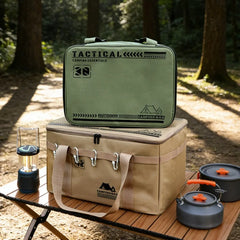
Taking a Camp Kitchen on a Ferry: Propane and Butane Rules for BC Ferries, Washington State Ferries, and the Alaska Marine Highway

A camp kitchen box loaded with fuel is a hazmat question the moment you roll up to a ferry ticket booth. BC Ferries, Washington State Ferries, and the Alaska Marine Highway each publish their own propane and camp fuel limits, and they don't match, so here's what each one says, what it means for the canisters in your kit, and what to do before you sail.
Why Ferries Care About the Fuel in Your Camp Kitchen
On the highway, a couple of fuel canisters in a closed kitchen box is a storage question (we cover heat and venting in our guide to storing propane canisters in a camp kitchen box). On a ferry, the same canisters count as regulated dangerous goods carried on a passenger vessel. All three operators set limits by cylinder size or weight, require valves closed before boarding, and expect you to tell staff what you're carrying.
That last part matters. The Alaska Marine Highway's hazmat notice says all hazardous materials must be declared and that failing to declare them is an offense under U.S. federal law. BC Ferries says the same thing under Canadian law. Declaring a few camp canisters takes about ten seconds at the booth. Not declaring them is the actual risk.
The other thing to know up front: these rules are written around propane. Butane, the fuel most cassette-style camp kitchens burn, is handled less clearly, and that's where most camp kitchen owners get caught out.

BC Ferries: Propane, Butane, and Camping Fuel Limits
BC Ferries publishes the most detailed rules of the three, and they're written in liters of water capacity, which is stamped on the collar around the cylinder valve, not in pounds of propane.
- Propane for camping or BBQs (car or trailer): one cylinder up to 18.9 L water capacity, or, if no other propane is carried, up to three cylinders of 1 L water capacity or less.
- RVs, campers, and motorhomes: up to two cylinders with a combined capacity of 65 L, no single cylinder over 46 L. The camping/BBQ allowance above is in addition to that.
- Gaseous camping fuel: if you carry no other camping fuel or propane, up to three 1 L containers of gaseous camping fuel, or one 5 L container of liquid camp stove fuel, with no dangerous goods paperwork.
- Butane: BC Ferries states that some camping fuels, like butane (UN1011), are prohibited.
- Handling: all propane tanks must be closed and tagged before boarding, and cylinders must be upright and secured to the vehicle. Neither propane nor camping fuel is allowed on passenger decks.
- Declaring: tick the "Carrying dangerous goods" box when you book a vehicle, or declare at the ticket booth, to the terminal attendant, or to the vessel officer at unstaffed terminals.
Two things trip up camp kitchen owners here. First, the 18.9 L limit is smaller than it sounds. A standard 20-lb barbecue tank is stamped around 47.6 lb water capacity, which works out to roughly 21.6 L. Read your collar before you assume the family grill tank qualifies, and if it reads over 18.9 L, call BC Ferries before you leave home.
Second, butane. The prohibition names UN1011, which is bulk butane. The gaseous camping fuel allowance names other UN numbers, including UN2037, the classification for small gas cartridges. Which bucket your 8-oz cassette canisters fall into is exactly the kind of call to make with the terminal before you load the car, not in the lane. BC Ferries also notes that its North Coast routes may carry additional rules, and that the provincially run inland ferries set their own limits.

Washington State Ferries: The 100-Pound Rule
WSF takes a simpler, weight-based approach. Per WSDOT's What you can bring aboard page, checked in October 2026:
- Propane: the total weight of propane including the tanks must not exceed 100 pounds. WSF's own example: two 20-lb tanks weigh around 76 pounds total.
- Fixed tanks: propane tanks permanently installed on a vehicle's frame or chassis don't count toward that limit.
- Gasoline and camp stove fuel: WSF lumps liquid camp stove and lantern fuel in with gasoline. It has to ride in a vehicle, in red, non-spill-spout containers that are UL-listed or Coast Guard approved, with no more than two 6-gallon containers. "Quick pour" containers aren't allowed.
- Mixed loads: if a vehicle carries both propane tanks and gasoline containers, the combined total can't exceed 12 gallons (water capacity).
- Prohibited: hazardous materials under 49 CFR Parts 170-180 and acetylene tanks are banned on board and at all terminals.
For a typical camp kitchen, one 20-lb tank plus a few 1-lb cylinders sits well under 100 pounds. The gap is butane: the WSF page doesn't list cassette canisters at all. If your kitchen runs on butane, call WSF Customer Service at 206-464-6400 before your crossing and ask specifically about cassette canisters. One more practical note: WSDOT says its Anacortes/Friday Harbor/Sidney, B.C. route is out of service until at least spring 2030, so a WSF sailing won't get you and your kitchen to Vancouver Island right now.
Alaska Marine Highway: Sealed Valves and 20-Pound Cylinders
The Alaska Marine Highway System's Transportation of Hazardous Materials notice (dated April 2019, the current version posted at the time of writing) sets these limits for non-commercial travelers:
- Passenger vehicles and boats on trailers: one propane cylinder, not over 9 kg (20 lb), per vehicle or boat.
- RVs: up to two cylinders connected to a regulator and secured in or on the vehicle, plus a third cylinder of no more than 9 kg (20 lb) for BBQ needs.
- Valves: propane valves must be closed and sealed by terminal personnel, and cylinders must be upright and secured against tipping.
- Foot passengers: one portable propane cylinder up to 9 kg (20 lb) and one 5 L (1 gallon) metal container of camp stove or lantern fuel. You carry them aboard yourself and stow them on the car deck where the loading officer directs. They can't go as baggage.
- Carry-on: hazardous materials are prohibited in carry-on baggage at all times.
The notice states that violations of federal hazmat rules can bring civil penalties of up to $25,000 per violation, and that the vessel's master or loading officer can refuse any item judged unsuitable. Butane isn't named. For routes touching Prince Rupert, the notice also warns that the port may impose its own rules, and asks you to contact that terminal at least 24 hours before departure. For anything not on the list, AMHS points travelers to 1-800-642-0066 or dot.amhs.commercial@alaska.gov.
Side-by-Side: What You Can Bring
| Operator | Car or trailer propane limit | Small cylinders | Butane | Before boarding |
|---|---|---|---|---|
| BC Ferries | 1 cylinder up to 18.9 L water capacity | Up to three 1 L cylinders (if no other propane) | "Butane (UN1011)" listed as prohibited; confirm cassette canisters | Close and tag valves; declare |
| Washington State Ferries | 100 lb total, tanks included | Count toward the 100 lb | Not addressed; call 206-464-6400 | Tanks secured in the vehicle |
| Alaska Marine Highway | 1 cylinder up to 9 kg (20 lb) per vehicle | Not separately listed | Not addressed; call 1-800-642-0066 | Valves closed and sealed by staff; declare |
How to Pack a Camp Kitchen for a Ferry Crossing
The fuel rules are the hard part. The packing is easy if you plan for it:
- Pick one fuel for the crossing. BC Ferries' small-cylinder and camping-fuel allowances only apply when you carry no other propane or camping fuel, and WSF caps mixed propane-and-gasoline loads. A single fuel type keeps you inside the simplest limit.
- Read the collar on every tank. Water capacity (BC Ferries) and tare weight (WSF's 100-lb total) are both stamped there. Snap a phone photo so you can answer questions at the booth.
- Pack canisters where you can reach them. Terminal staff may want to see, tag, or seal them. Fuel buried under a loaded kitchen box means unpacking in the lane.
- Keep everything upright and strapped. All three operators want cylinders upright and secured. The same tie-down habits from your road trip setup apply.
- Leave fuel in the vehicle. BC Ferries bars propane and camping fuel from passenger decks, and AMHS bans hazmat in carry-on bags. The kitchen box can come upstairs only if the fuel stays below.
- Restock on the far side. If your canister count is borderline, sail light and buy fuel after you land. Our 1-lb canister vs. 20-lb tank guide helps you figure out how much a trip really needs.
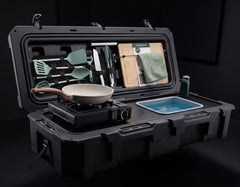
This is where a self-contained box earns its keep. The VOZ Camp Kitchen packs its stove, sink, faucet, and water tank into one weatherproof case, and its cassette stove runs on 8-oz butane canisters that come out separately. That makes it easy to show staff exactly what fuel you're carrying, or leave it out entirely and buy canisters after the crossing.


If you'd rather run a propane setup for ferry-heavy trips, since all three operators publish clearer propane limits than butane ones, browse our camp stoves and match the burner's fuel to the route you're sailing. For a full rundown of how a complete setup comes together, see our best camp kitchen setup guide for 2026.


FAQ
Can I bring a 20-lb propane tank on BC Ferries?
Only if its water capacity is 18.9 L or less. A standard 20-lb tank is usually stamped around 47.6 lb (about 21.6 L) water capacity, so check the collar and confirm with BC Ferries before you travel.
Are butane cassette canisters allowed on these ferries?
None of the three operators clearly addresses cassette canisters. BC Ferries lists butane (UN1011) as prohibited but allows some small gas cartridges, while WSF and AMHS don't mention butane at all. Call the operator before you sail.
Can I cook in my camp kitchen on the car deck?
Plan on no. Valves are closed, tagged, or sealed before boarding on all three systems, and BC Ferries keeps fuel off passenger decks. Cook before you queue or after you land, and check the rest area and parking lot cooking rules for where to do it.
Do I have to declare a few small canisters?
Yes. BC Ferries and AMHS both require declaring all dangerous goods, and AMHS notes that failing to declare is an offense under U.S. federal law. Tell the ticket agent what you have.
Verify before you sail: ferry hazmat rules change, and the master or loading officer always has the final word. These limits were checked against each operator's published rules on 10/09/2026. Confirm with your departure terminal before every crossing.
Ready to upgrade your camp kitchen?
The VOZ Camp Kitchen includes everything you need in one weatherproof case. Sets up in 15 seconds.
Shop VOZ Camp Kitchen →

