How to Get Hot Water at Your Camp Kitchen Sink (Without an RV)

A camp kitchen sink with a working faucet solves half the outdoor dishwashing problem — running water where you cook. The other half is temperature: tank water comes out cold, and cold water does a poor job on greasy pans. Here are four proven ways to get genuinely hot water at your camp sink, no RV required.
Why the water temperature actually matters
There is a reason restaurant kitchens are not allowed to wash dishes in cold water. The FDA Food Code requires the wash solution in a manual dishwashing sink to be held at 110°F or hotter (FDA Food Code, section 4-501.19). Below that, dish soap struggles to emulsify grease — bacon fat, butter, and cooking oil smear around instead of lifting off. At a campsite the physics are the same: a pan washed in 55°F tank water needs twice the scrubbing and still comes out filmy.
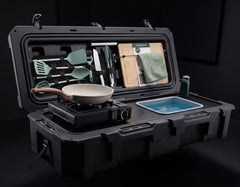
A modern kitchen box already handles the plumbing side. The VOZ Camp Kitchen pairs a removable 2-gallon tank with a USB-rechargeable faucet feeding a collapsible sink, so you have flow and drainage at the station. (We covered how that pump system works in our USB faucet explainer.) None of that heats the water, though — that part is up to you, and you have four realistic options.


Option 1: The kettle method — free, fast, already in your box
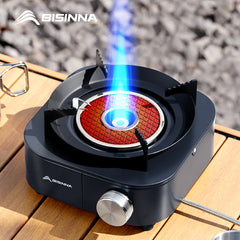
The simplest answer is the one campers have used forever: boil a kettle on your stove and blend it with cold water in the sink basin. It costs nothing extra, because the burner is already part of the kit, and it is quicker than most people expect — a 10,000 BTU burner brings a liter of water to a boil in a bit over three minutes.
The useful trick is the mixing ratio. You are not trying to fill the sink with boiling water; you are aiming for that 110–115°F dishwater sweet spot. The math works out neatly:
- 1 part boiling + 2 parts cold tank water (about 60°F) ≈ 110°F. Two quarts from the kettle plus four quarts from the faucet gives you a six-quart basin of proper dishwater.
- For a quick hand-wash or wiping the prep surface, half a kettle into a small basin does the job.
- Put the kettle on before you eat — by the time plates are scraped, the water is ready.

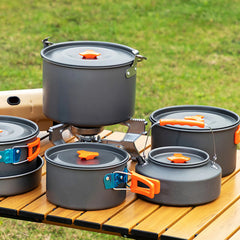
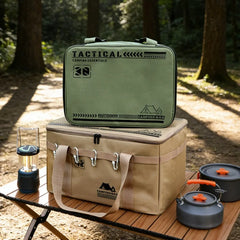
Any pot with a lid works, but a dedicated kettle pours more safely into a basin. Our 3-piece cookware set includes a 37 fl oz kettle that nests inside the pot, so it packs into the box without claiming extra space.


Option 2: An on-demand propane water heater
If you camp in one spot for days, cook for a group, or want a genuine hot shower on top of hot dishwater, a portable tankless propane heater is the serious upgrade. These units pull water from any container with a small pump, run it past a propane burner, and deliver continuously hot water at the spout — the same idea as an RV water heater, minus the RV.
Public specs from the current crop of popular portable units show the range of the category:
| Class | Flow rate | Burner output | Notes |
|---|---|---|---|
| Compact (e.g. Camplux® Nano 3 Pro) | 0.8 GPM | 20,500 BTU | 13.2 lb, built-in rechargeable pump battery |
| Mid-size (e.g. Camplux AY132) | 1.32 GPM | 34,000 BTU | About 10 lb, starts at 3 PSI water pressure |
| High-flow (e.g. Camplux BW264) | 2.64 GPM | 68,000 BTU | 23 lb, closer to household shower flow |
The trade-offs are real: you are adding a second appliance, a propane line, and a water pump to your load-out, and every unit in this category is outdoor-use only because of combustion exhaust. For dishes alone it is overkill on a weekend trip. For a week-long base camp with a family, it turns the camp sink into something close to a home sink.
Option 3: Solar heating — zero fuel, zero noise
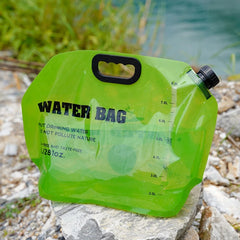
A black solar water bag is the lowest-tech option that actually works. Laid in direct summer sun, a 5-gallon solar bag typically reaches 95–105°F in 2–4 hours, and in strong sun it can hit around 113°F in about 3 hours — right at dishwater temperature with no fuel burned at all.

The limits are obvious: no sun, no hot water, and nothing on demand — you plan around the afternoon peak. The workflow that makes it shine is simple: fill the bag at breakfast, lay it on a dark surface facing the sun, and by dinner cleanup you have a full basin of warm wash water while your tank water handles rinsing. It also pairs well with the kettle method on overcast days — solar-preheated water needs far less boiling water to reach 110°F.
Option 4: Electric — kettles and immersion heaters off a power station
If you already carry a portable power station for lights and phones, an electric kettle or a 12V immersion heater can heat wash water without touching your fuel supply. The catch is energy budget: heating water is one of the most power-hungry things you can ask a battery to do, so this route makes sense as a supplement — a morning kettle for coffee and hand-washing water — rather than the primary plan for a sink full of dishes. If your power station spends the trip mostly idle, it is free hot water; if it is your only charging source, save the watt-hours.
Matching the method to your setup — and staying safe
For most car campers with a kitchen box, the honest ranking is: kettle first, solar second, propane heater only when trips get long or groups get big. Whichever you choose, three temperature rules keep it safe:
- Never pour boiling water straight into a plastic basin, tank, or over your hands. Mix it down first. Water at 150°F can cause a third-degree burn in about 2 seconds, per the U.S. Consumer Product Safety Commission.
- Treat 120°F as your ceiling for water you touch. That is the maximum tap temperature CPSC recommends for homes, and it is plenty hot for dishes — comfortably above the FDA's 110°F wash threshold.
- Keep hot water out of the cold-water system. Fill your kitchen's tank with cold water only — the tank, tubing, and USB pump are not designed for hot liquid. Heat happens in the kettle or heater, and hot water goes into the wash basin, not the tank.
One more planning note: hot water changes how much total water you use. A proper hot-water dish routine uses a wash basin and a rinse, which is easy to budget once you know your tank size and refill rhythm — and it is exactly the workflow a full camp kitchen kit is organized around, with the stove, sink, and tank in one station.


FAQ
Can I put hot water in my camp kitchen's water tank?
No. Fill the tank cold and heat water separately in a kettle or heater. Plastic tanks, tubing, and electric faucet pumps are not rated for hot water, and hot water sitting in a tank also encourages faster bacterial growth. Heat goes in the basin, not the tank.
What temperature should camp dishwater be?
Aim for 110–115°F. The FDA Food Code sets 110°F as the minimum wash temperature for manual dishwashing, and CPSC guidance treats 120°F as the sensible ceiling for water your hands are in. Hotter than that buys you nothing but scald risk.
Is a propane water heater worth it just for dishes?
Usually not. A kettle delivers a full basin of 110°F dishwater in under ten minutes for free. The propane heater earns its space when you also want showers, cook for 5+ people, or run a base camp for several days straight.
How do I get hot wash water fastest in the morning?
Put the kettle on as your first move — before coffee, before breakfast. One boil covers coffee and a small basin of hand-wash water; a second boil while you eat covers the breakfast dishes. On a two-burner setup you can run both at once.
Does the kettle method work in winter?
Yes, and it becomes the only reliable option — solar bags stall in weak sun and cold batteries lose capacity fast. Start from the warmest water you have, expect the boil to take a little longer in the cold, and use a slightly richer mix (closer to 1 part boiling to 1.5 parts cold) since near-freezing tank water pulls the blend temperature down.
Ready to upgrade your camp kitchen?
The VOZ Camp Kitchen includes everything you need in one weatherproof case. Sets up in 15 seconds.
Shop VOZ Camp Kitchen →