Camp Kitchen Counter Height: Why Cooking Bent Over Ruins Your Back (and What Height You Need)

Campground picnic tables sit around 30 inches off the ground — a full 6 inches below the 36-inch counter you cook on at home. Spend twenty minutes chopping, stirring, and washing at that height and your lower back files a complaint that lasts the rest of the trip.
Why Cooking Bent Over Hurts So Much
A picnic table was never designed as a standing workstation. It's a dining table for seated people: the benches sit 17 to 18 inches up, and the tabletop lands somewhere between 28 and 32 inches, with most campground tables right around 30. That geometry is perfect for eating dinner on a bench and terrible for prepping dinner on your feet.
When your work surface sits too low, you can't lower yourself by magic — you hinge forward at the hips and round your spine. Occupational-safety guidance is blunt about what that does: OSHA's ergonomics manual lists sustained awkward postures like forward bending among the risk factors for musculoskeletal disorders, and research on working postures links time spent in forward-bent positions with low-back pain. You don't need a study to confirm it, though. One camp breakfast cooked at shin-splint posture — hunched over bacon, then hunched over dishes — makes the point personally.
The sneaky part is that camp cooking stacks tasks. At home you chop for ten minutes and walk away. At camp you chop, tend a stove, wash dishes, and wipe down the surface in one long continuous session. Small posture problems compound over that stretch.

The Height Your Back Actually Wants
Home kitchen counters standardized at 36 inches because that height lets an average-height adult work upright with relaxed shoulders. But the real rule isn't a single number — it's your elbows. Stand straight, bend your elbows 90 degrees, and measure from the floor to your elbow. Ergonomists at the Canadian Centre for Occupational Health and Safety put light standing work — exactly what food prep is — about 2 to 4 inches below elbow height.
Run that math and the spread is wide: recommended counter heights range from roughly 30 inches for a 4-foot-6 cook to 42 inches for someone 6-foot-6. For most adults, comfortable prep lands somewhere in the mid-30s to around 40 inches. A 30-inch picnic table misses that window by half a foot or more for nearly everyone over five feet tall.
One nuance worth knowing: cooking and chopping aren't quite the same task. A cutting board wants to be near that 2-to-4-inches-below-elbow sweet spot. A stove wants to sit a touch lower, because the pot walls and handles add height — the same reason heavier, downward-force work is recommended even further below the elbow. If you have to compromise on one, keep the prep surface high and let the stove ride lower.
How Common Camp Surfaces Measure Up
Here's where typical camp cooking surfaces actually land, against the height most backs want:
| Surface | Typical height | Verdict for standing prep |
|---|---|---|
| Kitchen box on the ground | ~11 inches | Kneeling or squatting only |
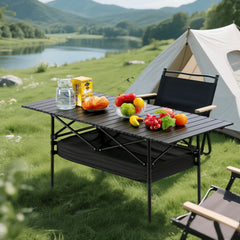
| Campground picnic table | 28–32 inches | Too low for most adults |
| Standard folding camp table | ~28–30 inches | Too low for most adults |
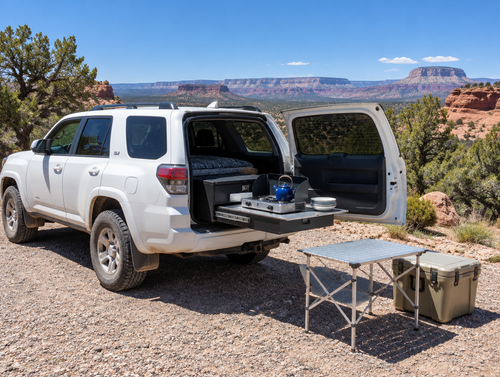
| Open pickup tailgate | 28–34 inches | Borderline; depends on the truck |
| Home kitchen counter | 36 inches | The benchmark |
| Kitchen box on a 30-inch table | ~41 inches | Standing height, even for tall cooks |
Notice the pattern: almost everything you'd naturally cook on at a campsite sits in the high 20s to low 30s. Adjustable-height camp tables exist — some prep tables run from the low 20s up to 38 or 39 inches at full extension — but the ordinary roll-top table or campground-issue picnic table leaves you hunched.
The Box Trick: Stack Your Way to Counter Height
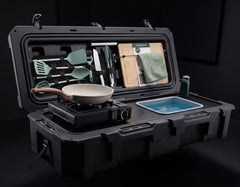
This is where a camp kitchen box quietly solves a problem most people blame on their spine instead of their furniture. The VOZ Camp Kitchen is a 47.6 x 19.3 x 11.4-inch case with no legs of its own — it's built to sit on a tailgate or a camp table. That 11.4-inch case height is the whole trick: whatever surface you put it on, your working deck rises about 11 inches above it.


Put the box on that too-low 30-inch picnic table and the removable countertop and cutting board now sit around 41 inches — above home-counter height, right in the comfortable zone for average and tall cooks alike. The sink and USB-rechargeable faucet come up to the same level, so dishwashing stops being a bent-over chore too. The case packs its own countertop, cutting board, stove, and sink into that height — our full rundown of everything included in the kit walks through the layout piece by piece.
The lid pulls the same duty for overflow space: popped open, it exposes extra deck for staging plates and ingredients, which we covered in detail in our guide to using the lid as a prep surface.

Matching the Base to Your Height
Since the box adds a fixed ~11 inches, choosing your base surface is how you tune the final working height to your body. Work the elbow rule backward: measure your standing elbow height, subtract 3 inches, then subtract 11 more — that's the base height you're looking for.
- Taller cooks (5'10" and up): a 30-to-32-inch picnic table or full-height camp table puts the deck at 41 to 43 inches — hard to achieve any other way short of a custom bench.
- Average-height cooks: a 28-to-30-inch table or a lower tailgate lands the deck in the 39-to-41-inch range. If that feels tall, chop on the table beside the box and use the box deck for the stove and sink.
- Shorter cooks (under 5'4"): aim lower. An adjustable-height side table dropped to the mid-20s puts the deck in the mid-30s — classic counter height. Truck owners can also skip the tailgate and use a lower table on the ground.
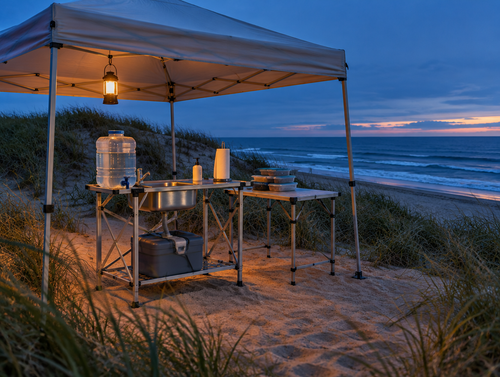
A dedicated table also beats gambling on whatever your campsite provides — picnic tables vary by a few inches between parks, and dispersed sites have none at all. Our camp tables collection includes roll-up aluminum tables at standard height and an adjustable-height folding side table you can dial up or down to hit your number exactly.


One last back-saver that has nothing to do with counter height: how you get the box onto the base. A loaded kitchen box is a real lift, so slide it to the tailgate edge and lift with your legs, not your rounded back — the same forward-bend rule applies to the ten seconds of carrying as to the forty minutes of cooking.
FAQ
What is the ideal counter height for a camp kitchen?
About 2 to 4 inches below your standing elbow height for prep work — the same guideline ergonomists use for light standing work. For most adults that means the mid-30s to around 40 inches, which is why the 36-inch home counter feels right and a 30-inch picnic table doesn't.
Is a picnic table too low to cook on?
For standing prep, yes — campground tables run 28 to 32 inches, built for seated dining, not standing work. Either sit down on the bench to chop, or raise the work surface: a kitchen box on the tabletop adds about 11 inches and puts you back at counter height.
How high is a tailgate as a cooking surface?
Open tailgates typically sit 28 to 34 inches off the ground depending on the truck and its tires. On a taller truck, a tailgate alone is already close to counter height; add a kitchen box on top and the deck suits tall cooks especially well.
Should the stove be lower than the cutting board?
Slightly, yes. Pot walls and handles add working height, so a stove a couple of inches below your prep surface keeps stirring and lifting comfortable — the same reason guidelines put heavier downward-force work further below the elbow than light work.
- Camp Kitchen Kit: Everything That's Included (and Why It Matters)
- Using Your Camp Kitchen Lid as a Prep Surface: Counter Space Without Extra Gear
- How Much Does a Camp Kitchen Weigh? Real Numbers for a One-Person Carry
- Where to Set Up Your Camp Kitchen: Placement and Safety Rules That Actually Matter
Ready to upgrade your camp kitchen?
The VOZ Camp Kitchen includes everything you need in one weatherproof case. Sets up in 15 seconds.
Shop VOZ Camp Kitchen →