Can You Drink the Water From Your Camp Kitchen Tank? Potability, Safety, and Filters

You filled your camp kitchen's water tank at home, drove four hours, set up camp — and now someone's holding out a cup. Is that water actually safe to drink? Short answer: yes, if you filled from a potable source, keep the tank clean, and don't let the water sit for weeks. Here's the full picture, with the exact numbers from the EPA and CDC.
The Short Answer: Yes — With Three Conditions
Water from a portable camp kitchen tank is as drinkable as the water you put into it, held in the condition you keep the tank in. That means three things have to be true at the same time:
- The source was potable. You filled from a tap or spigot that delivers treated drinking water — not an irrigation line, a lake, or a "non-potable" campground spigot.
- The tank and lines are clean. A tank that sat in the garage all winter with a half-inch of old water in it is not clean, no matter what you pour in on top.
- The water is fresh. Municipal tap water carries a small amount of residual chlorine that keeps it safe in your home's pipes, but that chlorine dissipates once the water sits in a warm plastic tank. Time works against you.
None of these is hard to get right. The rest of this article is the routine that keeps all three true on every trip.
"Potable" Depends on Where You Filled It
Campgrounds in the US generally mark their water sources, and the marking matters. A spigot labeled "potable water" or "drinking water" delivers water from a treated, tested supply. Spigots near dump stations, fish-cleaning tables, or irrigation lines are often labeled "non-potable" — that water may be untreated well or surface water intended for rinsing, not drinking. If a spigot isn't labeled at all, ask the camp host before you fill a tank you plan to drink from.
Two more fill-up habits worth building:
- Use a drinking-water-safe hose. Standard garden hoses aren't manufactured to drinking-water standards. If you fill with a hose, use one rated for potable water (the white or blue RV-style hoses), and store it with the ends capped or connected together so nothing crawls inside.
- Fill at home when you can. Your own tap is a known quantity. Filling the tank in your driveway the morning you leave means the water is as fresh as possible when you arrive.

If you're new to how the whole water system fits together — tank, pump, faucet, and sink — our rundown of everything included in a camp kitchen kit shows where the tank sits in the setup and what it feeds.
How Long Does Water Stay Drinkable in the Tank?
This is the question forums argue about, so let's separate the two situations:
- Water in a clean, sanitized tank on a trip: the widely repeated rule of thumb in the RV world is about two weeks. After that, the residual chlorine is long gone and the tank becomes a comfortable place for bacteria and algae to get started — especially in summer heat. For a weekend or even a week-long trip, water you filled at departure is fine to drink.
- Water stored in sealed containers between trips: the CDC's guidance for stored tap water is to replace it every six months, and to keep containers between 50°F and 70°F, out of direct sunlight. Note the difference: that guidance assumes a sealed, food-grade container in cool storage — not a vented tank riding in a hot cargo area.
The practical translation for camp kitchen owners: fill fresh for each trip, and drain the tank when you get home. Don't leave water in the tank between trips "to save time." A tank that travels wet grows things — that's how you end up with the plasticky, swampy taste people complain about.
Heat and sun accelerate everything. A dark tank riding in a closed vehicle on an August afternoon gets far warmer than the outside air, and warm standing water loses chlorine faster and grows bacteria faster. Park the kitchen in shade and keep the lid closed.
How much water you should be hauling in the first place is its own question — we ran the gallons-per-day math for camp kitchen tanks separately. For planning purposes, the CDC's baseline for drinking alone is one gallon per person per day, before you count cooking and dishwashing.
Sanitize the Tank: The Five-Minute Routine
Before the first trip of the season — and any time the tank has sat in storage or smells off — sanitize it. The CDC's method for water storage containers is cheap and takes minutes of hands-on time:
- Wash the tank with dish soap and water, then rinse completely.
- Mix a sanitizing solution: 1 teaspoon of unscented household bleach (5%–9% sodium hypochlorite) in 1 quart of water.
- Pour it in, cap the tank, and shake or slosh so the solution touches every interior surface — corners, the neck, and the underside of the lid.
- Wait at least 30 seconds, pour the solution out, and let the tank air-dry completely before you use it or store it.
Run a little of the solution through the pump and faucet line too — the tank is only half the system, and the tubing is where buildup hides. If you've already got visible slime or a musty smell, that's a deeper cleaning job: here's how to clean a camp kitchen sink and water system and keep mold out for good.
Not Sure About the Water? Boil, Treat, or Filter
Sometimes you can't verify the source — an unlabeled spigot, a questionable well, or water that's been in the tank longer than you planned. You have three options, and your camp kitchen's stove handles the first one:
| Method | How | Good for |
|---|---|---|
| Boil | Rolling boil for 1 minute (3 minutes above 5,000 ft elevation), per EPA guidance | Killing bacteria, viruses, and parasites; the most reliable method |
| Bleach | 8 drops of 6% unscented bleach per gallon (6 drops if 8.25%); stir and let stand 30 minutes; double the dose if water is cloudy | Treating a full tank without fuel |
| Filter | Use a filter certified to NSF standards for cyst reduction, then disinfect | Improving taste and removing parasites; pair with chemical treatment for viruses |
After bleach treatment, the EPA notes the water should have a slight chlorine smell — if it doesn't, repeat the dose and wait another 15 minutes. And to be clear on scope: this treats questionable water. If you filled from a potable tap into a clean tank a few days ago, you don't need to treat anything — that water is simply drinking water.

The Two-Water System Most Campers Land On
Here's the setup experienced car campers converge on, and it makes the potability question mostly disappear: drink and cook from a dedicated water jug; let the tank feed the sink.
The built-in tank on a camp kitchen earns its keep at the sink — handwashing, rinsing produce, and dishes after dinner. That's where running water changes camp life, and it's also the use that doesn't care whether the chlorine faded two days ago. Meanwhile, a dedicated jug with a spigot holds your drinking water, stays in the shade, and gets refilled at the potable spigot as needed.
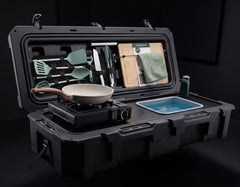
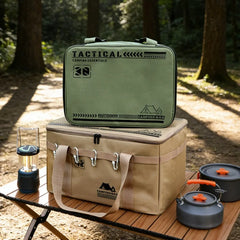
The VOZ Camp Kitchen is built around exactly this workflow: the included tank and USB-rechargeable faucet give you running water at the sink for washing and cooking cleanup, and the case still has room for cups and a compact jug for drinking water. One box, both jobs covered.


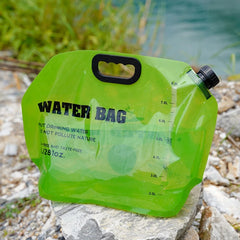
If you'd rather carry drinking water in its own container, a jug with a built-in faucet — like a 3.4-gallon camping water container — doubles as a hand-wash station and keeps your drinking supply separate from the wash supply.


FAQ
Can I drink water that's been in the tank for a month?
Don't. Past the two-week mark — and certainly at a month — the residual chlorine is gone and you have no idea what's grown in there. Dump it, sanitize the tank with the CDC bleach routine above, and refill fresh. Water is cheap; a stomach bug on a camping trip is not.
Does the USB faucet or pump make the water safer?
No. The faucet moves water; it doesn't treat it. A rechargeable pump faucet pulls whatever is in the tank up to the spout — clean tank in, clean water out. Safety comes from the source, the tank, and the timeline, not the hardware.
My tank water tastes like plastic. Is it unsafe?
A plasticky taste on its own is usually a taste problem, not a safety problem — common with new tanks and water that sat warm. Sanitize the tank, rinse well, and fill with cold fresh water. A musty or swampy smell is different: that suggests biological growth, so sanitize before drinking from it again.
Can I put stream or lake water in the tank if I filter it first?
Only if you treat it fully first — filter plus disinfection (or boiling) before it goes in. Pouring "mostly filtered" backcountry water into your tank seeds the whole system with whatever got through. Most car campers never need to do this; potable spigots are easier.
Do I need to sanitize before every single trip?
No. Sanitize at the start of the season, after any long storage, and whenever the tank smells or tastes off. In between, draining after each trip and letting the tank dry with the cap off is enough.
- Camp Kitchen Kit: Everything That's Included (and Why It Matters)
- How Big Should a Camp Kitchen Water Tank Be? The Gallons-Per-Day Math
- How to Clean a Camp Kitchen Sink and Water System (and Prevent Mold)
- How a USB-Rechargeable Faucet Works on a Camp Kitchen
- How to Get Hot Water at Your Camp Kitchen Sink (Without an RV)
Ready to upgrade your camp kitchen?
The VOZ Camp Kitchen includes everything you need in one weatherproof case. Sets up in 15 seconds.
Shop VOZ Camp Kitchen →