What to Keep Permanently Stocked in Your Camp Kitchen Box (vs. Packing From Home)

The whole point of a camp kitchen box is that it leaves the garage ready to cook. If you're still raiding your kitchen drawers for a spatula every Friday afternoon, you own a storage bin, not a camp kitchen. Here's exactly what earns a permanent spot in the box — and what should always come from home fresh.
Why a Permanently Stocked Box Beats Packing From Scratch
Experienced car campers almost universally land on the same system: a dedicated set of cooking gear that lives in the box year-round, never borrowed back into the house. REI's camp kitchen guide recommends exactly this — a pre-packed bin of items designated "just for camping" — and the traditional chuck box was built around the same idea a century ago: nonperishable kitchen supplies stay in the box, food travels separately.
The payoff shows up in two places. First, departure time: a stocked box loads in one carry, so a Friday-night decision can become a Saturday-morning campsite. Second, reliability: when nothing gets unpacked into the house between trips, nothing gets forgotten. Almost every "we forgot the can opener" story starts with gear that did double duty at home.
The cost is buying some duplicates — a second spatula, a second cutting board, a camp-only knife. Spread over years of trips, that's one of the cheapest upgrades in camping.

The Permanent Roster: What Lives in the Box Year-Round
Everything on this list is nonperishable, doesn't mind temperature swings, and is cheap enough to duplicate. Once it goes in, it never comes back out except to be washed and returned.
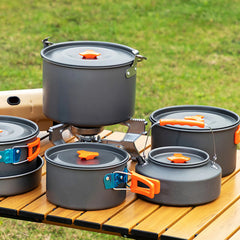
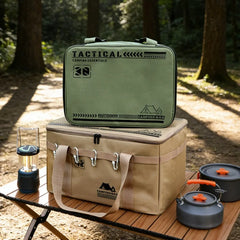
- Cookware: one pot, one pan, and a kettle that nest together. Dedicated camp cookware also takes the abuse — scorched bottoms, gravel scratches — that would ruin your home set.
- Eating gear: plates, bowls, cups, and cutlery for your usual crew size, plus two spares for guests.
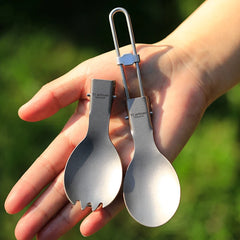
- Cook tools: spatula, tongs, serving spoon, ladle, can opener, bottle opener, cutting board, and a knife that stays sheathed in the box.
- Wash kit: biodegradable soap, sponge, scraper, dish towels, and collapsible basins if your kitchen doesn't have a built-in sink.
- Fire and light: lighter, waterproof matches as backup, and a headlamp or small lantern dedicated to the kitchen.
- Consumables that keep: foil, trash bags, paper towels, zip-top bags, salt and pepper.
- Small repairs: duct tape, a few zip ties, and spare stove-regulator o-rings weigh nothing and save trips.


Spices deserve their own note, because they're the item people most often shuttle back and forth. Ground spices hold their flavor for about 2 to 3 years according to the USDA's FoodKeeper storage guidance, so a dedicated camp spice kit refilled once a season is completely practical. A compact bottle set means you're never cooking an unseasoned dinner because the paprika stayed home.


If you want the full item-by-item breakdown with quantities, our 47-item camp kitchen checklist covers the complete loadout; this article is about which of those items should never leave the box.
What to Pack Fresh From Home Every Trip
Some things simply don't belong in long-term storage, either because they spoil, degrade, or aren't safe in an enclosed box.
- All food and the cooler. The chuck-box tradition is explicit on this: food travels in its own bin or cooler, never stored in the kitchen box between trips. Anything edible left in a garage-stored box is a rodent invitation.
- Cooking oil and condiments. Oils degrade with heat and light, and a garage or truck bed swings far outside kitchen temperatures. Bring a small bottle from home and take it back — or accept a shorter replacement cycle if you keep one in the box.
- Fuel canisters. Don't store propane or butane inside a closed box. OSHA's cylinder-storage rules prohibit keeping gas cylinders in unventilated enclosures such as lockers and cupboards, and a latched, gasketed kitchen box is exactly that. Store canisters in a ventilated spot away from heat, and load them loose on travel day.
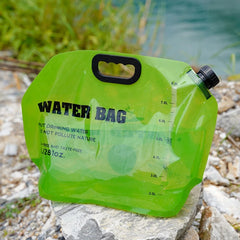
- Water. Fill the tank or jugs the morning you leave. Water left sitting in a tank between trips goes stale and feeds mold in lines and pumps.
- Anything rechargeable. A USB faucet pump or lantern should come inside for a top-up charge before departure rather than sitting on a dead battery since Labor Day.
Bear Country Rewrites the Rules
One important caveat on the "keep it stocked" strategy: in bear country, the box itself needs proper storage at camp. The National Park Service warns that bears treat anything with a scent as food — including canned goods, spices, soap, and even used cookware — and many parks require all scented items to go into bear-resistant lockers or containers, never left out or in tents. Details are on the NPS food storage page, and rules vary by park. Practically, that means your stocked box cooks dinner as usual, but overnight it goes into the campsite locker or a closed hard-sided vehicle where regulations allow — one more argument for a box compact enough to lift and move in one carry.
The 15-Minute Restock Ritual
A permanently stocked box only works if you close the loop after each trip. Before the box goes back on the shelf:
- Wash and dry everything — cookware stored damp in a sealed box grows mildew.
- Refill what the trip consumed: paper towels, foil, soap, trash bags, low spice bottles.
- Drain the water system completely and leave the tank cap loose to air out.
- Pull fuel canisters out and store them ventilated.
- Recharge anything with a battery, then note the box is trip-ready.

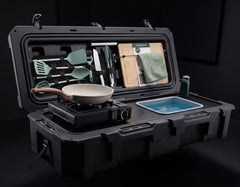
An all-in-one kitchen makes this ritual dramatically shorter because the storage plan is built in. The VOZ Camp Kitchen ships with 30+ cooking items in dedicated slots inside a weatherproof case, plus a built-in sink, water tank, and USB-rechargeable faucet — so restocking is a visual check of empty slots rather than a mental inventory, and the whole kitchen stays staged for the next trip in one box.


However you organize it, give every item one fixed home inside the box — our guide to organizing a camp kitchen box layout shows how a fixed layout is what makes missing items visible at a glance.
FAQ
Is it worth buying duplicate kitchen gear just for camping?
For anyone camping more than once or twice a year, yes. The duplicates are the cheapest items in your kit — spatulas, cutting boards, basic knives — and they eliminate both packing time and the forgotten-item failures that ruin camp meals.
Can I leave salt, pepper, and spices in the box all year?
Yes, with a caveat. Sealed spices are nonperishable and hold usable flavor for about 2 to 3 years, so an annual refresh is plenty. The exception is bear country, where scented items — spices included — must go into approved storage at the campsite.
Why can't I store my propane canister inside the box?
A latched kitchen box is an unventilated enclosure, and gas cylinders should never be stored in one — a slow leak has nowhere to disperse. Keep canisters in a ventilated area away from heat and add them to the load on departure day.
Should dish soap stay in the box?
Yes — a small bottle of biodegradable camp soap is a permanent resident. Just bag it in a zip-top so a pressure- or heat-induced leak can't coat everything else in the box.
What's the single most forgotten item without a stocked box?
Small hand tools are the classic casualties — the can opener, the lighter, the knife. They're exactly the items that get borrowed back into the house kitchen, which is why the no-borrowing rule matters more than any checklist.
- What Is a Camp Kitchen Box? The Modern Chuck Box Explained
- The Ultimate Camp Kitchen Checklist (47 Items)
- How to Organize a Camp Kitchen Box So You Can Find Everything Fast
- How to Store a Camp Kitchen Between Trips (So It's Ready Next Time)
- How to Clean a Camp Kitchen Sink and Water System (and Prevent Mold)
Ready to upgrade your camp kitchen?
The VOZ Camp Kitchen includes everything you need in one weatherproof case. Sets up in 15 seconds.
Shop VOZ Camp Kitchen →