Camp Kitchen for an Off-Grid Cabin: A Full Kitchen Without Plumbing or Power

An off-grid cabin gives you land, quiet, and a roof — and no faucet, no range, and no drain. The good news: you don't need a plumber or a solar array to get a working kitchen out there. A portable camp kitchen puts a sink, running water, and a stove in one box you can carry to the porch.
The Dry-Cabin Kitchen Problem
Every kitchen you've ever cooked in was designed around two assumptions: water arrives by pipe and leaves by drain. According to the EPA, the average American family uses more than 300 gallons of water per day at home — a number that only works because nobody is hauling it. At a dry cabin, every gallon rides in with you, so the whole kitchen has to be rethought around small amounts of water used deliberately.
The standard answer you'll find on cabin-building forums is the DIY rig: a 5-gallon jug with a spigot propped above a salvaged sink basin, draining through a hole in the counter into a bucket below. It works. It's also cold, slow, and cluttered — the spigot dribbles, the jug hogs your only counter, the bucket overflows when you forget it, and the whole thing has to be rebuilt every time you improve one piece. And you still don't have a stove, cookware storage, or a prep surface that isn't also the jug stand.
One Box Instead of a Remodel
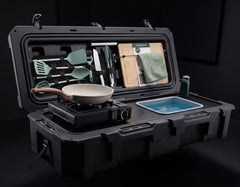
A camp kitchen box solves the same problem as that DIY rig, except somebody already engineered all the pieces to work together. The VOZ Camp Kitchen packs a collapsible sink, a USB-rechargeable faucet, a 2-gallon water bag, a butane burner, and 30+ cooking items into a weatherproof 25-gallon case that weighs about 57 pounds loaded and sets up in well under a minute. Closed, it's roughly 48 by 19 by 11 inches — it rides flat in a truck bed or SUV cargo area on the drive out and stows under a bunk or bench when you're not cooking. If you're comparing options in this category, our guide to what to look for in a camp kitchen breaks down the features that matter.


For a cabin specifically, the box format has advantages a built-in kitchen can't match. There's nothing to permit, nothing to winterize in place, and nothing to plumb. It cooks on the porch in July and moves inside for prep when the weather turns. And at the end of the season, the whole kitchen leaves with you — which matters at remote cabins where anything left behind feeds either mice or thieves.
Running Water Without Plumbing: How the Sink Works
The part cabin owners ask about most is the sink, because a sink is the thing that makes a cabin feel like a house instead of a campsite. Here's the whole system: a small electric pump faucet draws from the water bag below the sink and delivers a steady stream over the basin, like a kitchen tap. The faucet runs on a built-in battery that recharges over USB — from a power bank, a vehicle port, or a small solar panel. No pressure tank, no pipes, no 12-volt wiring through the wall. We cover the design in detail in our article on why a sink changes everything outdoors.
Drainage is just as simple, and honestly better suited to a dry cabin than real plumbing: the basin empties into a bucket or graywater jug below, which you carry out and dump properly. No trap to freeze, no drain line to crack in February.
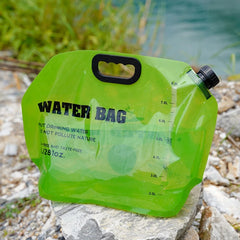
When you outgrow the included 2-gallon bag — and at a cabin you will, fast — the fix is to scale the supply, not the system. A USB pump faucet sits on top of any standard 5-gallon water bottle, and larger tap-equipped containers cover dishwashing and general wash-up water. Keep two or three filled containers on rotation and the "running water" experience never stops.


Cooking Without Power: Butane and the Carbon Monoxide Rule
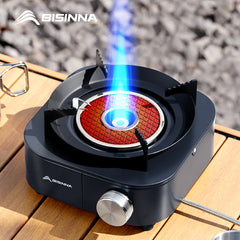
For the stove, canister fuel is the dry-cabin sweet spot. The butane burner included with the VOZ box lights instantly, simmers properly, and runs on standard cassette canisters you can buy at any big-box store. If you cook for a crowd, a two-burner propane stove running off a 20-pound tank gives you more output and cheaper fuel per meal.


One rule is non-negotiable, and it's the biggest mistake new cabin owners make: the stove cooks outside. The CDC is explicit that camp stoves, charcoal grills, and other fuel-burning devices should never be used inside a home, cabin, tent, or camper — and that includes running them near an open window or door, since CDC guidance calls for keeping fuel-burning equipment more than 20 feet from windows, doors, and vents. Carbon monoxide is odorless and colorless, and a small cabin is exactly the kind of tight space where it builds up. A residential propane range is engineered and vented for indoor use; a camp stove is not, and cracking a window does not make it one. So the working layout is: prep inside on the box lid or table, cook on the porch or a stand outside the 20-foot line, wash inside at the sink. In practice this is how good cabin kitchens have always worked — the fire stays out of the bunkhouse.
Water In, Graywater Out: The Weekend Math
Ready.gov recommends storing at least one gallon per person per day just for drinking and sanitation. Add real cooking and a round of dishes after each dinner and a comfortable planning number at a cabin is two to three gallons per person per day. For two people on a weekend, that's roughly 8 to 12 gallons — two 5-gallon containers filled in town before you head up the hill. The camp kitchen's own 2-gallon bag then works as the "faucet supply," refilled from the big containers as needed.

Graywater deserves the same discipline on private land that it gets on public land. U.S. Forest Service dispersed-camping guidance says to wash and dump wastewater well away from any water source — 200 feet is the standard — using small amounts of biodegradable soap and a shallow sump hole that lets soil do the filtering. At your own cabin, the water source you're protecting is probably your own well, spring, or creek, so the rule isn't just etiquette. Strain out food scraps first and pack them out with the trash; scraps buried in a sump are a standing invitation to raccoons and bears. If you've ever cooked with no hookups off a forest road, this is the identical workflow — our guide to boondocking with a camp kitchen walks through the full no-hookup routine.
FAQ
Can I use a camp kitchen inside the cabin?
The sink, faucet, prep surface, and storage — yes, absolutely, and that's a big part of the appeal. The stove — no. Per CDC guidance, fuel-burning camp stoves never run indoors, in any enclosed space, regardless of ventilation. Cook outside, more than 20 feet from windows and doors.
How do I get hot water for dishes?
The same way cabins always have: heat a pot on the stove and temper it into the wash basin with cold water from the tap. A gallon or so of hot water handles a full dinner's dishes. We cover more options in our guide to getting hot water at a camp kitchen sink.
Do I need a generator or solar setup to run the faucet?
No. The faucet pump has its own rechargeable battery and tops up over USB, so a phone-sized power bank keeps it running for a long stay. It's one of the few "powered" comforts that costs essentially nothing to support off-grid.
What about winter?
Drain everything before the first hard freeze — the water bag, the pump, and any jugs left at the cabin. Water expands about 9% when it freezes, which is enough to split a pump housing or a seam. Better yet, since the whole kitchen is a box, take it home for the winter and store it dry.
- Best Camp Kitchen in 2026: What to Look for Before You Buy
- Camp Kitchen With Sink: Why Running Water Changes Everything Outdoors
- Camp Kitchen for Boondocking and Dispersed Camping: Cooking With No Hookups
- Where to Dump Camp Kitchen Sink Graywater (Leave No Trace, Done Right)
- Camp Kitchen for a Hunting Camp: A Bear-Country Setup That Cooks Anywhere
Ready to upgrade your camp kitchen?
The VOZ Camp Kitchen includes everything you need in one weatherproof case. Sets up in 15 seconds.
Shop VOZ Camp Kitchen →