

Foot-Pump Portable Sink Station vs. Camp Kitchen Box With Sink: Which Gets You Running Water Easier?

If running water at camp is the goal, you have two common ways to get it without an RV: a freestanding foot-pump sink station, or a camp kitchen box that has a sink and faucet built in. Both put clean water over your hands. They differ in what else you haul, how much ground they take up, and what happens once the water gets dirty.
What a Foot-Pump Sink Station Actually Is
A foot-pump sink station is a free-standing plastic cabinet about waist high. A fresh-water tank sits inside, a basin sits on top, and a pedal at the base pushes water up through a spout. The best-known version in US retail is the Hike Crew line, sold in 4.5-, 5-, and 7.9-gallon sizes. SereneLife, Yescom, and SalonMore sell very similar designs.
Published specs for the most common setups:
- Hike Crew 4.5-gallon: 4.5-gallon fresh tank, 6.34-gallon waste tank, about 6.8 oz of water per pump, 8.1 lb empty, high-density polyethylene, assembles without tools. Overton's lists it at $119.99.
- Hike Crew 7.9-gallon: larger tank, about 6 oz per pump, built-in wheels, 12.1 lb empty, a basin about 19.7 x 15.9 in. Overton's lists it at $149.99.
- SereneLife 19L (about 5 gallons): about 180 ml (6 oz) per step, a 3L soap reservoir, roughly 19.7 x 13 x 40 in, 7.7 lb empty.
Hands-free operation is the selling point. You pump with your foot, so you never touch a dirty handle with dirty hands. That's why these stations show up at food booths, worksites, and big group camps. A station does one job, though: it washes hands and small dishes. It won't cook anything or carry anything for you.

What a Camp Kitchen Box With a Sink Does Differently
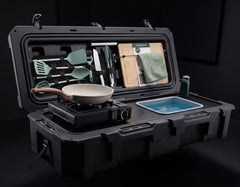
A camp kitchen box puts the sink inside the same case as your stove, cookware, and utensils. You don't carry a separate cabinet. The VOZ Camp Kitchen includes a butane stove and frypan, a foldable sink, a USB-rechargeable electric faucet, a removable 2-gallon water tank, a cutting board, an LED light, and utensils. All of it packs into one weatherproof case of about 47.6 x 19.3 x 11.4 in that sets up in under 30 seconds.


The faucet runs on a pump, so you press a button and water flows. You don't stand on one foot and pump. If you want the full breakdown of why a faucet beats a jug and a bowl, our post on a camp kitchen with sink and faucet covers it.
Side-by-Side: Pumped Station vs. Kitchen Box Sink
| Foot-pump sink station | Camp kitchen box with sink | |
|---|---|---|
| How water flows | Foot pedal, about 6 to 6.8 oz per press | Electric faucet, push-button |
| Fresh water on board | About 4.5 to 7.9 gallons | 2 gallons (VOZ), refillable |
| Gray water | Built-in waste tank or drain hose on some models | Drain to a bucket or container |
| Stove included | No | Yes |
| Storage for cookware | No (a cabinet, but it holds the tanks) | Yes, everything packs inside |
| Empty weight | About 7.7 to 12.1 lb | About 57 lb for the full VOZ kit |
| Items to load in the car | Sink + stove + cookware bin + table | One case |
| Power needed | None | USB recharge for the faucet |
Read that table honestly. A pump station holds more water and costs less on its own. A kitchen box is heavier, but that weight includes the stove, cookware, and the whole kitchen.
Footprint and Hauling: The Hidden Cost of a Separate Station
A foot-pump station stands roughly 40 inches tall and doesn't fold flat. A SereneLife unit packs into about 19.7 x 13 x 40 in. In a sedan trunk or an SUV already full of coolers and duffels, that's a bulky, awkward shape. And it's in addition to your stove, cookware bin, and prep table, not instead of them.
That's the real tradeoff. A station is a single-purpose item. Your car load becomes station + stove + table + kitchen tote, and each piece is one more trip from the car. A kitchen box folds the sink into gear you were already bringing. If you've ever weighed a modern box against an old-school wooden one, our camp kitchen vs. chuck box comparison works through that same consolidation argument.
At the site, a station needs its own patch of flat ground plus room to stand in front of it. A box sink sits at the same counter where you're already prepping and cooking. Rinse a pan, turn around, and it's back on the stove.

Water Capacity: Where Pump Stations Win
Tank size is the biggest point in a pump station's favor. A 4.5- to 7.9-gallon tank goes a long way when 10 kids are washing hands before dinner. At about 6.8 oz per press, one gallon is roughly 19 presses. A 4.5-gallon tank is around 85 presses before you refill.
A 2-gallon tank in a kitchen box is sized for cooking and dishes for a small group, not for a whole campground's handwashing line. You can stretch it with a refill jug, and we break down the daily math in how big a camp kitchen water tank should be. For a family of four doing a long weekend, a 2-gallon tank plus a spare jug is usually enough. For scout troops or large group sites, a big station often earns its space.
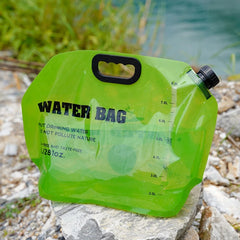
If you go the jug route, a container with a tap makes refilling easy:


Whichever you pick, running water makes proper handwashing easier. The CDC advises wetting hands with clean running water, scrubbing for at least 20 seconds, and rinsing under clean running water. Both setups can do that. A bowl of standing water can't.
Gray Water and Cleanup
Many pump stations include a waste tank. On the Hike Crew 4.5-gallon model it holds 6.34 gallons, so dirty water stays contained until you dump it. That's a real plus at a busy site. A kitchen box sink usually drains through a hose or outlet into a bucket you supply.
Either way, the dumping rules are the same. The National Park Service Leave No Trace guidance says to wash at least 200 feet from lakes and streams, use small amounts of biodegradable soap, and strain out food scraps. A waste tank makes that easier to follow, but it doesn't change what you're allowed to do.
One more cleanup point: a pump station's tank, hose, and pedal all need flushing and drying after each trip, or they can grow mildew. A kitchen box's removable tank comes out and dries in one piece. Pump stations have more parts to clean.
Who Should Pick Which
Choose a foot-pump station if: you run a group camp, a food booth, or a worksite where handwashing volume matters more than anything else. Also choose one if you already own a full stove and prep setup and only want the sink. And if you want zero electronics, a pedal never needs charging.
Choose a camp kitchen box with a sink if: you're car camping, overlanding, or tailgating with two to six people and cargo space is tight. It also makes sense if you want one item instead of four and you'd rather rinse a pan at the counter where you're cooking.
If you were also looking at a basic collapsible basin rather than a pumped station, that's a different comparison. We cover it in built-in sink vs. collapsible sink.
A middle path: a folding sink with its own electric pump is lighter than a full station and gives you push-button water, but it still doesn't include a stove or storage.


FAQ
Is a foot pump better than an electric faucet at camp?
A foot pump never needs charging and frees both hands. An electric faucet gives steady flow without pumping and lets you fill a pot without standing on one leg. For washing dishes at a counter, most people find a faucet easier. For a busy handwashing line, a pedal works well.
How much water does a foot-pump sink use per press?
Published specs run about 6 to 6.8 oz per press on Hike Crew models and about 180 ml (6 oz) on SereneLife's 19L unit. That works out to roughly 19 to 21 presses per gallon.
Can I use a pump station and a camp kitchen box together?
Yes. Large groups sometimes set up a pump station as a dedicated handwashing spot away from the cook area and keep the kitchen box sink for food prep and dishes. That splits traffic and keeps dirty hands away from the cooking counter.
Do foot-pump sink stations fold down?
Most don't. They assemble without tools, but the body stays about 40 inches tall, so plan for that space in your vehicle.
Ready to upgrade your camp kitchen?
The VOZ Camp Kitchen includes everything you need in one weatherproof case. Sets up in 15 seconds.
Shop VOZ Camp Kitchen →

