

Built-In Camp Kitchen Sink vs. Collapsible Sink or Wash Basin: Is Running Water Worth It?

A collapsible sink costs less than a tank of gas and folds flat in a glovebox, so why would anyone haul a camp kitchen with a built-in sink and faucet? Here is the honest answer: sometimes you shouldn't, and sometimes running water is the single feature that decides whether you enjoy cooking at camp.
What We're Actually Comparing
"Camp sink" covers a lot of gear, so let's pin down the three setups most car campers choose between:
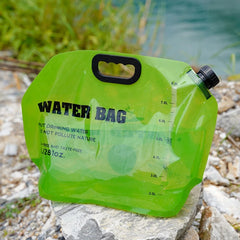
- Collapsible basin. A fabric or silicone bowl that pops up for washing and folds flat for storage. No faucet, no drain on most models. You fill it from a jug and dump it when you're done.
- Standalone folding sink station. A freestanding frame with a basin, a drain, and often a pump faucet fed by a separate water jug. It adds counter space but is its own piece of gear to set up.
- Built-in camp kitchen sink. A sink and faucet that live inside the kitchen box, with the water tank, stove, and prep surface in the same footprint. It deploys when the box opens.
We already made the full case for running water in our camp kitchen with sink breakdown. This post is the other side of the table: where a cheap basin genuinely wins, where it quietly costs you, and how to tell which camper you are.

Where the Collapsible Basin Wins
A good fabric basin is a remarkable piece of gear for what it weighs. Sea to Summit lists its 10-liter Kitchen Sink at roughly 4.4 oz, folding down to about the size of a paperback, and rates the fabric safe for hot water up to 140°F. That is about 2.6 gallons of washing capacity that disappears into a door pocket.
The basin is the right call when:
- Space and weight rule everything. Moto camping, hike-in tent sites, canoe trips, and small sedans all punish bulk. A basin adds nothing you'll notice.
- You mostly cook one-pot meals. If dinner is a single pot and two bowls, a basin and a kettle of warm water handle cleanup in a few minutes.
- The campground has a spigot nearby. Many developed sites put a water tap within a short walk. Filling a basin there is easy, though you still shouldn't wash dishes at the spigot itself.
- Budget is the hard limit. A basin is the cheapest way to get a dedicated wash bin, and it's still useful later as the second or third bin in a wash line.
If that list describes most of your trips, buy the basin and don't look back. A built-in sink won't fix a packing problem you don't have.
Where the Basin Quietly Costs You
The trouble with a basin isn't the basin. It's everything around it that you have to supply, carry, and pour by hand.
- No running water for hands. The CDC's handwashing steps start with wetting your hands under clean, running water and end with rinsing under clean, running water after at least 20 seconds of scrubbing. A still basin gives you neither step. When soap and water aren't available, the CDC's fallback is a hand sanitizer with at least 60% alcohol, which is fine for hands but not for raw-meat cleanup on a cutting board.
- Every rinse is a two-handed pour. Someone holds the jug while someone else rinses, or you balance a heavy water container on a tailgate and tip it. That works for two people. It gets old fast with kids, or when you're alone and holding a greasy pan.
- Dirty water ends up in one place. With a basin, wash water and rinse water tend to share a bowl unless you bring more bins. That's why the three-bin dishwashing method exists, and it's also why basin setups keep growing into three basins, two jugs, and a folding table.
- It needs a surface. A basin sitting on the ground means washing dishes bent over or kneeling in the dirt. Put it on the picnic table and you've given up prep space.
None of these are dealbreakers on a quiet weekend. They add up on a four-day trip with a family, where cleanup happens after every meal and someone is always asking for water to wash their hands.
Where the Built-In Sink Wins
A built-in sink earns its keep in the moments a basin makes awkward: hands before cooking, rinsing chicken juice off a cutting board, filling a pot without lifting a full jug, and washing up while dinner is still on the stove.
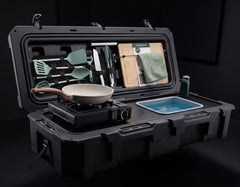
The VOZ Camp Kitchen is a good example of how this works in practice. The case holds a butane stove and frypan, a foldable sink with a USB-rechargeable electric faucet, and a 2-gallon water tank, along with a cutting board, LED light, and utensil set. Press the faucet and water flows; nobody holds a jug. The sink, stove, and prep space open together, so washing stays next to cooking instead of across the campsite.


The trade-offs are real, too. The whole box measures 47.6 x 19.3 x 11.4 inches and weighs about 57 lb, so it's a vehicle-camping tool, not a hike-in one. A 2-gallon tank also means you'll refill on longer trips; our water tank sizing guide walks through the gallons-per-day math. And a powered faucet needs charging between trips, the same as your headlamp.

The Middle Ground: A Standalone Sink or a Faucet on Your Jug
You don't have to jump straight from a basin to a full kitchen box. Two in-between options cover a lot of campers:
- A folding sink station with a pump. You get a basin at working height, a drain, and a faucet, all as a separate unit you can pair with any stove and table. Our Folding Camping Sink with Electric Water Pump is built for exactly this job.
- A water container with a tap or a rechargeable jug pump. Putting a spigot or USB pump on your existing water supply fixes the two-handed pour for very little money. It won't give you a drain or counter, but it turns a basin into something close to running water.


The catch with the middle ground is setup. Every separate piece is another thing to unpack, level, and fill, which is the same problem we compared in camp kitchen vs. chuck box: the more your kitchen is a collection of parts, the longer it takes to go from parked to cooking.
Side-by-Side: Basin vs. Sink Station vs. Built-In Sink
| Factor | Collapsible basin | Folding sink station | Built-in kitchen sink |
|---|---|---|---|
| Running water | No (pour by hand) | Yes, with pump | Yes, faucet from onboard tank |
| Packed size | Pocket-sized | Separate folding unit | Inside the kitchen box |
| Working height | Wherever you set it | Built-in legs | Same height as the stove and prep area |
| Setup | Pop open, fill | Unfold, connect water, fill | Opens with the kitchen |
| Handwashing under running water | Needs a helper or tap jug | Yes | Yes |
| Best for | Solo, minimalist, hike-in, tight budgets | Groups already owning a stove and table | Families, frequent car campers, overlanders |
How to Decide in Two Minutes
Ask yourself three questions:
- How many people wash hands and dishes at your camp? One or two adults can live happily with a basin. Add kids, raw meat, or a group, and running water starts paying for itself in convenience every meal.
- How far do you carry your kitchen? If it's more than a short walk from the car, the basin wins on weight alone.
- How much of your setup do you want to assemble? If you already own a table, stove, and bins and like building your own layout, add a tap jug or a sink station. If you want one thing to open and start cooking, a built-in sink makes more sense. Our folding-table-and-bins comparison, linked below, goes deeper on that choice.
Whichever you pick, the rules for wash water don't change. The National Park Service's Leave No Trace guidance says to wash 200 feet away from streams or lakes, use small amounts of biodegradable soap, strain out food scraps, and scatter the strained dishwater. A faucet doesn't exempt you from any of that, and a basin doesn't make it harder.

FAQ
Can I use a collapsible sink with a camp kitchen box?
Yes, and many people do. A basin makes a great second bin for rinsing or soaking pots alongside a built-in sink, and it gives you a backup wash bin if the tank runs dry.
Is a built-in sink worth it for solo camping?
Usually not if weight and space are tight. Solo cooks with simple meals do fine with a basin and a water jug with a tap. It becomes worth it when you car camp often and want handwashing and cleanup to be as quick as at home.
Can I put hot water in a camp sink?
Check your model. Sea to Summit rates its fabric Kitchen Sink for water up to 140°F. For any sink with a pump or faucet, follow the maker's limits for the tank and pump rather than pouring boiling water in.
Does a faucet sink use more water than a basin?
Not necessarily. A faucet you press on and off only runs while you're rinsing, while a basin has to be filled before you start. Habits matter more than hardware: wipe plates before washing and rinse in short bursts either way.
- Camp Kitchen vs. Chuck Box: Complete 2026 Comparison Guide
- Camp Kitchen vs. Folding Table and Bins: Which Setup Actually Cooks Better?
- How to Wash Dishes With a Camp Kitchen Sink: The 3-Bin Method Made Easy
- Where to Dump Camp Kitchen Sink Graywater (Leave No Trace, Done Right)
- How a USB-Rechargeable Faucet Works on a Camp Kitchen
Ready to upgrade your camp kitchen?
The VOZ Camp Kitchen includes everything you need in one weatherproof case. Sets up in 15 seconds.
Shop VOZ Camp Kitchen →

