

How to Keep Mice and Bugs Out of a Stored Camp Kitchen

A camp kitchen that sits in a garage from October to April is exactly what a mouse is looking for: dark, undisturbed, and smelling faintly of every meal you cooked last season. Here's how to put yours away so nothing is living in it when you open the lid next spring.
Why a Stored Camp Kitchen Attracts Mice and Bugs
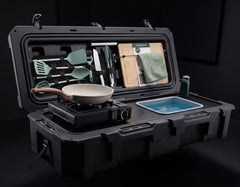
A camp kitchen box concentrates everything a pest wants into one container. A complete kit packs a stove, sink, cookware, utensils, and food storage into a single case — here's everything that's included in a full set — which also means it concentrates every food-adjacent scent into a single case. There's food scent — the grease film on the stove burners, crumbs in the drawer corners, a dusting of flour or pancake mix that leaked out of a bag in August. There's water, if you stored the tank or sink lines with moisture still in them. And there's nesting material: dish towels, paper towels, cardboard packaging from that replacement sponge you tossed in and forgot.
Add six months of darkness and zero human traffic, and the box becomes prime winter real estate. The good news is that a hard-sided kitchen box with an intact gasket is far easier to defend than a pile of loose bins — but only if you prep it right. The whole job takes about an hour, and it breaks down into three steps: clean, de-food, and seal.
Step 1: Deep-Clean Every Surface Before It Goes Into Storage
Pests don't need a buffet — residue is enough. Before the box goes on the shelf, work through every compartment:
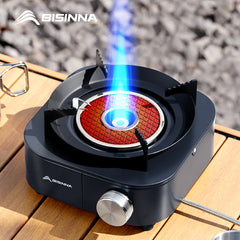
- Degrease the stove. Burner grates, drip trays, and the sheet metal around the burners hold a thin film of cooking oil that smells like food to a mouse long after it stops smelling like anything to you. Hot water, dish soap, and a scrub pad.
- Vacuum the corners. Tip the box, run a crevice tool along every seam, drawer track, and hinge line. Crumbs migrate into corners you can't see.
- Wash the fabric. Dish towels, pot grabbers, and storage pouches go through the laundry. Anything fabric that stays in the box over winter is potential bedding.
- Dry everything completely. Moisture attracts insects and breeds mildew. Leave the box open overnight in a dry room before you close it up for the season.

If you want the full teardown routine — including the sink and water system, which have their own mold issues — we've covered it step by step in our post-trip cleaning guide. The short version: a box that goes into storage clean comes out of storage boring, and boring is what you want.
Step 2: Get Every Trace of Food Out of the Box
This is the step people skip, and it's the one that matters most. The EPA's rodent-prevention guidance starts with cleaning up food and water sources, and a camp kitchen in storage should contain exactly zero calories. That means:
- No dry goods. Rice, pasta, oatmeal, coffee — all of it comes out, even sealed packages. Mice chew through plastic bags and cardboard without slowing down.
- No spices. Spice kits are the sneaky one. Paprika and bouillon smell strongly, and university extension entomologists note that pantry pests like Indian meal moths and weevils often arrive as eggs already inside dry goods — so a forgotten bag of flour can hatch an infestation inside your sealed box with no entry point at all. Store dry goods at home in airtight glass or hard-plastic containers, and restock the kitchen fresh each spring.
- No "it's basically not food" items. Cooking oil, gum, granola bar in the junk drawer, scented hand soap by the sink. If it has an odor, it winters somewhere else.
Decanting your seasonings into a dedicated set of sealed bottles makes this painless — pull the whole rack out in the fall, keep it in your pantry, drop it back in before the first trip.


Step 3: Inspect the Gaskets, Seals, and Latches
Here's where a weatherproof kitchen box earns its keep. According to the CDC's rodent exclusion guidance, a mouse can squeeze through a hole the size of a nickel — roughly the width of a pencil — and a rat through a hole the size of a half dollar. A box that closes with a continuous compression gasket, like the case on the VOZ Camp Kitchen, leaves no gap that size anywhere on its perimeter when the latches are closed. That's a physical barrier no scent-based trick can match.


But a gasket only seals if it's intact and seated. Before storage:
- Run a finger around the entire gasket channel. You're feeling for nicks, flat spots, and trapped grit. A pine needle lodged in the channel holds the lid open a hair — and a hair is a highway for ants.
- Wipe the gasket with a damp cloth and let it dry. Food residue on the rubber itself both attracts pests and degrades the seal over time.
- Close every latch. A lid that's resting closed but not latched isn't compressed, and an uncompressed gasket is just a decorative stripe.
- Check drain and vent openings. Sink drains, faucet pass-throughs, and cable ports are the honest gaps in any camp kitchen. Plug them — a stainless scrub pad stuffed in a drain opening works on the same principle as the steel wool the CDC recommends for holes in walls: rodents can't chew through it.
Garage vs. Shed vs. Basement: Where You Store It Matters
The same box faces very different pest pressure depending on the building it winters in. Ranked from safest to riskiest:
| Location | Pest pressure | What to watch |
|---|---|---|
| Indoor closet / basement | Lowest | Climate-controlled and regularly trafficked. Main risk is moisture in damp basements — elevate the box and check for condensation. |
| Attached garage | Moderate | Rodents follow the walls. Keep the box off the floor and away from clutter, bird seed, and pet food bags — those draw mice in, and your kitchen becomes the nearby shelter. |
| Detached shed | Highest | Sheds are rarely sealed and rarely visited. Assume mice will be inside the building and rely entirely on the box's own seal — inspect it monthly if you can. |

Wherever it lands, get the box up on a shelf or pallet. Rodents travel along floor-wall junctions, and elevation takes your kitchen off their commute. The EPA also recommends removing potential rodent nesting sites from your property — in a garage, that means the cardboard pile next to your camp kitchen is a bigger problem than the kitchen itself. Soft items that can't live inside the box, like extra towels or table linens, do better in sealed waterproof storage bags than in open milk crates.


What Works — and What Doesn't
Pest-proofing advice is full of folklore, so it's worth separating the proven from the hopeful:
- Works: physical exclusion. Intact gaskets, latched lids, steel wool in openings, elevation off the floor. Every credible source, from the CDC to professional exterminators, puts exclusion first.
- Works: zero food. A scent-free box in a tidy corner simply isn't worth a mouse's effort.
- Works: snap traps near the storage area. Not inside the box — around it, along the walls. They both reduce the local population and act as an early-warning system when you check them monthly.
- Doesn't: mothballs. Pest-control professionals report mice walking right past them, and the fumes are toxic to you — plus your cookware will taste like naphthalene until July.
- Mostly doesn't: peppermint oil and dryer sheets. The scent fades quickly, and pest-control companies consistently describe these as temporary, unreliable deterrents at best. Fine as a supplement if you like the smell; useless as your only defense.
FAQ
Can mice chew through a plastic camp kitchen case?
Given a reason, yes — rodents gnaw through plastic, wood, and cardboard without much trouble. In practice they almost never bother with a hard, smooth-walled case that doesn't smell like food. Chewing is expensive effort for a mouse; they do it where a food reward is certain. A degreased, food-free box rarely gets tested.
Should I put traps or bait inside the box?
No. Bait inside the box does the opposite of what you want — it adds a food scent to a container you just spent an hour de-scenting. Poison bait is worse: a poisoned mouse can die inside your kitchen. Set snap traps along the walls near the storage area instead.
What if mice already got in over the winter?
Don't sweep or vacuum droppings — that aerosolizes dust that can carry hantavirus. Follow the CDC cleanup protocol: air the area out for 30 minutes, then wear gloves and spray droppings and nesting material with disinfectant or a 1:10 bleach solution, let it soak 5 minutes, and wipe up with paper towels. Then wash every piece of cookware and utensil in hot soapy water before it touches food again.
How often should I check a stored camp kitchen?
Once a month is plenty. Pop the latches, look for droppings, chew marks, or insect webbing in the corners, confirm the gasket is seated, and close it back up. A monthly 60-second check catches a problem in week two instead of month five.
- Camp Kitchen Kit: What's Included in a Complete Set
- How to Store a Camp Kitchen Between Trips (So It's Ready Next Time)
- How to Clean Your Camp Kitchen After a Trip (So It Lasts for Years)
- How to Keep a Camp Kitchen From Rusting: Weatherproofing That Actually Works
- Cold-Weather Camp Kitchen Care: What Freezing Actually Breaks
Ready to upgrade your camp kitchen?
The VOZ Camp Kitchen includes everything you need in one weatherproof case. Sets up in 15 seconds.
Shop VOZ Camp Kitchen →