Can You Leave Your Camp Kitchen Set Up at the Campsite? Theft, Locks, and What to Stow

You want to hike for six hours and come back to a kitchen that is still there. Here is what actually gets stolen at campgrounds, what the federal rules say about leaving a site, how to cable a camp kitchen box to the picnic table, and which items go with you or into the car before you walk away.
The short answer: yes, with three rules
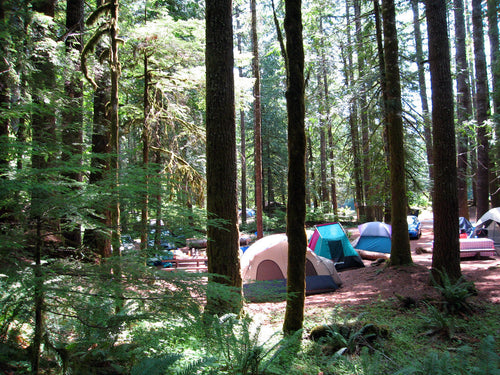
Leaving a set-up camp kitchen at a paid, occupied campsite for a day hike is normal. When the RV Lifestyle site asked its readers about campground theft, the thread ran past 200 comments and most said they had never had a problem. The people who do lose gear usually broke one of three rules: they left something small and valuable in plain sight, they left something easy to carry off unlocked, or they left food out where the rules say it cannot be.
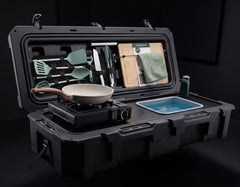
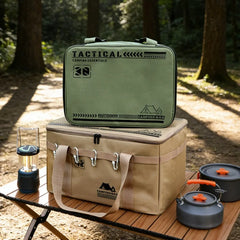
A camp kitchen box is a different kind of target than a phone or a cooler of beer. A loaded VOZ Camp Kitchen is a 47.6 by 19.3 by 11.4 inch case that weighs about 57 pounds. Nobody tucks that under an arm and jogs to a car. The realistic risk is not the box walking off. It is the loose items around it and, in bear country, a ranger writing you up for what you left open.


If you are new to the category, start with our guide to what a camp kitchen box is. The rest of this article assumes you own one and want to leave it out.
What actually gets stolen at campgrounds
Campground theft is mostly a crime of opportunity. Master Lock's camping security guide says most campsite thieves target easy opportunities rather than planning a break-in, and that visible security measures often stop an attempt before it starts. The same guide names portable generators as one of the most frequently stolen items at campgrounds because they are valuable and easy to resell. The RV Lifestyle reader thread lined up with that: e-bikes and bicycles, generators, electronics, and the contents of coolers were the things people reported losing.
Law enforcement bulletins point the same direction. In September 2018 the Jefferson County Sheriff's Office in Colorado warned hikers after a string of vehicle break-ins at Red Rocks area trailheads, where credit cards taken from parked cars were used to buy gift cards. Their advice was plain: nothing of value sitting in the open, lock items in truck beds, and carry your wallet with you.
Notice what is not on those lists: stoves, pots, and kitchen boxes. They are heavy and hard to sell. The kitchen is the safest thing at your site. The valuables you set on top of it are not.

What the campground rules say about leaving a site
Two sets of rules matter here, and they come from different places.
The 24-hour property rule. National Park Service regulations at 36 CFR 2.22 prohibit leaving property unattended for longer than 24 hours except where a longer period has been designated. At campsites, property may be left more than 24 hours only with prior permission of the superintendent and only if the fees for that period are paid in advance. Property left past the allowed time can be impounded. A day hike is nowhere near that line. An overnight backpacking loop launched from a car-camping site is, so ask at the kiosk before you go.
Food storage rules, which apply all day. Yosemite's regulations say food must be properly stored 24 hours a day and define food as anything with a scent regardless of packaging, including canned goods, drinks, toiletries, trash, ice chests even when empty, and unwashed items used for preparing or eating meals. Food may sit inside a closed vehicle only during daylight, and the penalty for noncompliance runs up to a $5,000 fine, impoundment, or removal from the campground. Great Smoky Mountains goes further and names the gear: all food and all equipment used to prepare and store food, including stoves, pots, and coolers, must be kept sealed in a vehicle or in a camping unit made of solid, non-pliable material at all times when not in use.
That second rule decides whether your kitchen can stay set up. Where lockers are required, a latched kitchen box is not a bear locker and rangers will not treat it as one. The stove, the dirty skillet, and the spice kit go in the locker or the trunk before you leave. Under Smokies-style wording, ask the ranger whether a latched hard-sided kitchen box counts as a solid camping unit. Do not assume. The full layout is in our bear-safe camp kitchen layout guide.

How to lock a camp kitchen box to your site
The goal is not to make the box uncuttable. It is to make it slower and more awkward to take than anything else in the loop. Family Handyman tested this with common tools: a 24-inch bolt cutter went through a 3/8-inch Grade 43 hardware-store chain in five seconds and through 5/8-inch vinyl-coated braided steel cable in about 60 seconds. Their conclusion was that the thicker a lock's shackle and the less of it that is exposed, the better it resists cutting. A cable lock is a deterrent against the opportunist with two hands, not against someone who brought tools.
With that understood, here is the setup that works for a box-style kitchen:
- Anchor to something that does not move. If the picnic table is bolted or chained down, use a leg. A tree works if there is one near the kitchen. Cooler cable locks come in lengths up to 8 feet, enough to wrap a table leg or a trunk and still reach the box.
- Run the cable through the carry handles, not around the lid. A cable around the outside of a latched box can be slipped off by opening the latches. Threading it through both molded handles ties the shell itself to the anchor. The VOZ case has two built-in handles for exactly this kind of pass-through.
- Use a padlock on the latches only if the latches have a hasp eye. Some kitchen boxes have padlock holes in the latches and some do not. If yours does not, do not drill one. The cable through the handles is doing the real work.
- Pick a weather-resistant lock. A campground lock lives in dew, dust, and rain. A brass or laminated body with a shrouded shackle beats a bare padlock that rusts shut by August.
- Latch the box. Three closed latches put every small item inside one more step away, and keep the weather and raccoons out.
The same cable earns its keep on the drive. Pair it with the straps in our guide to securing a camp kitchen for transport and the box stays put in the truck bed at the trailhead lot too.
What to stow before a day hike
This is the part that prevents nearly every real loss. Take five minutes and sort the site into piles.
| Item | Where it goes | Why |
|---|---|---|
| Wallet, phone, keys, cards | On your body | Top of every sheriff's list. Never in the tent or the box. |
| Power station, lantern, speaker, camera | Locked in the vehicle, out of sight | Small, resellable, and the only things in a kitchen setup worth a thief's time. |
| Cooler and 12V fridge | Vehicle or bear locker | Cooler contents are a reported theft target, and coolers count as food storage in Yosemite even when empty. |
| Stove, dirty pans, spice kit, dish soap | Bear locker or trunk where required; otherwise latched inside the box | Scented items. Required storage in bear country, optional but smart elsewhere. |
| Knives, fuel canisters | Latched inside the box | Out of sight and out of reach of kids on the next site. |
| Table, chairs, the kitchen box itself | Left set up, box cabled to the table | Heavy, low resale, and it signals the site is occupied. |
A latched kitchen box makes the last pile fast. Everything that lives in the kitchen goes back in its slot, the latches snap, and the site looks occupied instead of abandoned. Loose extras that live outside the box go in one closed bag, so the car gets one trip instead of six.


Leaving for a full day or overnight
An all-day outing or a night away from a reserved site raises the bar in three ways.
Check the 24-hour rule. If you will be gone past 24 hours at a national park site, you need the superintendent's permission and prepaid fees, per 36 CFR 2.22. Private and state park campgrounds set their own limits. Ask when you check in.
Know what your insurance covers. Standard homeowners and renters policies extend personal property coverage to belongings away from home, but Policygenius notes that off-premises coverage is generally capped at about 10 percent of your personal property limit. Theft away from home is covered under that provision. A stolen kitchen box is a real claim, so take a photo of the box, its contents, and the receipt before the season starts.
Make it identifiable. Write your name and phone number inside the lid with a paint marker and photograph serial numbers on the faucet pump, stove, and power station. Recovered gear with no owner information stays on the lost-and-found shelf.
For anything longer than a night, the honest answer is to break the kitchen down and take it with you. The box packs in minutes, which is the whole reason to own one. Our guide to storing a camp kitchen between trips shows how to stage it so it redeploys the moment you are back.
FAQ
Can someone just carry off a whole camp kitchen box?
In theory, but a loaded box weighs around 57 pounds, is nearly four feet long, and has almost no resale market. Campground thieves take generators, bikes, electronics, and cooler contents because those are light and sell fast. Cable the box to the table and it is the least attractive thing on your site.
Do I need to lock the box if I am only gone for an hour?
Latch it and put the valuables in the car. Clip the cable on if the campground is busy or near a road; it takes seconds and the opportunist walks past a cabled box. In bear country, food storage rules apply to a one-hour absence exactly as they do to an all-day one.
Will a padlock on the latches keep bears out?
No. Locks are for people. A bear that wants what is inside a plastic case will get it, and in parks that require lockers, storing food in your kitchen box is a violation regardless of any lock. Use the locker or the trunk for anything with a scent.
- What Is a Camp Kitchen Box? The Modern Chuck Box Explained
- How to Secure a Camp Kitchen for Transport: No Sliding, No Rattling on Washboard Roads
- How to Store a Camp Kitchen Between Trips (So It's Ready Next Time)
- Bear-Safe Camp Kitchen Layout: Where to Put Your Cook Station, Food, and Tent
- The Camp Kitchen Pack-Up Routine: Break Camp in 20 Minutes Without Forgetting Anything
Ready to upgrade your camp kitchen?
The VOZ Camp Kitchen includes everything you need in one weatherproof case. Sets up in 15 seconds.
Shop VOZ Camp Kitchen →