How to Keep Dust and Mud Out of a Camp Kitchen on Dirt Roads: Gaskets, Latches, Covers, and Packing Order

Twenty miles of washboard is all it takes: you open the lid at camp and there is tan powder on the cutting board and grit in the latch channels. Here is how dust gets into a camp kitchen box, how to care for the gasket and latches that stop it, which covers earn their space, how to load the vehicle, and the 15-minute blow-out after the trip.
Why dirt-road dust gets into everything
Road dust is not ordinary dirt. The EPA's emission factors for unpaved roads define the problem fraction as silt, particles smaller than 75 micrometers across, and note that traffic continually strips those fines off the road surface and puts them in the air behind you. That powder hangs in the air, rides the turbulence around a moving vehicle, and settles through any gap a credit card would fit.
Two things make it worse. First, speed: an Alaska Department of Transportation study on unpaved-road dust reported that dropping from 40 mph to 20 mph cuts dust emissions by 65 percent, and 15 mph cuts them by 80 percent. Second, vibration: washboard cycles a suspension 10 to 20 times per second, which loosens fasteners, walks gear across a truck bed, and shakes seals off their seats. If your box is not strapped down, the transport tie-down routine comes first, because a box sliding around the bed is grinding grit into its own latches.
The third factor is the vehicle. A U.S. patent for a vehicle dust-reduction device describes the mechanism: air moving around a vehicle creates negative pressure inside it, which pulls dusty air in through vents and openings. A truck bed under a topper or an SUV with a rear window cracked is the classic case. The dust is not blown in. It is sucked in.

Start with the seal: gasket check and care
A camp kitchen box keeps dust out the same way a hard equipment case does: a continuous rubber gasket in the lid is compressed against a lip on the body when the latches close. The gasket seals. The latches only squeeze. So the gasket is what you inspect first, before any trip on dirt.
The care sheet Pelican ships with its cases is a good model for any gasketed box: keep the o-ring clean of dirt and debris, replace it if it is cut or cracked, and clean the shell with mild soap, water, and a soft sponge, never a brush that scratches. Run a fingertip around the whole gasket with the lid open. You are feeling for grit stuck in the rubber, a flat spot where it has taken a permanent set, and any place it has lifted out of its channel. One grain of sand on the gasket is a leak path the whole way to camp.
For lubrication, use silicone grease, and very little of it. Petroleum-based products swell and degrade rubber, which is why o-ring makers steer people to silicone. A thin wipe keeps the rubber supple and lets the lid seat without twisting the gasket. Do not build up a visible layer; a greasy gasket grabs dust exactly where you want it clean. One caution: at least one major maker of rubber-seal protectant says not to use its product on silicone seals, so check what your gasket is made of before spraying anything on it.
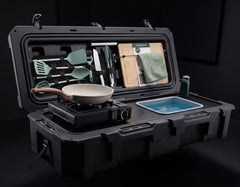
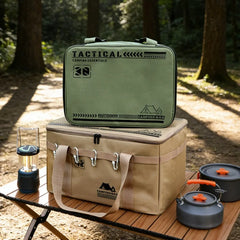
On a VOZ Camp Kitchen the case is a sealed LLDPE shell rated by the maker as weatherproof, dustproof, and UV-resistant, with three latches and stainless bar hinges holding the 47.6 by 19.3 inch lid down on the gasket. The same seal that keeps rain out, covered in our article on camp kitchen boxes in the rain, keeps silt out on a dirt road. Water shows itself immediately and dust does not, so the gasket check has to be a habit. To see how the sealed case, stove, sink, and tank work as a set, our breakdown of what is included in a camp kitchen kit walks through every piece.


Latches: compression is the whole job
A latch that clicks shut but does not pull the lid down hard is decorative. Dust protection depends on every latch, not most of them. If your box has three and you habitually close two because the third is stiff, the lid floats a hair above the gasket on that side, and washboard vibration pumps dusty air through the gap for the entire drive.
Before the trip, close each latch and try to slide a business card between lid and body beside it. If the card goes in, that latch is not compressing the gasket. On adjustable draw latches, tighten the keeper. On fixed snap latches, the cause is usually a gasket pushed out of its channel or a lid warped from storage with weight on it. Our repair guide for latches and hinges covers a latch that has lost its spring.
Two design details matter when you compare boxes. Some stacking cargo boxes have air holes in the lid, and Carryology's tested roundup of overlanding storage noted that on one such box those holes would let water, dirt, dust, and insects in if it rode on the roof. A vent hole is a dust hole. The upmarket alternative is a pressure-equalization valve: a housing with a hole covered by a thin Gore-Tex membrane that passes air but not water, so the case does not vacuum-lock after an altitude or temperature change. Most camp kitchen boxes have neither. If a gasketed box fights you after a mountain pass, push down on the lid to break the vacuum instead of prying at the latches.

Covers: three layers, cheapest first
The gasket is the last line. The cheap layers outside it do most of the work.
- Seal the cargo area. A tailgate seal kit and a cap or tonneau cover cut the dust reaching the box, though truck-bed sealing never gets to zero. Treat the bed as weather-resistant, not dustproof, and keep anything you care about in a sealed container inside it. A camp kitchen box is that container. In an SUV, keep the rear windows up and the cab fan on fresh air so the vehicle pushes air out instead of pulling it in.
- Cover the box. A fitted cover or folded tarp over the lid keeps silt out of the latch channels and hinge knuckles, where it does the most damage. Grit in a hinge grinds every time the lid moves. Grit in a latch keeper stops the latch short, and then you have a compression problem too.
- Bag the open items inside. Even a sealed box gets opened at camp in a wind. Anything you will not wash before use, such as paper towels, spice bottles, foil, or the cutting board, lives in a zip bag or lidded bin inside the box. Then a dusty afternoon does not cost you the whole pantry.
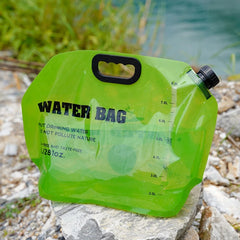
Waterproof storage bags earn their place here. They keep dust off cookware staged outside the box and double as a clean bag for the dirty stuff on the way home.


Packing order: where the kitchen rides
Where the box sits decides how much dust and mud it sees. These rules hold up across truck beds, SUVs, and trailers.
- Kitchen forward, dirty gear aft. Recovery boards, shovel, firewood, and fuel go nearest the tailgate. The kitchen goes against the cab or seat backs, where the air is calmest and tire-thrown mud travels farthest.
- Latches away from the tailgate. The dust swirl at the tailgate is the dirtiest air in the vehicle. Face the latch side forward or inboard so it is not working on the one edge that has to seal.
- Nothing on the lid. A cooler stacked on the lid flexes it, and a flexed lid does not seat evenly on the gasket. If you must stack, put the weight over the walls, not the center.
- Inside layout matters too. Our guide on packing a camp kitchen so nothing breaks or spills covers where the tank, fuel, and glass go.
- Strap it, then check it at the first stop. Vibration works latches and straps loose in the first few miles. The off-road-trailer habit of stopping to inspect seals and compartments applies to a kitchen box just as well.
The post-trip blow-out: 15 minutes that keeps the seal working
Do this outdoors within a day of getting home, before the mud dries hard.
- Knock the mud off closed. Hose the latched box at low pressure, aiming down and away from the lid seam and latches.
- Open away from the wind and empty it. Set contents on a tarp and shake out soft goods. Anything that touched food gets washed as usual; our post-trip cleaning guide covers that part.
- Blow out the shell. Compressed air or a leaf blower clears corners, cutouts, and the underside of the lid faster than any cloth. Work top to bottom, then flip the box to clear the recesses behind the handles.
- Clean the gasket by hand. Wipe the full loop with a damp microfiber cloth, then a dry one. Check the channel with a flashlight for grit under the rubber and reseat any lifted section.
- Service the hardware. Flush latch pivots and hinge knuckles with water, dry them, add a drop of light oil to each pivot, and cycle each latch until it closes fully.
- Dry, dress, and close. Air-dry everything, wipe a thin film of silicone grease on the gasket, drop in a silica gel packet (Pelican recommends them as standard practice in its cases), and latch the lid so the gasket stays clean in storage.
A dusty gasket left for a month becomes a gasket with grit ground into it. The routine takes about as long as unloading the cooler, and it is why a good box seals the same in year five as in year one.
FAQ
Is an IP67 case overkill for a camp kitchen?
For dust, a properly closed gasketed box is already in the right category. The dust-tight IP6X test circulates talcum powder at 2 kilograms per cubic meter of chamber for 8 hours while pulling a slight vacuum on the case, and the case passes only with no dust inside. The 7 adds 30 minutes under 1 meter of water, which matters on a river trip, not a dirt road. A weatherproof camp kitchen with an intact gasket and every latch closed handles a dusty drive. A gasket with sand on it does not.
What is the biggest cause of dust inside a sealed box?
A latch not fully closed. Second is debris on the gasket. Third is weight on the lid flexing it off the seal. All three are free to fix, which is why the pre-trip check is worth doing every time you load.
Ready to upgrade your camp kitchen?
The VOZ Camp Kitchen includes everything you need in one weatherproof case. Sets up in 15 seconds.
Shop VOZ Camp Kitchen →