Desert Camping Camp Kitchen: Cooking in Dust, Sand, Heat, and Wind (Moab, Mojave, Big Bend)

Desert camping breaks a camp kitchen in ways a rainy weekend never will: fuel canisters that sit in a 130-degree cab, water you cannot refill for three days, and fine red dust that finds its way into every pot. Here is how to run a portable camp kitchen box in Moab, the Mojave, and Big Bend, starting with the problems unique to heat and dry country.
Why desert cooking is a different problem than rain or beach wind
Wind screens and lid-down prep carry over from our beach and rain guides. What does not carry over is the heat. Arches National Park reports summer temperatures that often exceed 100°F, with swings of more than 40 degrees in a single day. Death Valley records summer highs up to 130°F with nights near 90°F. Big Bend's park guidance calls extreme heat its most serious safety hazard from May through September.
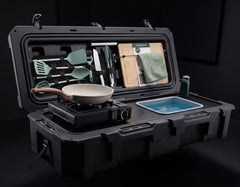
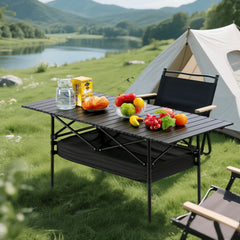
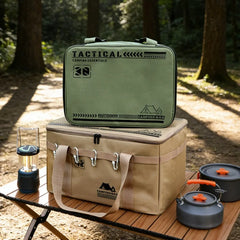
Those numbers change how you carry fuel, where the kitchen sits between meals, how you budget a small water tank, and when you light the stove. A weatherproof box like the VOZ Camp Kitchen handles the dust part almost by itself, since everything lives inside a sealed LLDPE case with a removable countertop on top. The rest is on you. If you are still choosing a box, our best camp kitchen setup guide covers the case, stove, and tank features that matter most in dry country.


Butane canisters above 100°F: what actually happens
Most camp kitchen boxes, ours included, run a cassette-style butane burner. Butane boils around 31°F, which is why it struggles in winter. The desert problem is the other end of the curve: as the liquid warms, the pressure inside the can climbs steeply. Near 77°F a butane canister holds roughly 30 to 36 psi. At 100°F, n-butane's vapor pressure is about 52 psi, and it keeps climbing as the can gets hotter.
Butane cartridge labels carry the same warning: do not store above 120°F, with most manufacturers citing 122°F (50°C) as the ceiling. The can is built to hold pressure beyond that, but the margin shrinks with every degree. Two practical rules follow:
- Never leave canisters in the cab or under a rear window. Stanford researchers measured an average 40°F interior rise in one hour on days between 72°F and 96°F, with 80 percent of that rise in the first 30 minutes, and a cracked window made no meaningful difference. The National Weather Service notes a dark dashboard can reach 180°F to over 200°F. On a 100°F Moab afternoon your cab clears the label limit before camp is set up.
- Do not cook with a hot can. A cartridge that has been baking in the sun runs at much higher pressure, which shows up as a surging flame that is hard to hold at a simmer. Let it cool in the shade first, or swap to a can that spent the drive in the kitchen box.
We cover the storage rules and transport laws in detail in our guide to storing fuel canisters inside a camp kitchen box. The desert version is short: canisters ride inside the closed kitchen box, the box rides in the cargo area, and at camp the whole thing sits in shade.
Where the fuel and the box live at camp
The ground and any dark surface run far hotter than the shaded air reading in the forecast. Death Valley's highest recorded ground temperature was 201°F at Furnace Creek, on a day when the air temperature topped out at 128°F. You will not see that at a Moab campground, but a dark kitchen lid or a fuel can left on slickrock at 2 PM is absorbing the same kind of radiation.

The fix is a shade plan, not a bigger cooler:
- Park the box in vehicle shade or under an awning between meals, lid closed. That keeps dust out and UV off the countertop, latches, and faucet pump. Our article on sun and UV damage to a camp kitchen covers what fades and cracks over a season of this.
- Fuel canisters go in the coolest spot you have: the shaded floor of the kitchen box, or a ventilated bin on the north side of the vehicle. Never the cab, never the cooler.
- Move the shade as the sun moves. A spot shaded at 8 AM is full sun by noon. Big Bend's backcountry guidance suggests a packable shade umbrella for hikers, and the same umbrella clamped to a table shades a kitchen box all afternoon.
Water tanks need the same treatment. A 2-gallon bag left in the sun is hot dishwater by lunch. Keep the tank inside the closed case or under the vehicle.
Timing matters as much as placement. Big Bend's safety page tells visitors to plan hikes for early in the day and be off the trails before the afternoon heat, and the kitchen should follow the same clock: stove-cooked breakfast at first light, a no-stove lunch from the cooler, and dinner after the sun drops behind the rim. That schedule also keeps raw meat out of a cooler opened all afternoon in 100-degree air; our camp kitchen food safety guide has the cold-chain numbers.
Water rationing with a 2-gallon tank
The BLM's Moab-area campgrounds have no water. Mojave National Preserve tells campers to haul all water in, with potable fill-ups only at the Hole-in-the-Wall visitor center and Kelso Depot, and its spigots are not set up for RV tanks. Big Bend, Death Valley, and Mojave all give the same drinking minimum: at least one gallon per person per day, and more in summer heat. Water weighs about 8 pounds a gallon, so a family of four on a three-day desert trip is hauling close to 100 pounds of it before the sink tank is filled.
The mistake is treating the kitchen's built-in tank as part of the drinking budget. It is the sink's budget only:
| Use | Source | Daily budget (2 people) |
|---|---|---|
| Drinking | Sealed jugs, never the sink tank | 2 gallons minimum, 3 in summer |
| Cooking (pasta, rice, coffee) | Drinking jugs, measured into the pot | About 0.5 gallon |
| Hand washing and rinsing produce | Kitchen sink tank via faucet | About 0.5 gallon |
| Dishes | Kitchen sink tank, wipe-first method | About 1 gallon |
Run that way, the 2-gallon tank covers a day of sink use for two people, refilled from a larger container each morning. The trick is wiping every pot and plate with a paper towel before water touches it, so a dinner's dishes rinse in a quart or two. Our gallons-per-day water tank math walks through the full calculation for bigger groups.
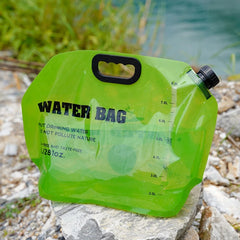
For the drinking and refill supply, a rigid container with a spigot beats grocery-store jugs: it rides strapped down and refills the sink tank without lifting. A 3.4-gallon container with a faucet plus two collapsible 2-gallon bags is a sensible weekend load for two people.


Dust, sand, and wind at the stove
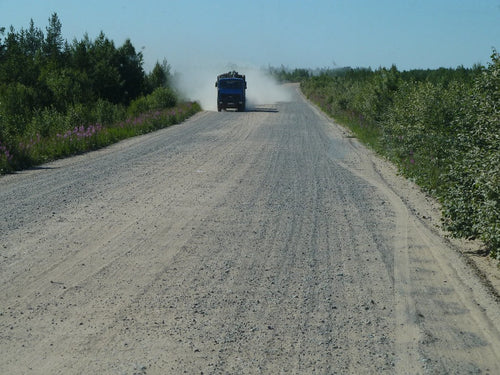
Desert wind is seasonal and sudden. The National Park Service's Death Valley climate notes put it plainly: wind is common in the desert, especially in spring, and dust storms can blow up suddenly ahead of cold fronts. Beach sand is coarse and heavy. Moab and Mojave dust is fine enough to float, so it settles on cooking oil, in the burner ports, and inside an open cooler.

- Cook with the lid on everything. Pots stay covered between stirs, and the cutting board goes back into the case as soon as you are done. The same lid-down habit from our beach camping camp kitchen guide applies, minus the salt.
- Put the vehicle between the wind and the box, then add a wind screen on the upwind side of the burner. Our rain and wind weatherproofing guide shows the screen placement that keeps a butane flame from lifting off the burner.
- Check the burner before lighting. Tip the stove and tap it, then blow the ports clear. A fine layer of dust makes the flame sputter and burn yellow.
- Wipe, do not rinse. Dry dust wipes off a countertop with a microfiber cloth. Add water and it becomes grit paste that scratches the surface and wastes your ration.
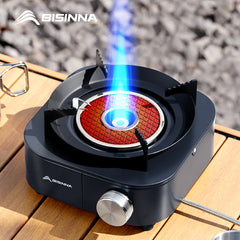
If you camp in the desert often, a single-burner cassette stove with a built-in windshield makes a second burner that handles gusts better than an open ring, on the same butane cartridges.


Set up on rock, not on the crust
Around Moab, the dark, knobby soil between the shrubs is biological soil crust, a living layer of cyanobacteria, lichens, and mosses that holds the desert together. The National Park Service says a thin veneer can return in five to seven years under the best circumstances, mature crusts take 50 years, and the lichens and mosses may take hundreds. One tire track or one kitchen leg does that damage.
So the kitchen goes where the vehicle goes: slickrock, a sandy wash, or the disturbed pad of an established site. BLM Utah's dispersed-camping rules say the same thing: camp only in previously disturbed sites, use existing fire rings or a fire pan, and do not dig or level your site. A box that sets up on any flat surface with no legs to plant makes this easy. Check Moab camping restrictions and current fire orders before you go. Our fire ban stove rules article explains which stages still allow a gas stove.
FAQ
Can a butane canister explode in a hot car?
The label limit is 120°F, and a closed vehicle on a 100°F day passes that within about 30 minutes. Keep fuel in the kitchen box in the cargo area, in shade at camp, and never in the cab.
Is a 2-gallon water tank enough for desert camping?
For the sink, yes. For drinking, no. Carry at least one gallon of drinking water per person per day in separate containers, more in summer, and refill the kitchen tank from those each morning.
Does the desert heat damage the kitchen box itself?
UV is the long-term enemy more than heat alone. An LLDPE case is UV-resistant, but latches, seals, and the faucet pump last longer if the box sits in shade with the lid closed.
Where can I refill water near Moab, Mojave, or Big Bend?
Moab-area BLM campgrounds have no water, so fill in town. Mojave has potable water at the Hole-in-the-Wall visitor center and Kelso Depot. In Big Bend, fill at developed campgrounds and visitor centers first.
- Best Camp Kitchen in 2026: What to Look for Before You Buy
- Beach Camping Camp Kitchen: A Cooking Setup That Beats Sand and Wind
- Cooking With a Camp Kitchen in Rain and Wind: How to Weatherproof Your Setup
- Camp Kitchen for Boondocking and Dispersed Camping: Cooking With No Hookups
- Can You Store Propane Canisters Inside a Camp Kitchen Box?
Ready to upgrade your camp kitchen?
The VOZ Camp Kitchen includes everything you need in one weatherproof case. Sets up in 15 seconds.
Shop VOZ Camp Kitchen →