

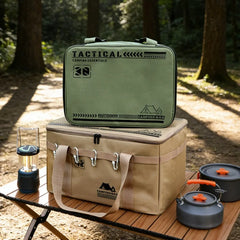
Using a Portable Camp Kitchen at Home: Backyard, Patio, and Balcony Setups

A camp kitchen box doesn't have to sit in the garage for 300 days a year waiting for the next trip. The same box that cooks at a campsite can turn a backyard, patio, or (sometimes) a balcony into a working outdoor kitchen. No contractor, no gas line, no permit. Here's how to set one up at home, where the fire-code lines are, and how it compares with a built-in outdoor kitchen.
Why a Camp Kitchen Box Works So Well at Home
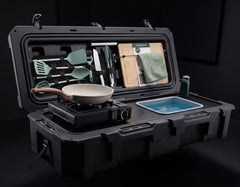
A built-in outdoor kitchen is a construction project. A camp kitchen box is an appliance you carry out the back door. Everything it needs comes inside the case: a stove, a sink with its own water supply, a prep surface, and storage for utensils. When you're done, it closes and goes back into the garage or a closet.
That makes the box a good fit for a few kinds of people:
- Renters. You can't run plumbing or a gas line in a rental, but you can set a box on the patio and take it with you when the lease ends.
- Homeowners who aren't ready to remodel. A box lets you find out whether you really cook outside often enough to justify a permanent build.
- Campers who want more use out of their gear. Cooking at home on weeknights is also practice for camp: you learn the layout, find what's missing, and fix problems before you're two hours from a store.
If you're new to the category, our guide to the modern camp kitchen box explains how these units grew out of the old wooden chuck box. Our own VOZ Camp Kitchen is a good example of the format. It has a single-burner butane stove, a foldable sink with a USB-rechargeable faucet, and a 2-gallon water tank, all in a case about 48 x 19 x 11 inches that weighs roughly 57 lb loaded.


Backyard and Patio Setups That Actually Work
In a yard or on a ground-level patio, you have the most freedom. A few placement habits keep it safe and pleasant.
- Keep the flame away from the house. Don't cook up against siding, under eaves, or below a low overhang. Grill fires are more common than most people think. The National Fire Protection Association reports that U.S. fire departments responded to an average of 12,141 home fires involving grills each year from 2020 to 2024, with July the peak month. A camp stove isn't a grill, but the same clearance habits apply to any open flame.
- Pick a level, non-combustible surface. Concrete pavers or a stone patio are ideal. On a wood deck, keep the stove up on the box's cooking surface rather than on the boards, and follow the stove maker's clearance guidance.
- Use the sink like you would at camp. Fill the tank from the garden hose or the kitchen tap. Wash produce and rinse dishes outside, then dump the graywater on a drain or a part of the lawn where soap won't hurt anything.
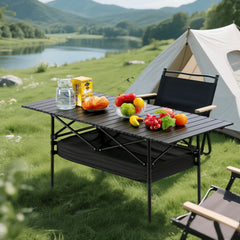
- Add counter space if you cook for a crowd. A folding table next to the box becomes a serving or plating station, the same way it does at a campsite.

For a family cookout, a second flat surface is usually the first thing you miss. Our camp tables fold flat, so they store next to the box and come out only when the guest list grows.


Balconies: What the Fire Code Actually Says
Balconies are where people get into trouble, and the reason is real. NFPA data show that about one-quarter of home structure fires involving grills started on an exterior balcony or open porch. That's why fire codes treat balconies differently from backyards.
Most U.S. jurisdictions base their rules on the International Fire Code. Section 308.1.4 says charcoal burners and other open-flame cooking devices may not be operated on combustible balconies or within 10 feet of combustible construction. The code has three exceptions:
| Exception | What it means for you |
|---|---|
| One- and two-family dwellings | Single-family homes, duplexes, and properly separated townhouses aren't covered by the balcony ban. |
| Sprinkler-protected buildings | If the building, balcony, or deck has an automatic sprinkler system, the restriction doesn't apply. |
| Small LP-gas containers | LP-gas cooking devices with a container of no more than 2.5 lb water capacity (a nominal 1-lb cylinder) are allowed. |
New York's Department of State wrote a technical bulletin on this exact section. It explains that apartment buildings with more than two units don't qualify for the one- and two-family exception. In other words, if you live in a typical apartment complex, assume the balcony rules apply to you.
Some cities go further. New York City's barbecue guidance bans standard 20-lb propane grills on balconies and roofs of apartment buildings and charcoal on balconies, but allows electric grills there.
One detail matters for camp kitchen owners. Many boxes, including ours, use a butane stove. The U.S. Energy Information Administration defines liquefied petroleum gases as propane, butanes, or mixtures of the two. So a butane canister stove is an LP-gas appliance. Whether its canister falls under your local small-container exception is a question for your fire marshal, not a guess. Before you cook on a balcony, check three things:
- Your local fire code. Call the non-emergency line of your fire department or fire marshal and ask about small canister stoves on balconies.
- Your lease. Many leases ban any open flame on balconies, even where the code would allow it.
- Your HOA rules. Condo and HOA bylaws can be stricter than the fire code, and fines are common.
If the answer is no, you still have options. You can use the box's sink and prep surface on the balcony and do the cooking at a park grill area or a friend's yard. Or skip the balcony entirely and treat the box as a picnic-and-park kitchen.
Portable Box vs. Built-In Outdoor Kitchen
A permanent outdoor kitchen and a camp kitchen box solve different problems. Here's how they compare for home use:
| Factor | Camp kitchen box | Built-in outdoor kitchen |
|---|---|---|
| Installation | None. Open the lid and cook. | Construction, often with permits and licensed trades. |
| Water | Built-in tank and faucet, filled by hand. | Plumbed supply and drain. |
| Fuel | Small canisters. | Natural gas line or large propane tank. |
| Renter-friendly | Yes. It moves with you. | No. |
| Goes camping | Yes, that's what it's built for. | No. |
| Cooking capacity | Fine for a family meal. Limited for big parties. | Multiple burners, large grill, more counter. |
| Weather exposure | Stored indoors between uses. | Lives outside year-round and needs covers and upkeep. |
The honest takeaway: if you host large parties every weekend and own your home, a built-in may be worth it. If you rent, travel, or just want to cook outside without a project, the box covers most of what you need. It also tells you, cheaply, whether a remodel would ever get used. RV owners face the same choice between a fixed outdoor galley and a portable box, and the logic is the same: a fixed kitchen stays put, and a box goes where you go.

Getting Year-Round Value From the Box
Home use is what turns a camp kitchen from a seasonal toy into gear you use every week. A few ideas:
- Summer heat. Cook outside so the stove doesn't heat up the house.
- Kitchen remodels. A box with a sink can be the temporary kitchen while your indoor one is torn apart, as long as all cooking stays outdoors.
- Power outages. A self-contained box with its own water and fuel works as a backup cooking station, as long as it stays outdoors.
- Tailgates and park picnics. The box goes from patio to car without repacking.
The one rule that never bends: the stove stays outside. Not in the garage with the door open, not in a screened porch with the windows shut, not in the kitchen during a storm. Fuel-burning stoves produce carbon monoxide. Our guide to camp stoves indoors and in garages covers why an open garage door isn't enough. Store the box in the garage if you like, but carry it out to cook.
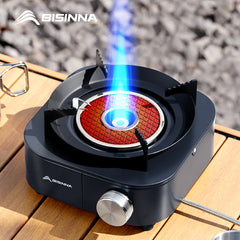
If the built-in butane burner feels small for patio cooking, you can add a second stove beside the box. Our camp stove collection includes two-burner and high-output options for bigger pans and bigger groups.


FAQ
Can I use a camp kitchen on my apartment balcony?
It depends on your local fire code, your lease, and the stove's fuel. The International Fire Code bans open-flame cooking on combustible balconies of multi-unit buildings, with exceptions for sprinklered buildings and small LP-gas containers. Check with your fire department and landlord before you light anything.
Do I need a permit to use a camp kitchen box in my backyard?
Generally no. There's no plumbing, gas line, or construction involved. You're using a portable appliance, the same way you'd use a portable grill. HOA rules can still apply, so read them if you have one.
Where should I store a camp kitchen box between uses?
Indoors, dry, with the water tank drained. A garage shelf, a basement, or a hall closet all work. Store fuel canisters according to the stove maker's instructions, away from heat sources.
Is a camp kitchen box a replacement for a built-in outdoor kitchen?
For many households, yes, especially renters and people who cook outside a few times a month. For frequent large-party hosts, a box is more likely to be a test run or a supplement.
Ready to upgrade your camp kitchen?
The VOZ Camp Kitchen includes everything you need in one weatherproof case. Sets up in 15 seconds.
Shop VOZ Camp Kitchen →

