Camp Kitchen as an Emergency Kitchen: Your Power-Outage Cooking Station

Every August, the same overlap shows up on the calendar: peak camping season and peak hurricane season. If you already own a portable camp kitchen, you also own something most preparedness checklists spend hundreds of dollars trying to assemble — a complete, self-contained cooking station that works when your house doesn't.
Why a Camp Kitchen Is Already an Emergency Cooking Station
Power outages in the US are getting longer, not shorter. According to the U.S. Energy Information Administration, electricity customers experienced an average of about 11 hours of power interruptions in 2024 — nearly double the annual average of the previous decade — and hurricanes accounted for roughly 80% of those lost hours. The National Hurricane Center puts the climatological peak of the Atlantic season at September 10, with most activity between mid-August and mid-October. In other words: if a multi-day outage is going to hit your house, statistically it's most likely to happen in the next eight weeks.
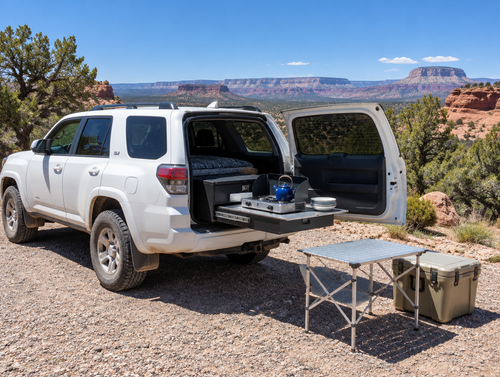
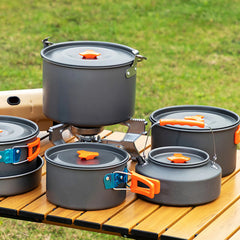
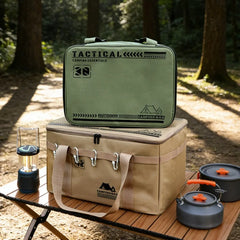
What makes a camp kitchen box different from a junk drawer of emergency gear is the same thing that makes it good at a campsite: everything lives in one case, already organized, already tested. A stove, fuel, a sink, a water supply, cookware, utensils, cutting board, dish tubs — packed so it can ride in a trunk down a washboard road. That's exactly the kit you want to carry out to the driveway when the lights go out. If you're still putting your setup together, our guide to the best camp kitchen setup for 2026 covers the core pieces; every one of them pulls double duty in an outage.
The One Rule That Matters: Cook Outside, Every Time
Before anything else: a camp kitchen is an outdoor kitchen, and in an emergency that rule is not negotiable. The CDC is blunt about it — never use a portable gas camp stove, charcoal grill, or any propane, butane, or charcoal-burning device inside a home, basement, garage, or camper, or outside near an open window. Carbon monoxide is colorless and odorless, and outage weeks are when poisonings spike, because people bring outdoor burners inside. If you're also running a generator, the CDC's guidance is to keep it outdoors more than 20 feet from your home, doors, and windows. The full guidance is on the CDC's carbon monoxide page.

The good news: cooking outside is not a downgrade when your kitchen is built for it. A camp kitchen box with a windscreen-equipped stove, a work surface, and a sink makes the back porch or driveway a fully functional kitchen, not a sad hibachi balanced on a step. Treat the outage like a base camp: set up once, in a sheltered spot away from windows, and leave the station standing until the grid comes back.
Setting Up a Power-Outage Station in the Driveway
The setup logic is the same one we use for a long stay at a campsite — see our week-long base camp guide — just compressed to your own backyard:
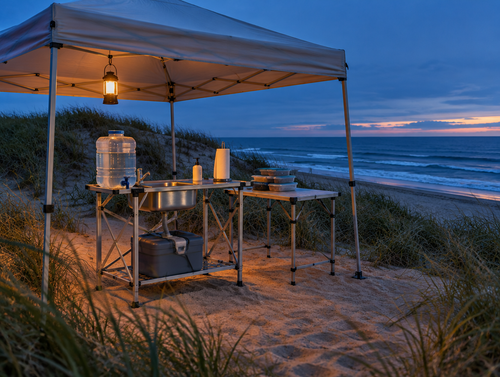
- Pick a covered, ventilated spot. A carport, open garage apron (stove fully outside the door line), or patio with a canopy. You want rain protection overhead and open air on at least two sides.
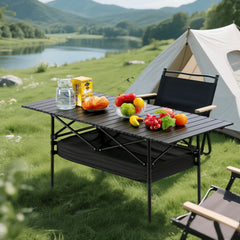
- Set up at counter height. Cooking on the ground gets old by day two. A folding stand or table keeps prep, cooking, and washing at the same height as your indoor kitchen.
- Keep the workflow: prep, cook, wash. Three zones, left to right. The routine matters more in an emergency than at a campsite, because you'll be cooking every meal this way, possibly for days.
- Light it. A headlamp or two clipped to the canopy frame turns the station usable after dark without tying up your hands.
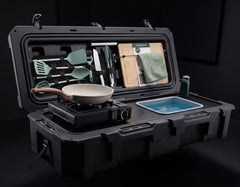
This is where an all-in-one box earns its keep. The VOZ Camp Kitchen packs a built-in stove, a sink with a USB-rechargeable faucet, a water tank, and 30-plus cooking items into one weatherproof case — which means the difference between "the power's out" and "dinner's ready" is carrying one box out the door and unfolding it. The faucet runs on a battery you top up over USB, so running water at the sink doesn't depend on the grid either; recharge it from a power bank or your car.


Water: The Other Half of the Station
An outage that takes out well pumps — or a storm that puts a boil-water notice on the municipal supply — makes stored water as important as the stove. The federal preparedness guidance at Ready.gov is to store at least one gallon of water per person per day for several days, for drinking and sanitation, and to consider a two-week supply if you have the space — that's 14 gallons per person. A family of four planning for even three days needs 12 gallons on hand, which is more than most households keep in the pantry.
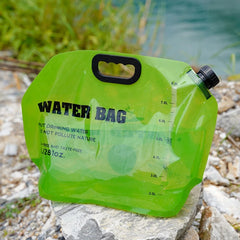
Camp water gear closes that gap without buying anything prepper-branded. The camp kitchen's own tank covers the sink for dishwashing and hand-rinsing, and a dedicated container like our 3.4-gallon camping water container with a faucet — literally sold as an emergency water tank — gives you a gravity-fed drinking station you can set on the counter. Foldable water bags store flat in the box the other 51 weeks of the year.


Fuel and Food: Plan It Like a Long Weekend
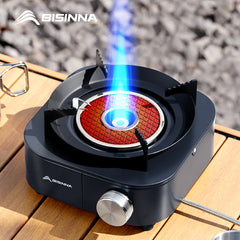
Fuel math for an outage is the same as fuel math for a self-sufficient trip off the grid — our boondocking guide walks through it in detail. The short version: count burners, count meals, and keep at least twice the fuel you think you need. Canister stoves are the easiest to stockpile because butane and propane canisters store safely for years in a garage (outside living spaces, away from heat). If your primary stove is built into the box, a second standalone burner is cheap insurance — it doubles your cooking capacity when the freezer situation turns into a cook-it-all-now situation.


That freezer situation is real, and it's on a clock. Federal guidance at FoodSafety.gov says a refrigerator keeps food safe for about 4 hours without power if you keep the door closed; a full freezer holds safe temperatures for about 48 hours, and a half-full one for about 24. Past those windows, perishables like meat, eggs, and leftovers have to go. A working outdoor cooking station changes the math from "throw it out" to "cook it": day one of an outage is when you grill the expensive stuff from the freezer, and the camp kitchen makes that a controlled operation instead of a scramble.

FAQ
Can I use my camp kitchen stove indoors if it's storming?
No. Per CDC guidance, no gas, propane, butane, or charcoal-burning device should ever run inside a home, basement, garage, or camper — or near an open window. Set up under a carport, canopy, or covered porch with open airflow instead. If it's truly unsafe to be outside, eat no-cook food until the weather passes.
How much water should I actually store?
Ready.gov's baseline is one gallon per person per day for several days; two weeks per person is the fuller recommendation if you have room. Count your camp kitchen's tank toward washing water, and keep dedicated containers for drinking water.
How long is the food in my fridge good after the power goes out?
About 4 hours for the refrigerator, about 48 hours for a full freezer (24 for half-full), per FoodSafety.gov — and that assumes you keep the doors closed. Plan your first outage meals around the most perishable items.
Should I keep the camp kitchen packed between trips?
Yes — this is the single biggest preparedness win. A box that stays stocked with its stove, cookware, utensils, and dish supplies is ready for a campground reservation and a hurricane warning alike. Restock consumables (fuel, soap, paper towels) after every trip, and charge the faucet battery when you charge your power bank.
Ready to upgrade your camp kitchen?
The VOZ Camp Kitchen includes everything you need in one weatherproof case. Sets up in 15 seconds.
Shop VOZ Camp Kitchen →