Where to Refill Your Camp Kitchen Water Tank on the Road

Every camp kitchen water tank runs dry eventually — usually the morning you planned to make pancakes. The good news: if you're running a portable tank instead of a plumbed-in RV system, refilling on the road is a two-minute stop, and there are far more places to do it than most campers realize.
Why a Portable Tank Is Easier to Refill Than Any RV Tank
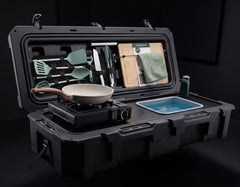
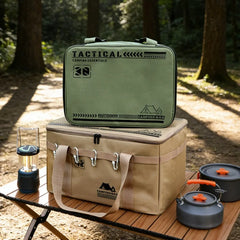
An RV fresh water system needs three things to refill: a potable spigot with hose threads, a drinking-water-safe hose, and enough room to park a rig next to the faucet. A portable camp kitchen tank needs none of that. The VOZ Camp Kitchen carries a removable 2-gallon tank — you lift it out, carry it to any water source, fill it, and drop it back in. At water's standard weight of 8.34 pounds per gallon, a full tank is under 17 pounds: one hand, one trip.
That changes the math on where you can fill. A bathroom sink, a bottle-filling station, a campground spigot two loops over, even a gallon jug poured in at the tailgate — all of them work. Meanwhile everything else in the kit — stove, sink, faucet, cookware — stays packed in the case. You're never hunting for "RV water"; you're just hunting for water.


Campgrounds and Parks: The Most Reliable Fill
Developed campgrounds are the gold standard because the water is maintained as a drinking supply. Nearly every paid campground — private, state park, or federal — has potable spigots near restrooms or scattered between sites. The National Park Service labels potable spigots in its campgrounds so visitors can tell them apart from non-potable sources, and many park visitor centers now have dedicated water bottle filling stations — Grand Canyon, Big Bend, and White Sands all run them. A 2-gallon tank fits under most of these fillers with room to spare.

Not staying the night? Many campgrounds will still let travelers top off for a small fee — a few dollars is typical — but call ahead, because policies vary by campground and season. A few etiquette rules keep everyone welcome:
- Never touch the spigot mouth to your tank, funnel, or hose — that's how one camper's tank contaminates everyone's water source.
- Fill and move; don't wash dishes or rinse gear at a drinking spigot.
- If a host or ranger is around, ask first. A 2-gallon fill is an easy yes.
Truck Stops, Travel Centers, and Rest Areas
Large truck stop chains — TA, Pilot Flying J, and Love's — are the most dependable highway option. Many locations offer potable water, often near the RV lanes or propane island, and most chains list water as an amenity on their location pages online, so you can check before you exit. If you don't see a spigot, ask inside; staff will usually point you to one.
Highway rest areas are hit or miss but worth knowing about: a number of states maintain rest stops with potable water fills and RV dump stations, free to use. Availability varies widely by state, so treat rest-area water as a bonus, not a plan.
City and county parks round out the list. Many keep potable spigots near picnic pavilions and ball fields, and a portable tank is exactly the scale of fill nobody minds.
Grocery Stores and Water Vending Machines
Here's the option RV owners overlook because their tanks are too big for it: the water vending machine outside nearly every supermarket. Primo — which acquired Glacier Water, the largest self-serve refill network in the country, in 2017 — runs thousands of these machines, and they dispense filtered, reverse-osmosis-treated drinking water for roughly $0.25 to $0.50 per gallon depending on location. That prices a full 2-gallon camp kitchen tank at well under a dollar.
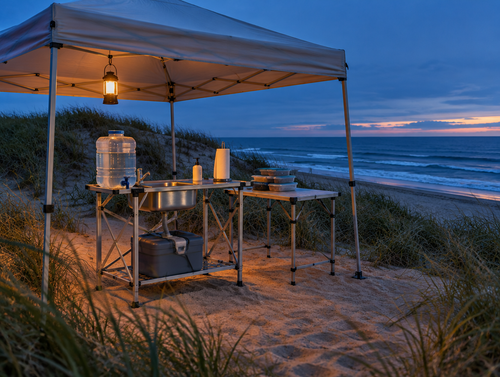
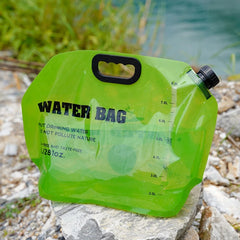
The same store sells 1-gallon jugs of drinking water for a bit more, which double as a reserve you can keep in the vehicle. And if you want a dedicated backup, a gravity-fed container bridges the gap between fills — a 3.4-gallon container with a faucet holds a bit more than one full tank refill and works as a second wash station at camp.


The Apps That Map Every Water Stop
You don't have to guess where the next spigot is. A handful of apps and sites maintain crowdsourced maps of water sources, and they're the difference between planning fills and improvising them:
- iOverlander — the most-used app for this job. Water is its own location category, every entry is crowdsourced from travelers, and the app works offline, which matters exactly when you need it to.
- Campendium — strongest on campgrounds and dump stations; listings and reviews regularly note whether potable water is available and whether non-guests can fill.
- FreeRoam — its "near me" view lists potable water, dump stations, and grocery stores in one screen, handy for stacking errands into one stop.
- Sanidumps.com — a long-running directory of dump stations that flags which ones also offer potable water.
One habit makes all of these more reliable: read the most recent comments before you drive out of your way. Crowdsourced spigots get shut off for winter, break, or go behind a locked gate, and the last review usually says so. If you're heading somewhere with no entries at all, fill before you leave pavement — the same rule that governs boondocking with a camp kitchen.
Potable vs. Non-Potable: Read the Spigot Before You Fill
Not every faucet you find is a drinking source, and the distinction is regulated, not casual. The rinse spigot at an RV dump station exists to wash out sewer hoses; state health codes, like Indiana's sanitary dumping station rules, require a posted sign stating the adjacent water outlet is unsafe for drinking. The reasoning is blunt: a faucet mounted next to a sewer drain catches splash, and its threaded end may carry contamination even if the supply line is clean.

Your field rules, in order:
- Labeled potable — fill away. This is what campground drinking spigots and bottle-fill stations are for.
- Labeled non-potable, or mounted at a dump station — never into the tank. Use it to rinse muddy gear, nothing that touches food or dishes.
- Unlabeled — treat it as non-potable unless someone who manages the property tells you otherwise. Hose bibs on buildings often run through irrigation lines or old plumbing.
One more seasonal note: campgrounds in freezing climates shut off and drain their spigots in the off-season, often from mid-fall to late spring. If you camp shoulder seasons, carry your reserve full.
FAQ
How often will I need to refill a 2-gallon tank?
Budget about one gallon per person per day through the sink for cooking and dishes. A solo camper can stretch one fill across a weekend; a couple tops off roughly once a day; a family of four should plan on a fill morning and evening — which is exactly why knowing three nearby sources beats knowing one.
Can I fill my tank from a dump station spigot?
Only if that specific spigot is labeled potable — some dump stations have both a rinse faucet and a separate marked drinking-water fill. If there's one unlabeled spigot next to the sewer drain, assume it's for rinsing hoses and skip it.
Do I need a drinking-water-safe hose?
For a lift-out tank, no — that's the point. You carry the tank to the spigot and fill it directly. If you ever do use a hose, use one rated safe for drinking water — standard garden hoses aren't made to carry water you'll consume.
Is water from a truck stop or gas station safe to drink?
If it's a marked potable spigot or an indoor tap on a municipal supply, yes — it's the same water the store sells coffee with. When in doubt, ask staff whether the outdoor faucet is on the drinking line, and keep up a regular tank sanitizing routine between trips.
Ready to upgrade your camp kitchen?
The VOZ Camp Kitchen includes everything you need in one weatherproof case. Sets up in 15 seconds.
Shop VOZ Camp Kitchen →