Do You Need a Camp Kitchen If Your Campground Has a Picnic Table?

It's the single most common reason campers talk themselves out of a camp kitchen: "My site already comes with a picnic table — why would I haul a whole cooking station?" It's a fair question, and the honest answer depends on how you actually cook. Here's a straight look at what that free table does well, where it falls short, and when a dedicated camp kitchen genuinely earns its spot in your trunk.
What the Campground Picnic Table Actually Gives You
Give the picnic table its due. Standard campground tables run 6 to 8 feet long with tops sitting roughly 28 to 30 inches off the ground, and a common 6-footer seats about six people. That's a lot of free real estate: it's sturdy, it's anchored, it costs you nothing, and it's already there when you pull in. You don't pack it, haul it, or set it up.
The catch is that at a real campsite, the picnic table is never just a kitchen. It's the everything table. It's where the family eats, where the card game lives, where the lantern, bug spray, phones, and half-unpacked totes pile up. By dinnertime, your "kitchen" is usually one crowded corner between the condiments and someone's headlamp. The table isn't useless for cooking — it's just oversubscribed.

Four Jobs a Picnic Table Can't Do
Even with the whole table to yourself, four gaps show up the first time you cook a full meal on one.
- Stand-up working height. Picnic tables are built for sitting on their 17-to-19-inch benches, which is why the tops sit around 28 to 30 inches. A home kitchen counter is 36 inches for a reason — that's the height most adults can chop and stir without hunching. Cooking standing up at a picnic table means working 6 to 8 inches below what your back is used to, usually while straddling a bench.
- Running water. There's no sink. Every hand wash, produce rinse, and round of dishes means hauling a jug from the spigot and balancing a wash tub on the bench. It's the chore that quietly eats an hour of every camp evening.
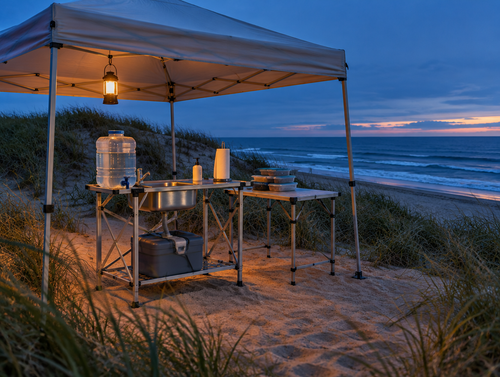
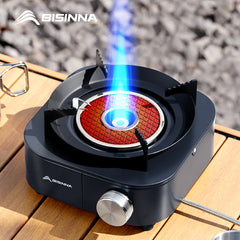
- Wind protection. A flat, open tabletop puts your burner flame at the mercy of every gust rolling through the site. A stove with a built-in windshield or a kitchen with a windscreen panel keeps the flame — and your boil times — steady.


- Organization. A table is a surface, not a system. No shelves, no hooks, no utensil slots — so everything lives in bins you dig through, and the prep space disappears under them.
The Food-Storage Rule That Changes the Math
Here's the part most campers don't think about until a ranger knocks: in bear country, the picnic table can't be your kitchen between meals even if you want it to be. National Park Service food-storage guidance is blunt — food should never be left unattended, and "food" includes anything with a scent: canned goods, drinks, soap, trash, empty coolers, and unwashed cookware. Parks that require it can back the rule with fines or confiscation.
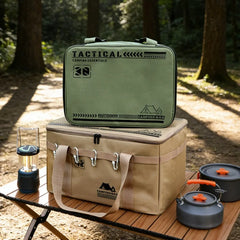
Practically, that means everything you spread across the table has to be torn down and locked in your vehicle or a bear box after every single meal, then hauled back out for the next one. With loose bins and scattered gear, that turns into a multi-trip shuttle after every meal. A camp kitchen box collapses the whole routine into one latching, weatherproof case: close the lid, carry it once, done.

When the Picnic Table Alone Is Enough
An honest gear article should say when you can skip the purchase, so here it is. The campground table genuinely covers you if:
- You camp a night or two at a time and eat cooler food — sandwiches, foil packs on the fire ring, one-pot meals on a single burner.
- You mostly grill. If dinner happens on the fire grate, the table only needs to hold a cutting board and a plate stack.
- You're solo or ultralight-minded. One burner, one pot, one mug — a full kitchen station would sit half-empty.
- You only book developed campgrounds with a table guaranteed at every site.
If that's your style, spend your money on a better cooler or stove instead. No shame in it.
When a Dedicated Camp Kitchen Earns Its Spot
The calculation flips when any of these describe your trips:
- You cook real meals for a family or group. Two burners going, someone chopping, someone washing — that needs dedicated cook, prep, and wash zones the shared table can't hold.
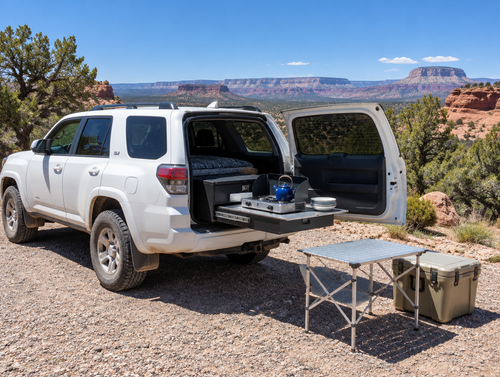
- You camp where there is no table. On national forest land, the Forest Service defines dispersed camping as camping outside developed campgrounds with no toilets, no picnic tables, no trash service, and no treated water — and typically requires you to set up at least 200 feet from developed facilities, with stays generally capped at 14 days. Out there, whatever kitchen you bring is the only kitchen that exists.
- You camp often. A kitchen box stays permanently stocked, so packing for the next trip means carrying one case to the car instead of rebuilding your setup from kitchen drawers.
- Weather doesn't cancel your trips. Wind panels, covered storage, and a faster pack-up matter most on the trips where the forecast turns.
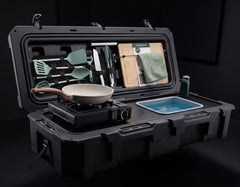
This is exactly the job the all-in-one box format was built for. The VOZ Camp Kitchen folds out of a single weatherproof case into a stand-up station with a built-in stove bay, a sink with a USB-rechargeable faucet, a water tank, and 30-plus cooking and eating pieces stored in their own slots. Unlike a homemade chuck box — a comparison we break down in camp kitchen vs. chuck box — nothing rattles loose in a tote, and nothing gets forgotten on the garage shelf.


The Two-Station Setup: Use the Table AND the Kitchen
The framing of "camp kitchen vs. picnic table" is a little false, because the best campsite layout uses both. Set the camp kitchen a few steps off the table's end — downwind side for the stove, facing the site so the cook stays in the conversation. That station handles cooking, prep, and dishes. The picnic table goes back to what it's actually good at: seating six for dinner, holding the meal, and hosting the after-dinner card game on a surface that isn't greasy.
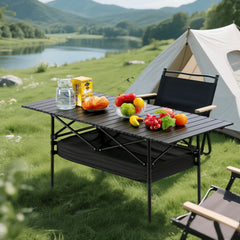
The split also solves a safety point every parent knows: the burner and the hot cast iron live at the cook station, not six inches from where the kids eat. And on dispersed sites with no table at all, a folding camp table drops into the dining role so the kitchen box doesn't have to do double duty.


FAQ
Can you cook directly on a campground picnic table?
You can set a camp stove on one — plenty of campers do — but put a heat barrier under it, because wooden and composite tops scorch. Expect to cook hunched over a surface 6 to 8 inches lower than your kitchen counter at home, with no wind protection for the flame.
Do all campsites have picnic tables?
Developed campgrounds usually include one per site, but it's not universal, and dispersed sites on national forest land come with nothing at all — no table, no water, no trash service. If your trips ever leave the reserved-campground loop, plan as if there is no table.
Can I leave my cooking setup on the table overnight?
Not in bear country. Park Service food-storage rules cover cookware, coolers, and anything scented, not just groceries — unattended gear can draw wildlife and fines. A latching kitchen box makes the nightly pack-away one trip instead of five.
I already own a folding table — isn't that the same thing?
A folding table adds surface; a camp kitchen adds systems — sink and faucet, wind protection, and organized storage that stays packed between trips. They solve different problems, and plenty of campers end up carrying one of each.
Ready to upgrade your camp kitchen?
The VOZ Camp Kitchen includes everything you need in one weatherproof case. Sets up in 15 seconds.
Shop VOZ Camp Kitchen →