

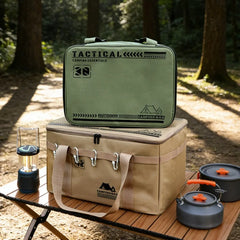
Horse Camping Camp Kitchen: Setting Up a Cook Station at the Trailer

Most horse campers end the day tired, hungry, and standing next to a trailer full of tack, hay, and dust. A dedicated cook station set up outside the trailer lets you cook a real dinner without turning the living quarters into a greasy, smoky kitchen.
Why Cook Outside the Living Quarters?
Plenty of living quarters (LQ) horse trailers ship with a cooktop, and plenty of owners still end up cooking outside. Double D Trailers describes a "Basics" living quarters package with a sink, toilet, hot water, and cabinets but no cooktop or refrigerator, meant for owners who eat outside. It also mentions a customer who left the cooktop out entirely, kept an overhead vent, and used a portable skillet instead. Their reasons will sound familiar:
- Smell. Bacon grease and onions soak into the cushions and curtains of a 10-foot short wall, and you sleep in that space.
- Space. Every foot of LQ cabinetry is a foot you are not using for a bed, a dinette, or a bathroom. Leaving the cooktop out frees up counter space you will actually use.
- Air quality. The U.S. Consumer Product Safety Commission warns that carbon monoxide from fuel-burning camping equipment is a real risk in enclosed spaces like tents, campers, and vehicles, especially at high altitude. A portable camp stove belongs outside, never in the dressing room or the gooseneck.
- Cleanup. Washing a greasy pan in a small LQ sink burns through your fresh water tank quickly and leaves food scraps in the gray tank.
If your trailer has no living quarters at all, the question answers itself: the cook station goes outside, and the only decision is what kind.
Where to Put the Cook Station at the Trailer
Horse camp sites are laid out around the trailer, the highline or corral, and the hay. Your kitchen has to fit in without getting in the way of any of them. A few placement rules work at almost every horse camp:
- Awning side, people side. Set up under the awning on the side opposite your hitch rail or highline. TrailMeister's DIY kitchen boxes hang on a bracket over the fenders, under the awning, which keeps the cook zone sheltered and next to the door.
- Away from hay and bedding. Rutgers' farm fire-safety guidance says hay, straw, and bedding should not be stored near any heat source. At camp that means the stove does not go next to the open hay bag, the stack of bales by the tack room door, or the shavings.
- Away from the water source. The National Park Service asks stock campers to tie at least 200 feet from streams or lakes, and many national forests set 100 to 200 feet for stock. Your kitchen gray water should follow the same spirit: dump it well away from creeks and away from where horses drink.
- Upwind of the dust. A busy horse camp kicks up a lot of fine dirt. Put the stove upwind of the trailer ramp and the walkway to the highline so you are not seasoning dinner with arena dust.
- On level, firm ground. A cook box that rocks while you stir is a spill waiting to happen. Pick a flat patch of gravel or packed dirt, not the rutted area where trailers back in.

Built-In vs. DIY Box vs. All-in-One Camp Kitchen
Horse campers usually end up with one of three setups. Here is how they compare for cooking at the trailer.
| Setup | What it is | Best for | Trade-offs |
|---|---|---|---|
| Built-in LQ kitchen | Cooktop, sink, and fridge installed in the living quarters, plumbed to the trailer's fresh water tank, water heater, and propane lines | Owners who want to cook indoors in bad weather | Costs cabinet space, cooking smells stay inside, uses trailer water fast, cannot be moved to a friend's site |
| DIY kitchen box ("K-box") | A homemade box, often aluminum or plywood, with a fold-down front as a work surface and shelves for a stove and supplies | Owners with fabrication skills and time | No running water unless you add it, build time, you source every piece separately |
| All-in-one camp kitchen box | A weatherproof case with stove, sink, faucet, water tank, and cooking gear packed together | Owners who want a complete outdoor kitchen that loads in one piece | Takes floor space in the tack room or truck bed, higher upfront price than a DIY box |
The DIY route has a strong tradition in the horse world. TrailMeister published plans for aluminum and stainless steel kitchen boxes that measure 12 inches deep, 24 inches tall, and 24 inches wide, with legs that extend to a 30-inch working height and a fold-down front covered in food-grade HDPE. They ride inside the trailer while you drive, then hang from the trailer at camp. The author built them because the commercial options at the time "seemed lacking and terribly expensive." If you enjoy building, that is a solid design. If you want running water and a sink out of the box, a ready-made kitchen saves you the plumbing and wiring work. We break down the real cost and time of building your own in DIY Plywood Chuck Box vs. Buying a Camp Kitchen.
What a Horse Camp Cook Station Needs
Horse camp cooking has a few demands that general car camping does not. Here is what to check before you choose a setup.
Its own water supply
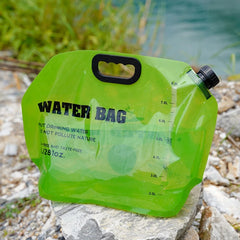
Horse water and people water should stay separate. Most horse campers already haul water for the stock in tanks or jugs; your kitchen needs its own clean supply that never touches a horse bucket. A built-in tank or a dedicated jug with a spigot makes it obvious which water is for dishes and drinking.


A real sink
After a day of saddling, grooming, and cleaning hooves, your hands are filthy. A sink with running water at the cook station means you wash hands before you touch food without walking back into the LQ or digging out a jug. Endurance rider and blogger The Sweaty Equestrian recommends 5-gallon water jugs for ride camp; an onboard tank with a faucet does the same job without the lifting and pouring.
A sealed case
Trailers are dusty inside and out. A kitchen that latches shut keeps hay chaff, horse hair, and road dust off your plates and pans. Gaskets and closed latches matter more here than at a paved campground. See our guide on keeping dust and mud out of a camp kitchen on dirt roads for packing tricks that apply to every trailer ride in.
A stable, roomy work surface
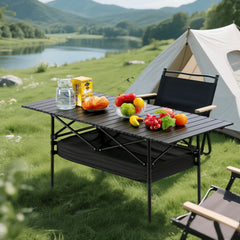
You will often be cooking for a group of riders. A wide counter or a fold-out side table gives you room to prep while the stove runs.


An All-in-One Option That Loads in One Piece
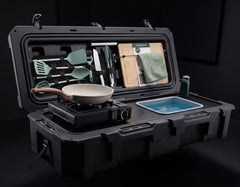
If you would rather not build a box or give up LQ cabinet space, the VOZ Camp Kitchen puts the whole station in one weatherproof case. It includes a butane stove and frying pan, a foldable sink with a USB-rechargeable electric faucet, a removable 2-gallon water tank, a cutting board, an LED light, utensils, and a towel. Packed, it measures 47.6 x 19.3 x 11.4 inches and weighs about 57 lb, so it rides on the floor of a tack room, in the dressing room, or in the truck bed, and comes out in one carry.


Setup takes under 30 seconds, which matters when you pull into camp at dusk and the horses need to be unloaded, watered, and settled first. The stove runs on butane, so keep a few spare canisters stored outside the living quarters. For a full rundown of what to look for in any camp kitchen, read our 2026 camp kitchen buyer's guide.

Packing the Kitchen for the Trailer Ride
A cook station that slides around the tack room on a washboard road will dent, rattle, and eventually break. A few habits help:
- Load it low and forward. Floor level in the tack room or dressing room, against a wall, is the steadiest spot. Do not stack saddles on top.
- Strap it down. Use a ratchet strap or cam strap to a D-ring so it cannot shift when you brake.
- Keep fuel separate. Store butane or propane canisters in a ventilated spot, not in the closed living quarters.
- Drain the tank for long hauls. An empty water tank is lighter and cannot leak onto your tack. Fill it at camp.
- Pack it ready to cook. Restock the box at home so you never have to hunt through the trailer for the spatula at camp.

FAQ
Can I use a camp stove inside my horse trailer's living quarters?
Do not run a portable camp stove inside the living quarters, dressing room, or any enclosed part of the trailer. The CPSC warns that fuel-burning camping equipment can cause carbon monoxide poisoning in enclosed spaces like campers and vehicles. Cook outside under the awning instead.
Do I need a cook station if my trailer already has a kitchen?
Not strictly, but many LQ owners use an outdoor station for anything greasy or smoky and keep the indoor kitchen for coffee and reheating. It keeps smells out of the bedding and saves fresh water in the trailer tank.
Is a DIY kitchen box cheaper than buying one?
Usually on materials, if you already have the tools and skills. You trade money for build time, and most DIY boxes skip running water. A ready-made kitchen makes sense if you want a sink and faucet without building them yourself.
Where should I dump dishwater at a horse camp?
Follow the campground's posted rules first. Where none are posted, scatter strained gray water well away from streams, lakes, and stock water, and pack out food scraps. Our graywater disposal guide covers Leave No Trace methods.
Ready to upgrade your camp kitchen?
The VOZ Camp Kitchen includes everything you need in one weatherproof case. Sets up in 15 seconds.
Shop VOZ Camp Kitchen →

